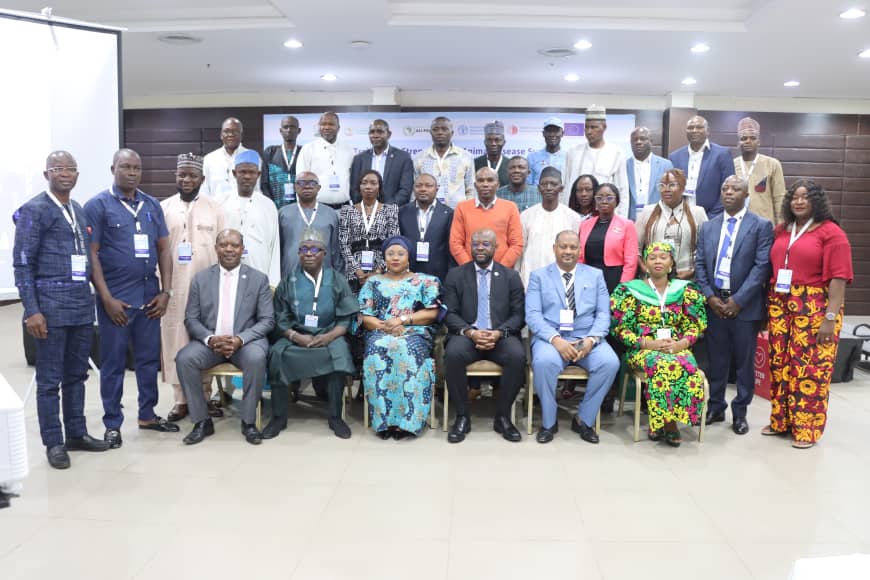
The Federal Government has urged West African countries to deepen regional cooperation to curb transboundary animal diseases, warning that recurring outbreaks pose serious risks to livestock productivity, rural incomes, and cross-border trade.
In a statement by the ministry, Chinyere Akujobi, permanent secretary, Federal Ministry of Livestock Development, made the call in Abuja recently at the opening of a regional training programme aimed at strengthening capacity to control Peste des Petits Ruminants (PPR) and other priority animal diseases.
She said diseases such as PPR continue to erode livestock value chains across the region, affecting small ruminant producers, processors, and traders, while undermining food security and regional integration efforts.
Akujobi said Nigeria remains committed to the Pan-African PPR Eradication Programme and regional solidarity.

She outlined ongoing investments by the country, including upgrades to the National Animal Disease Information System to improve real-time reporting and early warning, stronger laboratory and field coordination under the One Health framework, and expanded collaboration with ECOWAS-RAHC, AU-IBAR, Food and Agriculture Organization (FAO) and World Organisation for Animal Health (WOAH) to align national actions with continental disease control strategies.
She said Nigeria’s decision to host the regional training reflects its readiness to contribute technical capacity and strengthen cooperation with neighbouring countries.
The permanent secretary warned that repeated disease outbreaks weaken rural resilience, disrupt markets, and delay livestock sector transformation goals.
She stressed the need for West Africa to shift from reactive disease response to predictive and analytics-driven surveillance systems capable of anticipating and containing outbreaks before they spread.
She noted that the region continues to face multiple disease threats including Foot and Mouth Disease, African Swine Fever, Anthrax and Highly Pathogenic Avian Influenza, all of which carry significant economic costs for households and governments.

Akujobi called for closer collaboration among veterinarians, laboratory scientists, epidemiologists, wildlife experts, border agencies and pastoralist communities, noting that effective disease control depends on coordinated action across the livestock value chain.
Read also: Nigeria, Indonesia deepen partnership on livestock technology
Also speaking, Taofeek Braimah, FAO representative in Nigeria, described PPR as a major constraint to sheep and goat production with direct implications for household income, nutrition and resilience in rural and peri-urban communities.
He said the global target of eradicating PPR by 2030 remains achievable if countries sustain political commitment and strengthen partnerships at national and regional levels.
Participants at the training were drawn from West African countries and regional institutions.