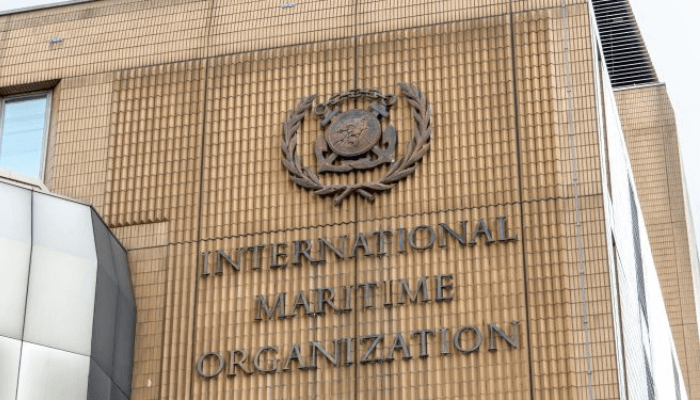
Nigeria will sit as a member of the International Maritime Organisation (IMO) Council in 2026 for the first time since 2011.
The country was elected by the IMO Assembly into Category C of the Council, joining 19 other nations, including South Africa, Egypt, and Singapore with “special interests in maritime transport or navigation and selected to ensure representation of all major geographic areas of the world,” according to the IMO website.
Nigeria is one of the only two West African countries to submit a candidacy for election to the IMO Council this year, alongside Liberia, which secured election into Category A, a seat reserved for states with the largest interest in providing international shipping services.
Read also: How Nigeria can unlock N70 trillion maritime wealth, Agbakoba reveals in letter to Oyetola

The IMO is the United Nations organisation, with responsibility for the safety and security of shipping and the prevention of marine and atmospheric pollution by ships. The Council is the executive organ responsible for supervising the work of the organisation.
‘Top echelons’
Nigeria has been involved with the Council since the 1970s, with a history of both holding and losing a seat. It has had successful stints in the IMO Council in 1975, 2000, 2001, 2005, 2007, and 2009.
But since losing its seat in the 2011 election by a single vote, Nigeria has engaged in a continuous push to regain a position on the Council, participating in subsequent elections in 2013, 2015, 2017, 2019, and 2021, all of which were unsuccessful, until now.
The nation is optimistic that the benefits that have been missed for over a decade will return.

According to the IMO website, the Council is the executive organ of IMO that supervises the organisation’s work, implementing decisions between Assembly sessions to ensure safer, more secure shipping, while preventing marine pollution through regulations on safety, emissions, and standards.
“You are basically in the top echelons of the people who take decisions as it relates to shipping,” said Temisan Omatseye, who was the director general of Nigerian Maritime Administration and Safety Agency (NIMASA) the last time Nigeria was in the Council.
Members of the committee steer the IMO’s global maritime rules, focusing on everything from ship design and emissions reduction to seafarer welfare and electronic certification. “It’s prestigious to be part of that,” Omatseye said.
High expectations
Adegboyega Oyetola, minister of Marine and Blue Economy, who led Nigeria’s campaign in the last 12 months, said Nigeria is ready to return and justify the trust placed in it.
He said Nigeria hopes to “continue championing the values that underpin the IMO,” which include “cooperation, transparency, regulatory stability and equitable global maritime development.”
“As a Council member, Nigeria intends to intensify advocacy for capacity-building for developing nations, expand avenues for technical cooperation and promote a level playing field that enables all states to confront emerging maritime challenges effectively,” the minister said.
Industry players are expectant. Aminu Umar, president of the Nigerian Chamber of Shipping (NCS), said Nigeria must ‘look inward’ to develop its maritime capacities and competence to meet the demands of its new responsibilities.
“It’s a big task on the honourable minister as well as the DG NIMASA and all the CEOs of the government agencies that are in that sector,” he told BusinessDay.
Part of this, according to Omatseye, includes sustaining the regulatory functions required, “which is basically maintaining the issue of safety within our waters and making sure that we meet the mandatory audits to get ourselves back on the white list,” he said.
But Umar, who was also involved in the campaign for the Council seat, said the private sector must continue to be carried along as partners.
“We need to work together to be able to grow the capacities and the competence in the industry…We are always there to work together with the government to create jobs, create wealth and increase the revenue that the government is generating in this industry,” he said.
Read also: Tinubu sees Nigeria’s return to global Maritime body as sign of growing influence
The Chamber of Shipping’s role, he said, will be to advocate and discuss with the government on industry policies to ensure they are more ‘growth-specific.’
Meanwhile, Oyetola assured delegates that Nigeria’s contributions within the Council will remain forward-looking, inclusive and solution-driven.
He pledged closer cooperation with member states, the IMO Secretariat and industry stakeholders to improve global maritime safety, sustainability and economic growth.
According to him, the confidence shown by the international community strengthens Nigeria’s resolve to deliver measurable, beneficial outcomes throughout the 2026–2027 biennium.
Industry players say Nigeria, as a maritime nation, should also aspire to go above being a category C nation to join category B or category A nations, which are states with the largest interest in international seaborne trade and countries with the largest interest in providing international shipping services, respectively.