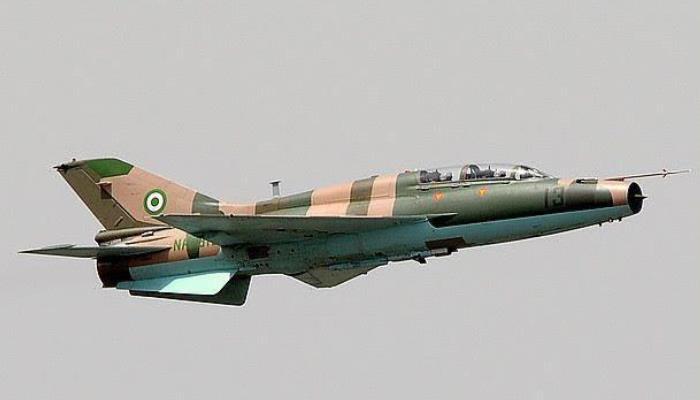
The Nigerian Air Force (NAF) has explained the circumstances behind the emergency landing of one of its aircraft in Burkina Faso.
In a statement on Tuesday, Ehimen Ejodame, Director of Public Relations and Information, NAF, said the aircraft—on a ferry mission to Portugal for scheduled maintenance—diverted to Bobo-Dioulasso, the nearest suitable airfield, after developing a technical fault. He noted that the diversion was carried out strictly in accordance with international aviation safety protocols.
According to Ejodame, the crew acted swiftly to ensure their safety and received warm cooperation from Burkinabe authorities upon landing.
Read also: Burkina Faso grounds Nigerian military flight after alleged airspace violation

“The NAF crew is safe and has received cordial treatment from the host authorities,” he said.
He added that plans are underway to resume the mission as scheduled, reiterating the Nigerian Air Force’s commitment to strict compliance with operational procedures and safety standards. The Air Force also assured the public that the precautionary landing was a necessary measure to protect its personnel while continuing to fulfil its constitutional mandate.
Fresh revelations from diplomatic and military sources have shed new light on the sudden detention of a Nigerian Air Force C-130 aircraft and 11 military personnel in Burkina Faso—despite the jet having received emergency clearance to land.
Contrary to claims circulated by Burkina Faso’s state news agency on Monday, findings show that the NAF aircraft neither violated Burkinabe airspace nor entered the country without authorisation.
The jet, which departed Lagos en route to Portugal, developed a technical fault mid-flight and immediately sought permission to land at the nearest safe airport, in line with established international aviation protocols.

Burkinabe authorities granted clearance, and the aircraft landed safely in Bobo-Dioulasso. Officials reportedly received the crew warmly, provided accommodation, and cooperated fully with engineers who worked through the night to repair the aircraft.
Sources disclosed that “everything had been concluded,” and the aircraft was preparing for departure when a sudden counter-order arrived from Burkina Faso’s military leadership, instructing local authorities to prevent the Nigerian jet from taking off.
It was at this moment, insiders say, that the situation shifted from a straightforward aviation matter to one entangled in regional geopolitics.