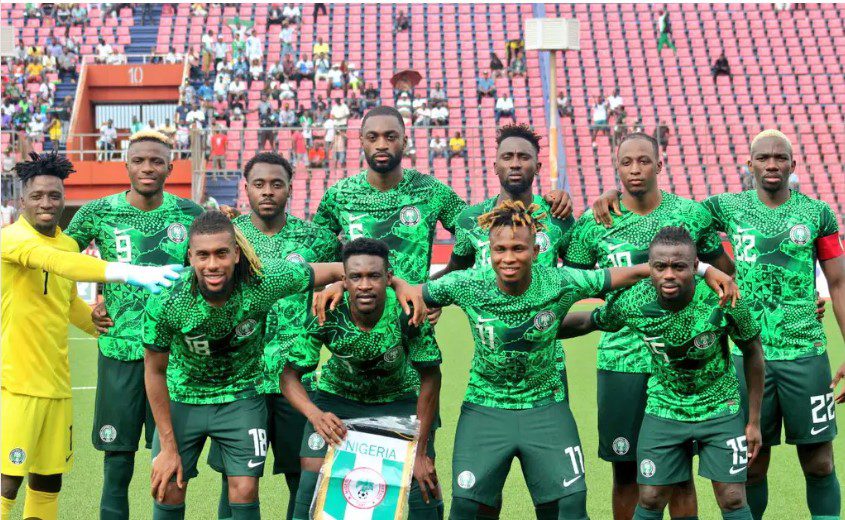
Nigeria’s football story in 2025 has been one of high expectations tempered by harsh realities. The Super Eagles – brimming with talented stars – suffered a gut-wrenching setback when they failed to qualify for the expanded 2026 World Cup. In a dramatic playoff final in Rabat, Nigeria were edged out by the Democratic Republic of Congo on penalties after a 1-1 draw. It marked the first time since 1990 that the Super Eagles will miss back-to-back World Cups, a jarring outcome for a nation long considered an African heavyweight. The defeat was painful not just for its rarity but for the manner it unfolded – Nigeria took an early lead through Frank Onyeka, only to concede an equalizer and eventually fall 4-3 in the shootout. Frustrations boiled over as coach Éric Chelle even alleged that a DR Congo staff member resorted to “voodoo” on the touchline during the penalties. While such claims grabbed headlines, captain William Troost-Ekong struck a more measured tone: “We are devastated… but there are plenty of positives to take away. The future of this team is promising”. His words reflect a cautiously optimistic outlook that many Nigerian fans share despite the World Cup heartbreak.
Turbulent Road to a World Cup Miss
Nigeria’s failure to reach the World Cup did not come out of the blue – it capped a turbulent qualifying campaign. The road to the playoffs was anything but smooth. The Super Eagles had looked disjointed for much of the two-year campaign and only snuck into the CAF playoff round on goal difference. Off the pitch, long-running issues with football administration reared their head at the worst time. In the training camp before a crucial playoff match, players staged a short-lived revolt over unpaid bonuses and allowances, some dating back as far as 2019. The squad, led by Troost-Ekong, boycotted a training session in Rabat to demand the settlement of outstanding payments – exposing once again the Nigeria Football Federation’s chronic failures in managing players’ welfare. Emergency funds were rushed in and the captain announced the dispute “resolved” on social media to refocus the team. While the immediate crisis was averted, the episode highlighted persistent governance and financial mismanagement issues that have plagued the NFF. Coaching instability has been another symptom of the malaise – incredibly, Nigeria went through seven different managerial stints in the last three years before settling on the current boss. This revolving door of coaches created a sense of muddled direction, in stark contrast to some rivals who enjoyed long-term planning. It is against this backdrop of chaos and near-misses that Éric Chelle’s tenure must be viewed.
Stability and Chelle’s Steady Hand
Appointed in January 2025, Éric Sékou Chelle has provided a measure of stability that Nigerian football sorely needed. The Malian-born coach quickly set about instituting a more structured, merit-based team selection. Chelle revealed that the staff monitors around 80 players weekly, with clear criteria: club playing time, performance, and tactical fit determine call-ups. “Sometimes the tactical criterion wins,” he explained, underscoring his emphasis on picking the right pieces for his system. This data-driven approach and fresh discipline yielded results: Nigeria saw a strong upturn in form once Chelle took charge. In fact, under Chelle’s guidance the Super Eagles went unbeaten in all 13 matches through 2025 (excluding the penalty shootout loss). The team collected four wins and two draws in six competitive qualifiers post-January – a remarkable recovery considering they had earned only three points in the group stage before his arrival. There was even a small morale boost from winning the mid-year Unity Cup friendly tournament and holding World Cup hosts Russia to a draw in a June exhibition. Chelle’s early success owes much to tightening the defense and organizing the talent at his disposal. However, analysts note that Nigeria’s playing style remains a work in progress. Despite the improved results, the team is still heavily reliant on Victor Osimhen to produce magic up front, and Chelle “hasn’t yet configured an approach that gets the best out of those around him” when the star striker is absent. That said, Chelle’s calm leadership and willingness to blend established names with new faces have earned him credit for a “promising resurgence” of the Super Eagles. Crucially, the NFF has so far kept faith in him despite the World Cup miss, a sign that Nigeria may finally prioritize coaching continuity over knee-jerk reactions.
Eyes on Redemption at AFCON 2025
With the World Cup dream dashed, attention now shifts fully to the 2025 Africa Cup of Nations (AFCON) – a chance at redemption that comes quickly. Nigeria will enter the tournament in Morocco as one of the favorites, and with good reason. Just earlier this year, the Super Eagles enjoyed a deep run in the last AFCON: they reached the final in Côte d’Ivoire, ultimately losing a tight 2-1 contest to the host nation in February. That runner-up finish (sealed by a late Sébastien Haller goal that denied Nigeria the trophy) restored some pride after recent disappointments and reminded everyone of the squad’s pedigree.

Nigeria are three-time African champions, and the ambition is to claim a fourth continental title to finally add to the cabinet after a 12-year drought. The draw for AFCON 2025 has pitted the Super Eagles against Tunisia, Uganda and Tanzania in the group stage – a pool Nigeria is expected to top, though no opponent can be taken lightly. Fans will remember that even qualification for this AFCON was not without hiccups; nevertheless, the team secured their spot and now have a golden opportunity to turn the page on World Cup failure.
In anticipation of the tournament, interest across Nigeria has surged—not only among fans but also across the growing sports betting community. Surebet, one of the most trusted betting sites in Nigeria, is already accepting early stakes on AFCON outcomes. Whether you’re backing Osimhen for top scorer or Nigeria to top their group, both traditional betshops and mobile betshop platforms are ready for action. For many supporters, placing a wager isn’t just about profit—it’s a way to connect with the team’s journey. Cautious optimism is the prevailing mood. “The future of this team is promising,” the captain insisted, and the upcoming tournament will be the first test of that promise.
The NFF, for its part, has publicly backed the squad to “challenge for honours in Morocco”, and anything less than a semifinals berth would be seen as underachievement by Nigerian standards. Having come so close in the last edition, the Super Eagles know that lifting the AFCON trophy would not only heal the World Cup wound but also reassert Nigeria’s status as a powerhouse.
Star Players and Rising Talents to the Fore
Encouraging Nigeria’s AFCON aspirations is a roster stacked with high-quality players plying their trade in Europe’s top leagues. Victor Osimhen remains the undoubted talisman. The 24-year-old Napoli striker, famed for his explosive pace and finishing, was instrumental in Nigeria’s qualifying run – indeed, without his heroics (notably a virtuoso performance against Benin), Nigeria might not have made the playoff at all. Osimhen’s importance was underscored in the playoff final when a lingering hamstring injury forced him off at half-time and Nigeria’s attack visibly faltered thereafter. Fit again, Osimhen will spearhead the charge in Morocco, carrying the nation’s hopes on his shoulders. Crucially, he may have more support this time. Winger Ademola Lookman offers creativity and spark in the attacking third, and his return to form is timely. Lookman struggled for the Super Eagles during the World Cup qualifiers, often looking short of confidence, but he has regained his groove at Atalanta with back-to-back goals in Serie A just weeks before AFCON. This resurgence “offers major encouragement” for coach Chelle, who will be delighted to see Lookman peaking at the right moment. Another name on everyone’s lips is Victor Boniface, a powerful young forward who represents the next generation. Boniface was a breakout star in Germany last season – he made an immediate impact at Bayer Leverkusen by netting 21 goals across all competitions in his debut year, earning Rookie of the Month honors and a spot in the Bundesliga Team of the Season. Injuries have tempered his current campaign and he’s yet to score for the national team, but the 24-year-old’s potential is undeniable. Chelle included Boniface in his provisional squad and has spoken of “managing Nigeria’s attacking riches” involving Osimhen, Lookman and Boniface, emphasizing that selection will come down to form and tactical fit. The message is clear: no passenger will be taken to AFCON. Beyond these headline names, Nigeria’s depth means there is intense competition for roster spots. The provisional 54-man list features an embarrassment of attacking options – Paul Onuachu, Taiwo Awoniyi, Kelechi Iheanacho, Terem Moffi, Samuel Chukwueze, Moses Simon, Nathan Tella, Cyriel Dessers and more are all fighting to make the final cut. Such firepower, on paper, is the envy of Africa. The challenge for Chelle will be finding the right balance and not over-relying on any single savior. As local pundits have noted, Nigeria has earned an “unpopular reputation for heavy reliance on Osimhen,” and the coach must integrate other goal-scorers so the team can weather any surprises. If players like Lookman or Boniface step up to share the load, the Super Eagles’ attack could be truly formidable.
Equally important will be the team’s mindset and unity. The bonus row saga showed how off-field discontent can seep into performance. Avoiding distractions will be key to unlock the full potential of this squad. On a positive note, the unity displayed during the dispute – with players sticking together for their rights – could translate into a tighter bond on the pitch. Leaders such as Troost-Ekong, midfield anchor Wilfred Ndidi, and veteran wingers like Simon bring experience, while younger talents add hunger. The blend of youth and experience in Nigeria’s ranks is well calibrated, and many of these players now have the memory of an AFCON final loss to fuel their motivation. The Simulated Reality League of football might crown Nigeria champions in every virtual tournament, but the Super Eagles are determined to prove themselves where it truly counts – on the real field, with real silverware at stake.

Home Front: Domestic Football’s Ups and Downs
Back home in Nigeria, the state of domestic football presents a mixed picture. The Nigeria Premier Football League (NPFL) has shown signs of life, but it continues to grapple with long-standing issues that mirror some of the national team’s struggles. On the one hand, administrators tout steady improvements in the local leagues, noting efforts to raise standards and improve competitiveness across the pyramid. The 2025/26 NPFL season kicked off on schedule and there have been initiatives to upgrade stadium facilities and marketing. On the other hand, the league still faces an image problem. Attempts to create a safer, family-friendly matchday environment have often fallen short, undermined by a win-at-all-costs culture, poor officiating, and incidents of unruly fan behavior. Nigerian league venues in recent years have seen worrying cases of crowd trouble and even violence against players or referees, which in turn scare away sponsors and broadcasters. The result is a domestic scene that struggles to attract the kind of investment and attention commensurate with Nigeria’s status as a football-loving nation. Many top talents leave early for Europe due to the league’s shortcomings, creating a void in local star power.
Yet, passion for the game runs deep at home. Even when the quality of the local league product wavers, Nigerian fans remain avid and resourceful. They pack viewing centers to watch Premier League and UEFA Champions League nights; some even turn to alternative outlets like the simulated reality league matches on gaming platforms to get their football fix when live action is sparse. This enduring enthusiasm suggests that if reforms take hold – for instance, stricter enforcement of security and officiating standards to curb hooliganism – the NPFL could regain its allure. The NFF leadership, under President Ibrahim Gusau, claims it is addressing these issues, from pushing state governments to invest in proper infrastructure to updating NFF statutes for better governance. Grassroots development has also been earmarked as a priority to ensure a steady pipeline of talent. In short, domestic football in Nigeria is a work in progress: the potential is enormous, but realizing it will require sustained good governance – the very factor that has often been missing.
A Hopeful Path Forward
As 2026 dawns, Nigerian football stands at a crossroads between frustration and hope. The disappointment of missing the World Cup – a “gross failure for Africa’s would-be footballing powerhouse,” as one analyst bluntly put it – has forced a period of introspection. There is a widespread understanding that systemic problems, from federation mismanagement to coaching merry-go-rounds, must be fixed for Nigeria to truly fulfill its potential. At the same time, the immediate horizon offers a chance for redemption that few teams get so soon: AFCON 2025 is not just a tournament, but a stage for the Super Eagles to reassert themselves. The talent pool is rich, the hunger is there, and lessons have been learned from recent failures. If the team can channel the unity that saw them through adversity and if off-field distractions are kept at bay, Nigeria could very well script a triumphant chapter in Morocco.
Importantly, the mood around the Super Eagles remains one of guarded optimism rather than despair. The mix of youth and experience, the return of injured stars, and the continuity under Coach Chelle give fans credible reason to believe. In Nigeria, football is lived and breathed with a fervor few countries can match – it dominates conversations in offices and markets, it unites 200 million people in joy or sorrow, and it captivates imaginations from the local park games to the digital thrills of a simulated league. That passion endures through every setback. As the team prepares for the continental showpiece, there is a sense of resolve: a belief that the Super Eagles can rise again. Glory at AFCON 2025 would not erase the pain of World Cup qualification, but it would definitively announce that Nigerian football is back on track. And for a proud nation of football lovers, lifting that trophy – for the fourth time – would feel like a soothing balm on the wounds of the recent past, and a launchpad towards an exciting future. The stage is set; now it is up to the Super Eagles to soar.