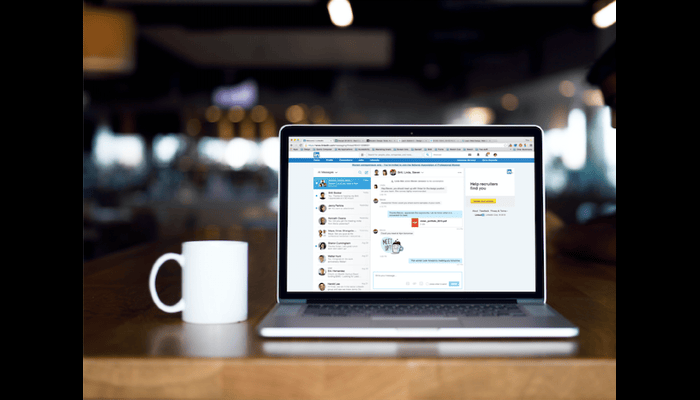
LinkedIn now serves as the first screening layer for employers, with 97 percent of HR recruiters using the platform to source talent, according to Sociallyin , a US-based social media agency, also noting that most job seekers don’t survive the first filter on Linkedin.
Currently, Linkedin has about 52 million users of the platform from the Middle East and Africa alone, making the statistics significant. Candidates risk being overlooked if their profiles lack essential skills, keywords or recent activity, making visibility a critical job-hunting skill.
“LinkedIn is increasingly determining which candidates get noticed, and most jobseekers are failing to clear its earliest screening layer”, according to Keith Kakadia, marketing strategist and CEO of Sociallyin.
“People severely underestimate how strict the first filter is,” she said. “If your profile is empty, outdated or passive, recruiters simply do not see you. Visibility is now a skill, not an added bonus.”

For many employers, the platform has replaced the traditional CV as the first point of assessment, meaning a candidate may be dismissed long before their résumé is opened if their profile lacks essential skills, keywords or recent engagement.
Read also: Why Nigerian professors, lecturers need a strong Linkedin profile
“With competition routinely surpassing 100 applicants per vacancy, even small missteps, such as missing skills, outdated profiles or a lack of activity, can remove a candidate from a recruiter’s search results entirely”, she explained.
This comes as the labour market tightens for the next graduating cohort. Hiring growth for 2026 is forecast at just 1.6 per cent, while 60 per cent of employers plan to maintain flat recruitment next year. The rise of skills-based hiring is also shifting expectations: nearly 70 per cent of employers now prioritise demonstrable skills over academic grades.
Where jobseekers are going wrong

Many users still overlook the importance of listing core competencies and industry-specific terminology, a gap that can render their profiles virtually invisible in recruiter searches. Without the right skills and keywords, candidates simply fail to appear in the platforms’ filtering systems.
A lack of recent activity also undermines visibility. Inactive profiles tend to rank lower, as minimal posting, commenting or engagement signals stagnation and suggests that a candidate may not be actively involved in their field.
Weak or generic headlines present a further challenge. Vague phrases such as “Open to Work” do little to support discoverability, as recruiters typically search for specific skills and specialisms rather than broad status updates.
Many job seekers still treat LinkedIn as a static CV, uploading a résumé and leaving the rest of the profile sparse. However, recruiters increasingly expect evidence of capability, including projects, links, measurable achievements and recognised certifications, to substantiate the information on a candidate’s résumé.
Read also: Nine ways to build credibility on linkedin fast
Also, profiles lacking a human touch often fall flat. Without a photograph, summary or a sense of personality, a profile can appear incomplete and uninviting, prompting recruiters to favour candidates who present themselves as authentic, engaged and professionally present.
“The biggest shift is that recruiters are no longer focused solely on qualifications,” Kakadia added. “They want proof that you are active in your field. Even one thoughtful post a week can dramatically change how you appear in search. In a crowded market, the visible candidates are the ones who get hired.”
Read also: Nigeria’s workforce faces a digital reality check as global remote jobs surge
Recruitment remains LinkedIn’s core mission
Despite its evolution into a content and marketing platform, recruitment is still LinkedIn’s core mission. The site currently lists more than 14 million open roles, and 97 per cent of HR professionals use it for talent acquisition. It remains the top global source of quality hires, eclipsing job boards and even employee referrals.
Though many postings now display only “over 100 applicants”, LinkedIn notes that this figure includes incomplete submissions, meaning genuine competition may be lower.
The platform’s most in-demand skills reflect a fast-shifting workplace. Adaptability, research, communication, analytics, leadership and project management top the list, with adaptability surging in relevance as artificial intelligence reshapes job requirements.