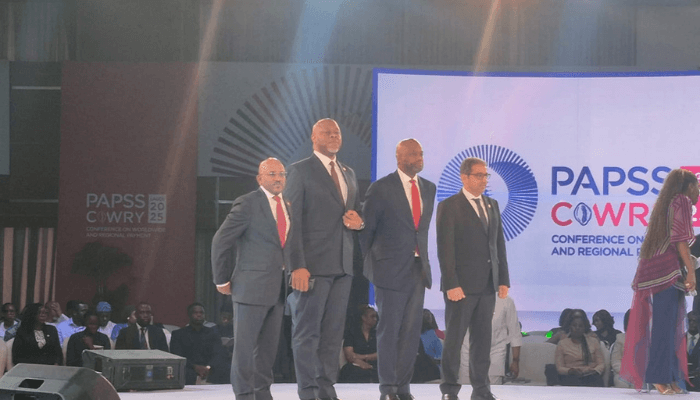
The PAPSS Cowry platform has officially debuted with a clear mission to define payments in Africa in a distinctly African way, marking a major step supported by Afreximbank, the African Union and the AfCFTA.
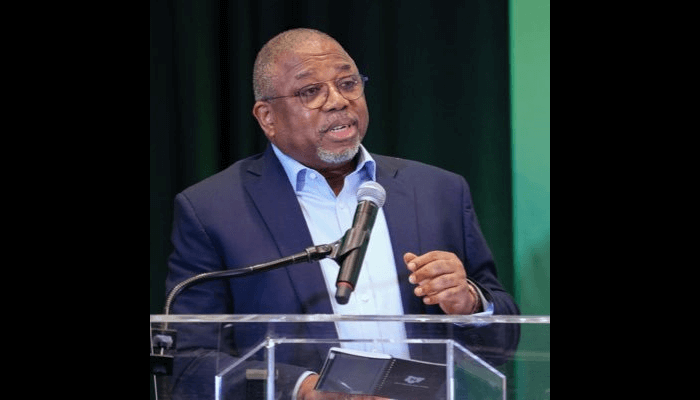
The launch in Lagos signalled a new phase in the continent’s payment evolution, with PAPSS CEO Mike Ogbalu emphasising that Africans must be able to shape, control and direct their own payment systems.
He described the Cowry platform as a space created to network, share ideas and co-create payment solutions that speak directly to African realities, noting that 160 commercial banks, 19 countries, 15 switches and five fintechs have already adopted PAPSS.
Ogbalu explained that Cowry will serve as a central hub for conversations on global and regional payments, hosting events and conferences that bring together stakeholders across the ecosystem. According to him, the platform represents a deliberate effort to ensure that Africa’s voice is not only heard but becomes influential in the global payments industry.

Read also: Africa’s payment revolution: PAPSS network expands, powering continental trade dream
He stressed that the colonial history that fractured the continent continues to shape economic outcomes today, pointing out that artificial borders split communities that shared the same language and culture, while the proliferation of 41 currencies created a significant barrier to trade and movement of goods. He described this fragmentation as one of the reasons African nations became overly dependent on foreign markets, as even neighbouring groups struggled to trade with each other because they could not use their local currencies for cross-border transactions.
Reflecting on Africa’s early journey toward unity, Ogbalu recalled the three schools of thought that shaped post-independence debates in the 1960s. He said the first school pushed for strong national identities, the second favoured regional groupings for trade, and the third, championed by Kwame Nkrumah, called for a united Africa. While Nkrumah’s vision remains aspirational, the continent eventually chose to build regional blocs first, with the long-term goal of achieving full continental unity. He argued that Africa’s challenge is not its population, which matches India’s 1.4 billion but the weakness and fragmentation of its individual states.
According to him, the AfCFTA emerged as a response to this problem, establishing common rules for trade, movement of people and intellectual property, but a critical piece was still missing: a unified payment system.
Ogbalu said this gap inspired the vision for a Pan-African payment and clearing union, an idea first proposed in 1963 by the Organisation of African Unity. The aim was to enable seamless payments across African markets, eliminating the long delays and heavy reliance on foreign currencies. He explained that PAPSS was developed to process cross-border payments in local currencies within 120 seconds while embedding anti-money-laundering checks, sanctions monitoring and fraud management. This infrastructure, he said, reduces the cost of processing transactions and enables banks, fintechs and technology companies to originate and terminate payments securely across multiple markets.

Read also: PAPSS pays Africans: The financial future of African trade demands business adoption
He highlighted the tangible benefits already visible across the continent, noting that PAPSS has connected 19 countries and integrated 160 commercial banks, making it easier for switches in various African countries to channel more transaction traffic. He added that the platform empowers small businesses, including artisans and shoemakers, to trade across borders without worrying about complicated settlement processes. With the Cowry platform now introduced, Ogbalu said the focus expands to co-creation, collaboration and innovation, ensuring that stakeholders across Africa work together to design payment solutions that reflect the continent’s unique needs.
Acknowledging the support of central banks, he noted that transactions on the PAPSS network had grown by 1,000 percent, underscoring the confidence of regulators and operators in the system. He expressed optimism that the next phase would see PAPSS expand to 40 countries, integrating more commercial banks, fintechs and payment providers as Africa accelerates toward a unified payment landscape. He said the overarching goal remains to build an Africa where seamless payments fuel economic prosperity, continental integration and the realisation of the AfCFTA vision.
In his remarks, Pius Deji Olanrewaju, president and chairman of council at the Chartered Institute of Bankers of Nigeria, said the collaboration between the CIBN and partners such as Afreximbank and the African Union represents an important step in shaping the future of Africa’s financial sector. He stressed the importance of using Africa’s resources intelligently and mobilising them for the benefit of its people, describing the forum as a platform for the continent to set its own agenda. He called on all stakeholders across Africa to collaborate, innovate and lead boldly, insisting that the continent’s transformation depends on the collective commitment of its institutions, policymakers and private-sector actors.