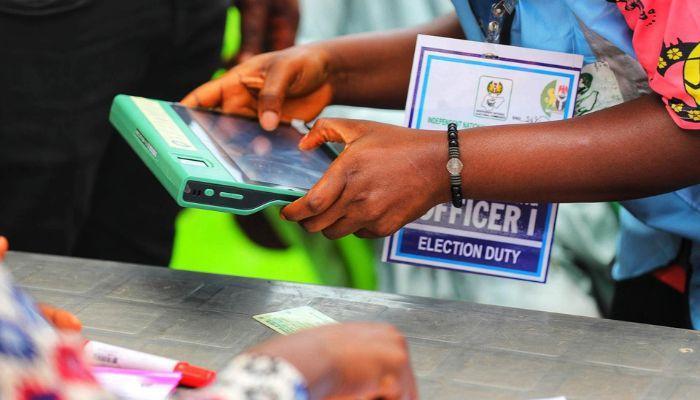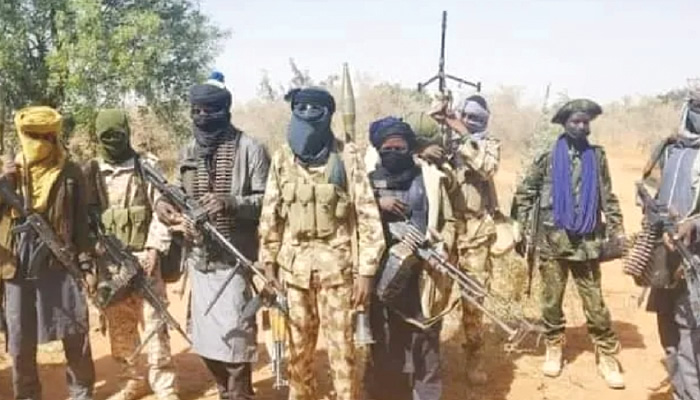
In the contemporary Nigerian sociopolitical discourse, the word technicality has undergone a remarkable semantic mutation. It has travelled far from its innocent dictionary meaning – the quality of being technical or procedural – to become a linguistic shield for official incompetence, deception, and corruption. From the military to the judiciary, from the electoral umpire to education agencies, technicality has become the lingua franca of official malfeasance – a convenient linguistic contraption used to distort reality, pacify the populace, and absolve leadership of accountability. To understand the anatomy of this linguistic banditry, one must trace the evolution of technicality in Nigeria’s public sphere – from Buhari’s “technically defeated” Boko Haram, to NNPCL’s “technically completed” refineries, INEC’s “technical glitch” elections, and finally JAMB and WAEC’s adoption of the same rhetoric to justify systemic absurdities. Together, these “mutations” of technicality reveal a nation caught in a web of semantic fraud – where governance is sustained not by truth, but by linguistic camouflage. In my local proverbial lore, the dove’s chirping is verbally transcribed as ‘shi n’ukwu okwu kwuru okwu; shi n’ukwu okwu, kwuru okwu’ – “the Dove chirped, ‘let the discussion begin from the root of the matter’; ‘let the discussion begin from the root of the matter.’” In this context, the ‘root of the matter’ is Buhari’s ‘technically defeated Boko Haram,’ which birthed an era of linguistic banditry. For proper contextualization, linguistic banditry as a term captures the discursive behaviour of bandits of meaning, which mirrors the modus operandi of original bush bandits holding sway in the large swathes of ‘ungoverned spaces’ in the forests of Zamfara, Katsina, and Niger States. Just as these bandits kidnap, abduct, rape, and violate both the human and material essence of their victims, so do bandits of meaning kidnap words and violate their semantic sanctuaries in a manner that dilutes, distorts, and permanently masks their inherent denotations. The masking tape of linguistic banditry becomes too thick for any linguistic proboscis to pierce and burrow through the semantic marrows and ferret out the original entailments. Like a drug addict transmitting on high frequency of Met-modulated Band (FMM), who staggers into the middle of a thoroughfare to challenge an articulated truck on right of way, victims of linguistic banditry get serenaded by ‘technicality’ to a point of sedation that the new meanings of banditized words become a new normal of their verbal repertoire! That is when the process of linguistic banditry comes full circle. The first major outbreak of technicality epidemic in Nigeria’s official lexicon emerged during the Muhammadu Buhari administration. Shortly after assuming office in 2015, Buhari declared that Boko Haram had been “technically defeated.” The statement was widely reported by both local and international media, including the mainstream media of the Global North, as evidence of supposed progress in the war against insurgency. Yet, a decade later, the grim reality belies that claim. Today, terror metastasis has birthed a number of other groups, with Boko Haram splintering into different factions, the Islamic State West Africa Province (ISWAP), an affiliate of the global Islamic State (IS) group, Ansaru, also known as Jama’atu Ansarul Muslimeena fi Biladis Sudan, a group with an affiliation to Al-Qaida, Jama’at Nusrat al-Islam wal Muslimeen (JNIM), Lakurawa, affiliated with jihadist factions in Mali and Niger. These groups have been spreading the jam of terror across communities in the northeast, northwest and middle belt parts of Nigeria with meteoric regularity and effortless ease, destroying villages, displacing thousands, and even downing military aircraft. The killing of Brigadier General M. Uba, a top-tier officer responsible for strategic operations in the heart of Borno State, by so-called ‘rag-tag’ non-state actors marked another tragic entry in Nigeria’s endless security ledger. The coordinated assassination engineered through sophisticated intelligence gathering sent a cold, unmistakable message: ISWAP has evolved from a ‘ragtag militia’ into a techno-savvy insurgency with the capability to hunt Nigerian officers as targets of war. Terrorists can track troop movements, jam communications, and infiltrate command structures. An Army General falling an easy prey to terrorists is not just violence; it is messaging. State authority is being symbolically decapitated. Once Generals are hunted, the myth of state invulnerability collapses. Nigeria’s tactical vulnerabilities are widening. The insurgency has moved from guerrilla warfare to hybrid warfare, mixing terrorism, intelligence, propaganda, and battlefield manoeuvres. Right now, Nigeria is literally drowning under the weight of insurgency, mass abductions, and systemic insecurity. It is against this background that President Tinubu was compelled to declare a nationwide security emergency and order additional recruitment into the Armed Forces! Before now, Borno State Governor, Prof. Babagana Zulum, had warned that insurgents deploy drones in their attacks – a chilling escalation in tactical sophistication. Retired Army General Ishola Williams, speaking on Channels Television, lamented that after over 15 years, billions in defence spending, and countless promises of victory, Nigeria is still trapped in what former Chief of Army Staff, Lt. Gen. Tukur Buratai, once predicted: a “perpetual war.” Ishola noted that what Nigeria has achieved are at best “tactical victories” without strategic direction – a cycle of attacks and counterattacks that drains resources and lives without end. Here again, ‘technicality’ has found a new cousin in General Ishola’s ‘tactical’! Thus, Buhari’s “technically defeated” remark stands today as the prototype of linguistic banditry – a calculated deployment of language to mask defeat as victory, failure as achievement. It inaugurated the era in which words became Weapons of Mass Distraction (WMD), anesthetizing citizens into acceptance of dysfunction as destiny. Recall Saddam Hussein’s Weapons of Mass Destruction (WMD) curated on behalf of the late Iraqi leader by the former US president Bush as a military decoy to justify his invasion of Iraq to effect regime change – a retaliatory military action against the former’s invasion of Kuwait. Nonetheless, the rude insolence of Buhari’s ‘technically-defeated’ Boko Harm has been starring all of us in the face, pointing somewhat grimly to the protracted and seeming insurmountable character of the insurgency. The immediate past Chief of Defence Staff, General Chris Musa betrayed this sense of despair and defeatist resignation when he advocated the acquisition of self-defence skills such as karate and taekwondo by Nigerians to equip them for combating AK-47-wielding terrorists and bandits! Reason? The terrain is too difficult for the regular military operatives to navigate in real time for counter-offensive whenever the terrorists attacked. In Critical Default Model of Discourse Coherence terms, the former CDS’ narrative evinces of two levels of coherence – the surface level (what he says) and deep level (what language does). His surface-level speech act invokes the inevitability of marshal skills acquisition by the citizenry as defence strategy against banditry and terrorism in the light of difficult topography, which militates against real time swift military responses. But at the deep level, the CDS’ karate narrative masks a fundamental operational constraint – lack of political will to deal decisively with the nagging security or what has been construed in some quarters as outright state complicity. So, in this sense, meaning, as always, lives in what is left unsaid. In linguistic terms, the “macrostructure of meaning” has fragmented – and when meaning fractures, manipulation in borrowed garbs of ‘technicality thrives. Unfortunately, it is this inferred inaction or even duplicity that has fertilized the soil for the metastasis of insecurity – one that degenerated to the sorry point of provoking Trump’s CPC label and entering the ‘disgraced’ nation ‘guns-a-blazing’ to protect the Christian population of Africa’s most populous country. “If we attack, it will be fast, vicious, and sweet, just like the terrorist thugs attack our CHERISHED Christians,” Trump thundered. Yet, even when the surface narrative of Trump’s tough talk says “save lives” but the deep narrative reads “preserve influence” and risks normalising external coercion as a form of divine justice – an unsettling trend that blurs the boundary between salvation and subjugation – it still offers catharsis, even hope to a section of Nigerians exhausted by insecurity and apparent helplessness of the ‘sovereign’ state. And gradually but consistently, Nigeria is transmuting into a pawn in global politics tossed around like a yo-yo in a string by US-China rivalry. Well, enough of this digression as we return to the trajectory of NNPC’s oily economics of technicality.
.Agbedo, a professor of Linguistics, University of Nigeria Nsukka, Fellow of Netherlands Institute for Advanced Study, is a public affairs analyst.