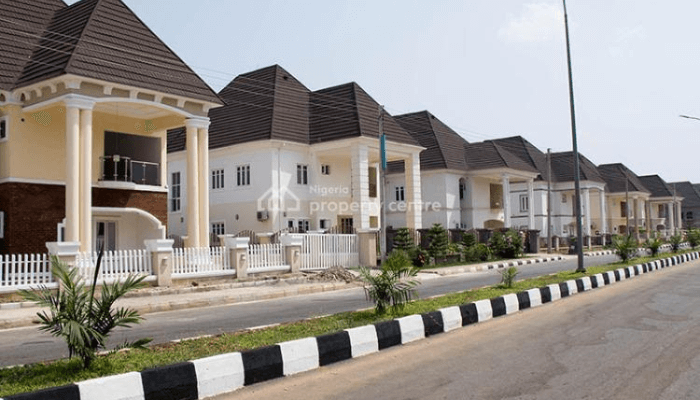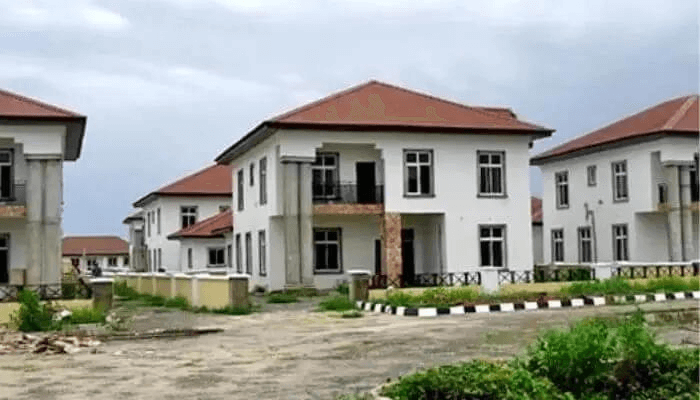
In major cities of Nigeria, especially Lagos, the country’s commercial nerve centre, governments are making deliberate efforts to create new towns away from the city centre.
Alongside these new towns are urban communities which fit into the Lagos new urbanism. Instances of these communities are Gracefield Island, Orange Island, Periwinkle Estate, and others that are springing up from land reclamation from the Lagoon.
The new towns are not just suburbs or urban expansions, but structures conceived as self-contained communities with their own housing, employment, industry, commerce, and leisure facilities, intended to relieve pressure from overcrowded major cities and drive regional development.
Experts, who gathered in Lagos recently for the 4th edition of the UPDC Real Estate Summit, surmised that new towns and urban communities can turn housing deficit into national economic growth, noting that Nigeria’s housing deficit, estimated at 28 million units, can become an economic growth driver.

“Real estate is now the third pillar of the economy; its contribution to GDP as of Q2 2025 is 12.80 percent, coming after Crop Production—17.80 percent, and Trade, 18.28 percent.” Franklin Nnaemeka Ngwu, Strategy, Corporate Governance & Risk Management at Lagos Business School, said,
Ngwu, who was the keynote speaker at the summit, added that real estate drives jobs, urban growth, and industry development, stressing that there are key opportunities in the sector for investors, developers, and policymakers.
Read also: UNILAG land confab highlights urgency of inclusive urban growth
He noted that New Towns have implications for the economy and investors like UPDC. “For the economy, New Towns engender economic opportunity and job creation, and real estate expansion drives jobs in construction, materials supply, logistics, and finance,” he said.
Ngwu, a professor, added that urban planning and infrastructure needs, as well as integrated housing with transport, utilities and social infrastructure, prevent haphazard sprawls.

According to him, there are socio-economic benefits such as increasing housing supply that can improve living standards, reduce slums, and enhance productivity.
The implications New Towns for UPDC and other developers are that it leads to market expansion into affordable housing, where there is great unmet demand and mass market opportunity
It also creates opportunities in high-end housing, as there is premium market demand in the cities of Lagos and Abuja.
“In terms of investment attraction, it will lead to increased prominence of real estate in Nigeria; increased investor interest in development and REIT products,” Ngwu noted, pointing out that UPDC is uniquely positioned to leverage this trend to raise capital for large-scale projects and diversify its portfolio.
He believes that the future of Nigeria’s cities begins now. “Our decisions today shape our cities of tomorrow; real estate is more than structures, it is opportunity and prosperity; New towns and urban communities can turn housing deficit into national growth,” he assured.
Earlier, Oluyinka Olumide, the Lagos Commissioner for Physical Planning and Urban Development, had pointed out that the state government has some roles to play in the development and implementation of New Towns.
Among other things, he said, the state government plays multiple interconnected roles from population redistribution to regulatory framework implementation, ensuring sustainable urban growth and economic development across the state.
The state government also ensures population redistribution management by dispatching population from congested metropolitan areas to sparsely populated Southwest and Lekki Peninsula sub-regions effectively.
It also ensures urban pressure reduction by creating new business districts to reduce pressure from Lagos Island as the major Central Business District.