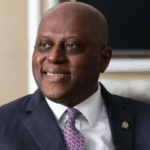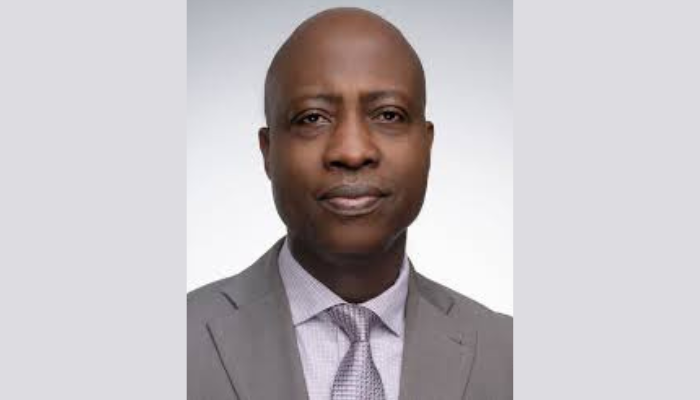
In a world where industries are disrupted faster than strategies are written, most organisations talk about transformation; very few build the quiet, disciplined systems that make it possible. Dr Steve Ojeh is one of those rare leaders who does both. As Director, Corporate Services at Seplat Energy, he sits at the intersection of people, process, and technology, orchestrating Human Resources, Business Services, and Information Technology into a single, coherent engine of performance.
His remit is not glamorous in the way some leadership roles are described, yet it is foundational. He aligns HR strategy with business ambition, shapes talent to fit the future rather than the past, ensures essential services run without drama, and steers IT infrastructure that must be both stable and agile. On top of this, he navigates complex employment law landscapes in both Nigeria and the UK. In a sector where misalignment between people, systems, and regulation can be ruinous, his work is not simply operational; it is strategic risk management and value creation by other means.
What makes his journey particularly instructive is that it embodies the very shift global thought leadership now calls for: from heroic leaders to institutional architects, from reactive HR to strategic stewardship of human and social capital, from technology as a cost centre to technology as a multiplier of human capability.
From HR specialist to shaper of enterprise advantage

Dr Ojeh brings nearly three decades of Human Resources leadership experience drawn from consulting, manufacturing, and oil and gas. His career has spanned Nigeria, wider Africa, Europe, and Asia. This is not just a list of regions; it is a portfolio of different regulatory environments, labour markets, union cultures, and corporate expectations. Very few HR leaders get to test their philosophy against so many different contexts.
For almost twenty-four years at Shell Companies in Nigeria, he led critical HR functions such as Business Partnering, Talent Management, Total Rewards, Employee and Industrial Relations, Leadership Development, and Change Management. These are not isolated disciplines. They are the levers that determine whether strategy remains a presentation or becomes lived behaviour across thousands of people.
His leadership has never been confined to one organisation. As former Chairman of the Rivers State Branch of the Chartered Institute of Personnel Management (CIPM) and a continuing national-level contributor, he has helped shape the standards of the HR profession in Nigeria. His influence extends through the Nigeria Employers’ Consultative Association (NECA), and his credentials as a Certified Employee Assistance Programme Professional, Trainer, Speaker, and Coach mean he has repeatedly been trusted to guide others through complexity, conflict, and change.
Academically, he stands on firm ground: a Doctorate in Social Sciences from the University of Leicester; Chartered Fellow of the Chartered Institute of Personnel and Development (UK); Fellow of CIPM Nigeria and the Chartered Institute of Mediators and Conciliators; Chartered Member of ADR Canada; and executive education at Harvard Business School. The combination of scholarly discipline, professional standards, and practical experience allows him to operate at the level where research, regulation, and real-world constraints collide.
Corporate Services as a strategic nerve centre

At Seplat Energy, Dr Ojeh leads Corporate Services, which integrates Human Resources, Business Services, and Information Technology. This portfolio is easily misunderstood as “support”. In reality, it is the spine of the organisation.
Recent work from leading institutions such as Harvard Business Review and Stanford’s leadership scholars increasingly converges on a core insight: competitive advantage now lies less in strategy documents and more in the quality of the organisation’s operating system. That operating system is made up of culture, decision rights, talent pipelines, digital infrastructure, and the way everyday work actually flows. This is precisely the terrain that Corporate Services shapes.
By aligning HR with business strategy, he helps ensure that Seplat does not simply recruit to fill vacancies but cultivates capabilities that anticipate where the energy sector is moving—towards greater scrutiny, higher stakeholder expectations, and more complex regulatory regimes. Through Business Services, he drives reliability and consistency in the kinds of “invisible” processes that, when poorly managed, quietly drain trust and productivity. Through IT, he supports infrastructure that must be secure and compliant yet flexible enough to enable new digital tools, analytics, and collaboration.
He leads more than 500 full-time and 150 contract staff and joined the Senior Leadership Team in 2024. In that role, he does more than represent HR; he speaks for the institutional health of the organisation: whether its people feel heard, whether its systems are coherent, whether its digital backbone is enabling or constraining strategic ambition.
Leadership at the fault lines
The most forward-looking leadership thinking from Harvard and Stanford stresses that modern leaders must operate at the fault lines: between human and digital, short term and long term, local pressures and global standards. Dr Ojeh’s responsibilities place him squarely in those fault lines.
He operates between regulation and innovation, ensuring compliance with employment law in both Nigeria and the UK while enabling agile, future-facing ways of working. He stands between executive ambition and frontline reality, translating strategic priorities into policies, structures, and behaviours that real people can execute without burnout or confusion. He works between technology and humanity, championing IT not just as hardware and software, but as a means of amplifying human judgement, collaboration, and learning.
Thought leadership today emphasises that resilience is less about individual toughness and more about institutional design. Psychological safety, constructive conflict, clear decision rights, and learning loops are now recognised as strategic assets, not soft add-ons. Dr Ojeh’s background in industrial relations, mediation, and employee communications is invaluable here. He understands that trust is not built by slogans; it is built by consistency, fairness, and mechanisms that allow concerns to surface early before they become crises.
Culture as infrastructure, not wallpaper
One of the most powerful shifts in contemporary leadership thinking is the idea that culture should be treated as infrastructure. Just as physical infrastructure channels the flow of goods and services, culture channels the flow of information, decisions, and energy inside an organisation.
Dr Ojeh’s work on leadership development, change management, and talent systems turns culture from an abstract aspiration into concrete routines. This shows up in how performance is discussed, how recognition is structured, how conflict is resolved, and how leaders are selected and developed. The real test of culture is what happens under pressure—when timelines are tight, markets are uncertain, or hard choices must be made. By equipping leaders and teams with the mindset and tools to handle these pressures constructively, he helps Seplat build a culture that does not crack at the first sign of turbulence.
Leading thinkers now argue that the most enduring impact of any senior leader is not a single project or initiative, but the improvement of the organisation’s “decision fabric”: who is empowered to decide, what information they see, how quickly they can course-correct, and whether they feel safe to challenge assumptions. Dr Ojeh’s track record in policy, remuneration, and business partnering means he has spent his career working on that fabric—aligning incentives with values, embedding grievance and mediation processes, and ensuring that people systems are coherent rather than fragmented.
Technology as a multiplier of human potential
As technology accelerates, the conversation has moved beyond digitising existing processes to reimagining how work itself is organised. Leading scholarship stresses that the real value of technology comes when it is integrated into workflows in ways that strengthen human judgement, not replace it.
By overseeing IT alongside HR and Business Services, Dr Ojeh is positioned to ensure that technology decisions are made with a deep understanding of people and processes. This integrated view allows Seplat to avoid the common trap of implementing tools that look impressive in isolation but create friction in practice. Instead, the organisation can invest in platforms that enable collaboration, data-driven decision-making, and learning.
In energy and other regulated sectors, this alignment is critical. Systems must comply with stringent standards and withstand scrutiny. At the same time, they must allow the organisation to adapt quickly to regulatory changes, market shifts, and technological advances. Steady hands like his ensure that digital ambition is grounded, responsible, and sustainable.
Lessons for aspiring leaders
Dr Steve Ojeh’s trajectory offers a different model of success for ambitious professionals. It shows that it is possible to build a career that is both technically deep and strategically expansive; that credibility in the boardroom can be earned through years of working on complex, often invisible problems that determine whether an organisation stands firm or falters.
His story underscores that true impact unfolds when leaders embrace roles that many underestimate: the architect of policies, the steward of culture, the mediator in times of strain, the designer of systems that make it easier for others to do the right thing. These responsibilities may not always dominate headlines, but they shape the institutional conditions under which performance, ethics, and well-being either thrive or wither.
For emerging leaders, the invitation is clear. Do not limit your ambition to titles or functions. Aim to become the kind of leader who improves how decisions are made, how people are treated, and how technology is used to serve human and organisational progress. Invest in your own development with the seriousness Dr Ojeh has shown—through advanced study, professional fellowships, and continuous learning from the best thinking around the world—but remember that credentials are most valuable when they translate into better outcomes for others.
Dr Steve Ojeh’s legacy, still very much in the making, is not simply that he leads Corporate Services at Seplat Energy. It is that he is helping to build an institution where people can grow, systems can adapt, and performance can be sustained with integrity. In a time when many talk about impact, he quietly demonstrates how to create it, day after day, through disciplined leadership at the very core of how an organisation works.
That is the kind of leadership that teams remember, organisations depend on, and societies need.