Nigeria’s bid to accelerate electric mobility gained renewed momentum in Lagos as industry leaders, policymakers, and innovators called for stronger collaboration and policy consistency to unlock the country’s Electric Vehicle (EV) potential.
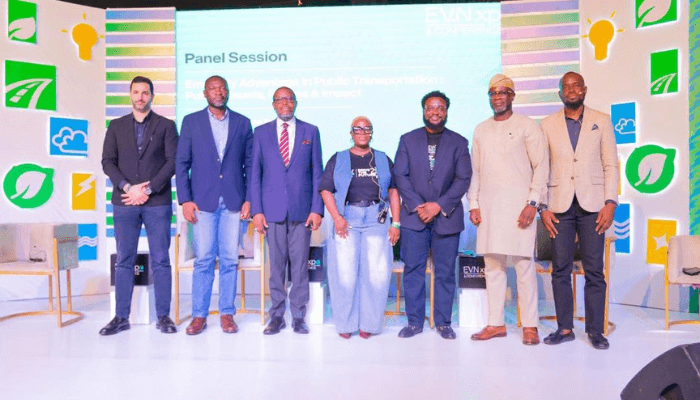
The appeal was made at the inaugural Electric Vehicle Nigeria (EV.N) Exhibition and Conference, in Lagos. Themed “Driving the Future,” the event convened public and private sector actors who argued that Nigeria stands at a pivotal moment, one where rising fuel costs, subsidy reforms, and global shifts toward cleaner technologies make e-mobility both urgent and inevitable.
Abiola Adekoyejo, convener of the EV.N Expo, noted that the expo was organised to deepen conversations around co-creation and collaboration to drive growth in the EV mobility sector.
Adekoyejo stated that the expo was happening at a critical time, when issues like the removal of fuel subsidy had triggered the need for a multi-modal approach to Nigeria’s transportation system.

Read also: Stanbic IBTC, LOXEA BYD partner to boost electric vehicle adoption in Nigeria
He emphasised that with the right incentives, policies, and interventions, the e-mobility ecosystem will play a vital role in helping the government achieve its goal of building a resilient economy, adding that Nigeria has the conditions and innovation needed to lead Africa’s e-mobility adoption.
Setting the stage for the Expo, Sam Faleye, the keynote speaker, chairman and chief executive officer of SAGLEV INC, who delivered a presentation on the topic titled “E-mobility as an Alternative Source for Revenue Generation,” emphasised the need for Nigeria to capitalise on the growing interest in electric vehicles by transforming it into a sustainable investment.
According to Faleye, it has become crucial for stakeholders in the EV ecosystem to develop the right financing models, policy incentives, and partnerships that can speed up EV adoption, local manufacturing, and infrastructure development.
He stated that Nigerians cannot afford to ignore the market that EVs create, urging others to make significant investments that will not only help address challenges such as rising fuel costs but also create jobs for the people.

In his remarks, Gaith Al-Hassan, director of engineering & design at IHS Nigeria, stated that there is no need to reinvent the wheel in the EV mobility sector, as the telecom sector presented similar challenges many years ago when the company embarked on tower installation.
Read als: Tinubu commissions locally made electric vehicles in Nasarawa
Al-Hassan explained that stakeholders must be prepared to overcome the challenges of grid reliability, power, and security to support the needs of many Nigerians.
He commended the organiser for taking a bold step that will undoubtedly shape the future of mobility in Nigeria, noting that this step alone will ultimately herald interest and possibly deepen investment in the EV space.
Delivering his keynote speech titled “E-mobility in Grassroots Development: Skills, Jobs and Local Enterprise,” Barr. Moyosore Ogunlewe, the executive chairman, Kosofe Local Government, stated that electric mobility has become increasingly important for driving local job creation, skills development, and supporting small businesses.
He explained that grassroots communities stand to gain significantly from Nigeria’s transition to clean transportation, considering the many opportunities in EV assembly, maintenance, and charging infrastructure.
According to him, the e-mobility ecosystem, comprising interconnected components, presents distinct opportunities for grassroots involvement, including vehicle assembly, maintenance, energy infrastructure development, battery management services, and digital platform operation.
Read also: REEV Africa Expo 2025 to Drive Nigeria’s Renewable Energy and Electric Vehicle Revolution
“The local government must provide supportive policies and regulatory clarity. Additionally, private sector partners must contribute technology, expertise, and market access, while financial institutions must provide accessible credit facilities. The community organisations must also ensure inclusive participation, particularly for women and also for the youth,” he said.
Providing a case study on the importance of EV mobility in transportation, Head of Operations, Lagos State Waterways Authority, LASWA, Ibrahim Famuyiwa, said the agency has done a lot not only to address transportation but also to boost tourism in Lagos state.
Citing the Omi Eko project, Famuyiwa noted that the agencies have procured a total of 70 electric boats and repaired 35 existing jetties while providing the necessary charging solutions. He stated that Lagos State is already considering creating an electric network that can integrate with the existing rail and BRT bus systems.