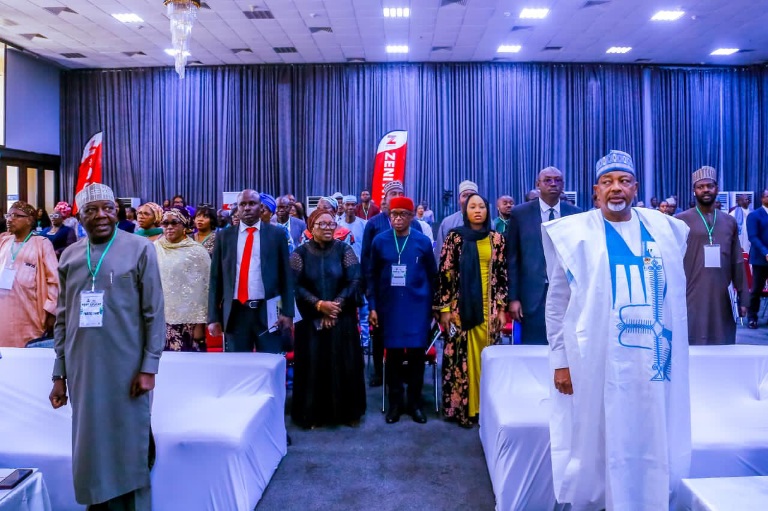
President Bola Ahmed Tinubu has launched the Global Flood Disaster Management Project (GFDMP) aimed at reducing the economic and infrastructure losses caused by recurrent flooding.
Represented by Abubakar Kyari, minister of Agriculture and Food Security, Tinubu said the GFDMP is positioned as a shift from reactive disaster response to a proactive national resilience strategy, stating project is expected to strengthen early-warning capabilities, climate-risk forecasting, infrastructure protection and community-level preparedness.
In a statement by the ministry of Agriculture and Food Security, it stated that that the President speaking at the launch in Abuja on Tuesday, said the project is central to safeguarding the country’s agricultural base, transport corridors and critical infrastructure regularly disrupted by climate-induced floods.
Read also: Flooding in Nigeria: A growing crisis that calls for urgent action

He noted that flood resilience “requires consistent investment, planning, monitoring and innovation,” stressing that climate-related losses—particularly to farmlands and rural livelihoods—carry significant economic consequences.
The project is built on four core pillars which include Advanced Early Warning Systems, Flood-resilient Infrastructure Development, Capacity Building and Knowledge Transfer and Community Engagement and Local Participation
Tinubu said the initiative will enhance real-time monitoring, expand digital alert systems and improve nationwide preparedness for extreme weather events.
He added that Nigeria has already prioritised hydrological upgrades, environmental protection and improved disaster-response coordination, and that the GFDMP will “strengthen and accelerate these priorities with global expertise and technological support.”
The President pledged full government cooperation, noting that resilience investments are not optional but essential for long-term economic stability: “Flood resilience is not a luxury; it is a necessity—one we owe both to citizens today and to future generations.

Umar Mohammed, director general of the Nigeria Hydrological Services Agency (NIHSA), warned that recent flood-risk numbers represent real economic losses and family disruptions, underscoring that proactive investment is far cheaper than emergency response.
The project is expected to support national planning, reduce agricultural disruptions, protect communities and attract global partnerships into Nigeria’s climate-risk and disaster-management ecosystem.