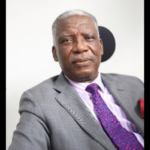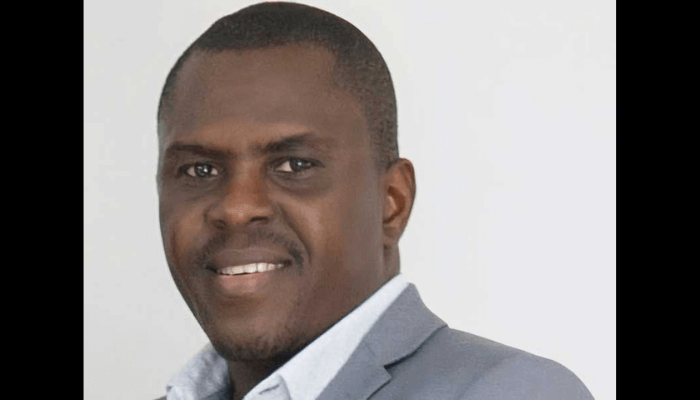
Timipere Felix Allison, executive director, Conflict Research Network West Africa, has called on the Economic of West African States (ECOWAS) to mobilise countries in the region to collectively combat violent extremism and the deepening humanitarian pressures.
“Fifty years after the establishment of ECOWAS, West Africa stands at a crossroads,” Allison said, adding that though “the region has experienced remarkable gains in trade, mobility, diplomacy and peacekeeping, the region also faces democratic backsliding, a resurgence of coups, violent extremism, climate-induced displacement, deepening humanitarian pressures, and widening socio-economic inequality. These layered challenges demand new thinking, evidence-based policymaking, and a renewed commitment to regional solidarity.”
CORNWEST director spoke at the end of an international conference held in Abuja in partnership with the Centre for Democracy and Development (CDD), themed ‘ECOWAS at 50: Reimagining Regional Integration for a Resilient, Democratic and Secure West Africa’.
The conference participants agreed that “there is a rapid decline of democratic governance in West Africa. This is shown in the rise in military takeovers and in the growing pattern of constitutional, judicial and civilian coups across several states; ECOWAS has focused on responding to military coups while paying insufficient attention to other forms of unconstitutional changes of government; the security situation in many West African states has deteriorated, resulting in high levels of death, displacement and disruption of livelihoods.

“The creation of the Alliance of Sahelian States has deepened political divisions within the region and poses a challenge to regional cooperation. Climate change and environmental degradation are intensifying pressures on communities, yet ECOWAS has not developed a robust regional approach to these issues. Socio-economic conditions have worsened, with rising poverty and unemployment affecting large youth populations across the region.”
To solve these problems, the conference participants resolved on the need for ECOWAS to restructure with a view to strengthening itself to be able to address emerging regional threats and solving democratic governance challenges.
Among other resolutions, the conference resolved that ECOWAS must enhance democracy, strengthen regional security initiatives, build partnerships among nations, and revolutionalise economic integration.
Garba Dauda, executive director of Centre for Democracy and Development (CDD) recalled the role that ECOWAS played in conflict resolution, stabilization, and peacebuilding across West Africa stressing also the success of the regional body in promoting free movement across national borders—an achievement that other regional organisations on the continent have yet to realise.
He, however, expressed concern that key challenges continue to threaten the very core and purpose of ECOWAS “concerning trend of de-democratization marked by anti-democratic actions by political elites across the region, as well as the rising threat of fundamentalism with severe implications for peace and human security.”

He reflected that it was hard to imagine West Africa experiencing the scale of terrorism it faces today stressing that addressing these threats requires innovative thinking—not only from ECOWAS but also from scholars, practitioners, and various sectors.
The keynote speech at the conference was delivered by the Director General Institute for Peace and Conflict Resolution (IPCR), Joseph Ochogwu who tasked ECOWAS to restructure by embracing resilience, championing democracy and prioritising regional security.
The conference attracted 108 participants (including academics, policymakers, civil society actors, researchers, students, development practitioners, journalists, and representatives of the Nigerian military and paramilitary services), drawn from 41 different universities and institutions across West Africa, Europe and North America.