Amid renewed nationwide concerns over worsening insecurity, including this week’s terror attacks in the North that saw people killed and more than 400 residents and students abducted in separate incidents in Kebbi, Kwara and Niger States, lawmakers and critical stakeholders in the South-West have again called for the creation of state police and the adoption of community-driven security systems to curb Nigeria’s escalating violence.
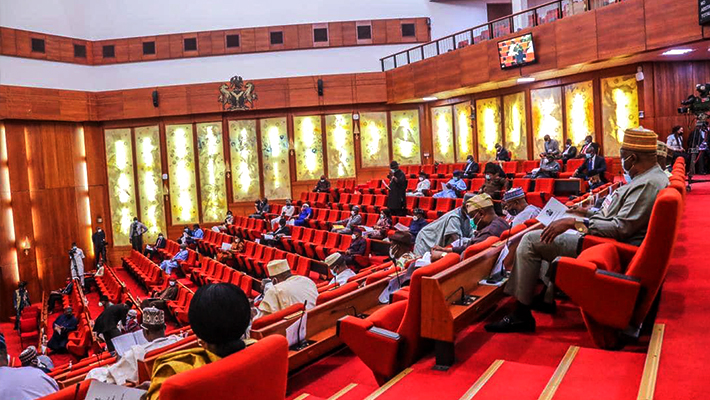
At the South-West Zonal Security Summit convened by the Nigerian Senate in Lagos on Friday, senators, governors, security chiefs, traditional rulers, and civil society actors pressed for urgent reforms, warning that the region must not wait until its security situation deteriorates further before acting decisively.
The summit is part of the 10th Senate’s ongoing nationwide engagement on national security following a string of deadly terror attacks, including Monday’s abduction of 25 girls in Kebbi State and the reported kidnapping of over 300 pupils in Niger State on Thursday; incidents that have heightened anxiety about the country’s direction and exposed the limits of current security structures.
Read also: Tinubu mourns Musa Uba, other fallen soldiers, vows safe return of kidnapped Kebbi schoolgirls

Tokunbo Abiru, representing Lagos East and chairman of the South-West geopolitical zone interactive hearings, urged Nigerians to unite in confronting what he described as an increasingly complex threat environment.
“While the South-West has not experienced the full brunt of terrorism as in some other regions, the rise in banditry, kidnapping, and violent crimes across our states is deeply troubling,” Abiru said.
“Our villages and farmlands have come under increasing threat; farmer-herder clashes have been on the increase, our highways have seen more daring incidents, and the disturbing spread of armed groups such as the reported Lakurawa incursion into parts of Kwara and Kogi underscores the urgent need for proactive measures.
‘If decisive action is not taken, the danger could spill fully into the South-West geo-political zone.”
He added, “We must not allow the South-West to become a sanctuary for criminality or a battleground for those who seek to destabilise our nation. We must use every resource; human, material and technological to defend our communities.”

Abiru emphasised that security must be seen as a collective responsibility and urged the media to adopt a nation-building approach in its reportage.
“We must promote narratives that strengthen unity, inspire confidence, and avoid framing our national challenges along ethnic or religious lines.
“Let us strive to paint a positive and reassuring picture of our country,” he said.
Representing Governor Babajide Sanwo-Olu of lagos State, the Chief Executive Officer of the Lagos State Security Trust Fund, Ayodele Ogunsan, said Lagos was committed to strengthening its security architecture but stressed that the region as a whole must adopt coordinated strategies.
“As governors of this region, we must reaffirm our commitment to a regional security framework, which includes transforming Amotekun into a more unified, well-equipped, technology-driven command that can facilitate cross-state intelligence sharing and joint operations,” Ogunsan said.
He added that traditional institutions must remain central to regional efforts, saying “no one knows the heartbeat of local communities better than they do.”
“Security is not just about keeping the peace; it is about ensuring our economic survival,” he said. “When insecurity disrupts markets, farmlands, transportation, and investment, our GDP takes a hit, livelihoods crumble, and growth stalls.
“A region that cannot promise safety cannot promise prosperity either.”
Ibrahim Jimoh, representing Ondo South who sponsored the motion calling for the National Security Summit, argued that terrorism and insurgency require non-conventional strategies combining military and civilian efforts.
Gbenga Daniel (Ogun East) echoed similar sentiments, calling for collaborative engagement across institutions and communities.
In his presentation, Lagos State Commissioner of Police, Moshood Jimoh, underscored the need to sustain momentum in tackling crime.
He noted that “security challenges are often local and require local solutions,” aligning with growing demands for decentralised policing.
Read also: Students, staff abducted as bandits raid Catholic school in Niger
Traditional rulers at the summit reiterated their long-standing call for community-centric security models.
The Alara of Ilara in Epe, Lagos, Oba Olufolarin Ogunsanwo, advocated a mix of modern technology, joint task forces, better funding, expanded recruitment, and strengthened grassroots structures.
He said President Bola Tinubu’s administration had scaled up collaboration with international partners but warned that “weak structures at the grassroots continue to derail progress.”
For Iba Gani Adams, the Aare Onakakanfo of Yorubaland, the path forward is clear: “state policing remains a key solution to tackling insecurity nationwide.”
Civil society groups, women’s organisations, youth representatives, and Christian and Islamic leaders all called for improved welfare for security operatives, arguing that no security reform would succeed if personnel remained poorly motivated.
The summit continues the Senate’s series of regional engagements, which are expected to form part of a broader legislative agenda to reform Nigeria’s security architecture at a time when public pressure for decisive action has reached new levels.