It used to be groundnut cakes [kuli kuli], Benny seed sugared cakes [ridi], kokoro, a southwestern cassava snack, bean cakes [akara] and a range of other street snacks that are truly in quantum in Nigeria. There are also fresh walnuts in their shells, ‘Agbalumo’, and the almighty corn-on-the-cob, as well as cassava flakes and coconut. The range is incredible. Nigeria has always had diverse snacks – sweet, sour, and savoury – over the years. Then colonialism came to our shores, and the wives of the colonialist bosses led a revolution of snacks, bringing in new and shiny stuff. If the white man eats it, then it must be good stuff, our forebears thought. And anyway, they took most of what we had and started to replace them strategically. Language was introduced slowly; the more you sounded like them, the more respected you were. English was storming the world, albeit slowly. Thankfully, we did not have what the coloured French colonies had: a total brainwash under a fancy word, “assimilation”. Psychology can be defined if well applied, and the French did. The plan was to make Black, Yellow, and Arab people, every being there colonised, believe they had become French. Most incredible! So we then spoke like them, and in some places, indigenous languages struggled, while in others, they all but disappeared.
Up until I went through secondary school in the early 70s, speaking vernacular was a crime to be punished. Today, some of us speak our languages, but most of our children struggle to speak or do not speak at all. In the end, the more confused a generation is, the more lost it feels. Some of the feelings can be tied down to identity. Who are you? What are your values and ideals? As a copycat, you truly are just that, a copycat, not fully European, not fully African, not fully accepted.
Some of the vestiges of colonialism are our names, but that is a conversation for another day. Let us return to some of the vestiges left behind for us to fathom by the wives of the colonial masters. Knitting, yes, that two-needle activity with wool; crocheting; biscuits, which we promptly rechristened and redefined as chin-chin; and buns, which then led to the ubiquitous puff-puff. I love my people.
Then they try to make housewives of us all. But the West African woman, resilient as she was, kept on trading in between learning home economics and European menus. In the end, from Benin to Lagos and Lomé to Accra, women remain in top form not only in petty trading but also in the heavy, economically viable merchandising. Look towards Balogun and the famous markets in Lomé and Accra; women remain the arrowheads and big traders, from jewellery to fabrics to general merchandise. To kill the West African woman’s commerce instincts was not possible; it was passed down from a trading great-grandmother to a smart great-grandchild.

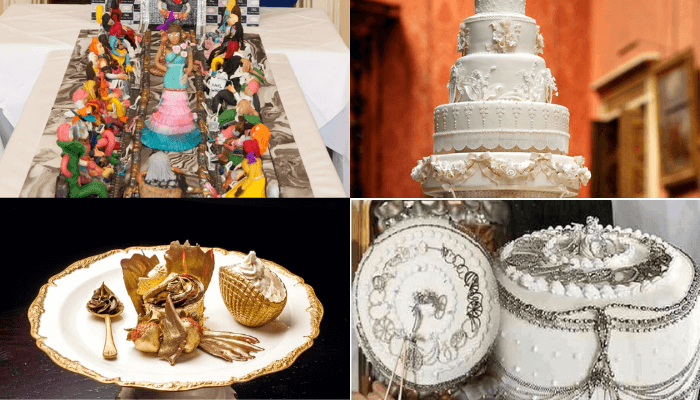
But I digress. One interesting leftover of the colonialists is one of my favourite pastries. Cakes. I love cakes. Chocolate cake, cheesecake, vanilla cake, and fruit cake. I love them, fluffy and the melt-in-the-mouth variety. I love the marble cakes, muffins and cupcakes [without cream for me, thank you]. In my past life, I used to love to bake, and I baked well. Pineapple upside down, fruit cake, cupcakes, marble cake. My kids loved it. But now I cede it to those whose art and baking are formidable.
Aisha Alkali makes the most decadent cupcakes [light as air, buttery and decadent cupcakes]. If too much was good for you, I would literally order her cupcakes every day. She says, “I learnt it from my mother. If you know, you know.”
Only recently did I turn a year older.
Last week I ran into a friend and sister at the shopping mall who felt bad that, because she was away, she had neither called nor sent a gift. She insisted on getting me a cake. We found a bakery shop; all the cakes were winking at me. ‘Choose,’ she said, and returning to my 8-year-old self, I picked the one with white icing and gold decoration. It was a sight for sore eyes. Come on, great for photography. I took my prize home with plans for tea. But the moment the knife had a reluctance syndrome in cutting the cake, I knew we were in trouble. One slice later and I was done. It was like chewing rubber. Some character had put this together and covered it in shine. It tasted nothing like the cake as I knew it. No fluff, no melt-in-the-mouth, just gooey sugar, heavy in the dough and very little butter. Were there eggs? Not too sure. Out of respect for the purchaser, I suffered through ¼ of the slice. It was, to say the least, a truly painful experience. But it is safe to say a cake is a cake, and why not? What is cake to me may be a different experience for someone else. If they have been eating rubber since they were nine years old and they’re 40 now, then rubber is the cake. No argument. As for me, a cake has to deliver a cake’s promise: gorgeous to look at and heavenly to the taste. If it feels like rubber and its denseness can serve as an instrument of pain if thrown at you, then I do not consider it a cake.
I have encountered these cakes in several supermarkets and shops where some strange concoctions are baked and decorated, which I call ‘kicks’. Rubberised in its extremity and pretending to be what they are not.

But the white colonial masters’ wives tried. These cakes, now morphed into different categories, types, and weights, can lead to war or even anger issues or depression. In the end, I am at Aisha Alkali’s door. Cupcakes, please. I rest my case.