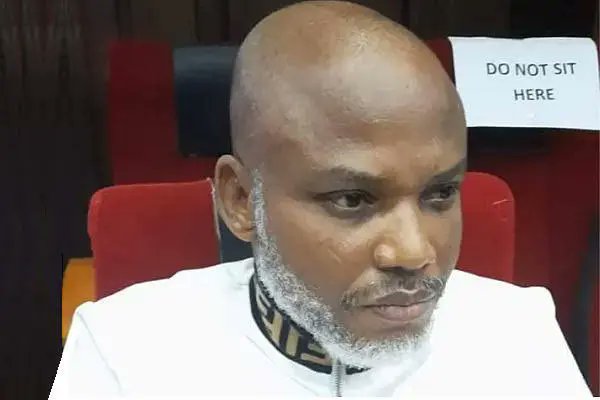
South-East political and socio-cultural leaders on Thursday intensified calls for a political resolution to secure the release of Indigenous People of Biafra leader Nnamdi Kanu, following his sentencing to life imprisonment by a Federal High Court in Abuja.
Deputy Speaker of the House of Representatives, Ben Kalu, speaking on behalf of South-East leaders, said they would immediately pursue dialogue with the Presidency, insisting that a political solution was both viable and necessary to prevent rising tensions.
“Now that the court has concluded its work, it is time to intensify the request for the President’s intervention,” Kalu said in a statement issued by his Chief Press Secretary, Levinus Nwabughiogu. “All hope is not lost. Our people should remain calm.”
Kalu expressed confidence that President Bola Tinubu would “listen to well-meaning Igbo leaders” and would not be opposed to a political settlement. His appeal for restraint was directed not only at residents of the South-East, but also at Nigerians concerned about renewed unrest.

Regional groups reject ruling
The sentencing immediately drew strong pushback from Igbo organisations.
Ohanaeze Ndigbo officials said the ruling marked a “black day” for the region, while the Igbo Community Association in Abuja warned that the decision could threaten the fragile calm recently restored in parts of the South-East.
The Coalition of South-East Youth Leaders said anxiety had already spread across the zone, urging President Tinubu to “temper justice with mercy”. Its President-General, Goodluck Ibem, said Kanu’s case had gone beyond legal arguments and touched on questions of regional inclusion and national cohesion.
The South East Revival Group went further, calling the conviction a “judicial aberration” and urging the Court of Appeal to intervene rapidly. The group also called on the National Judicial Council to review the conduct of the trial judge.
Legal team vows to challenge conviction

Kanu’s consultant, Aloy Ejimakor, said the defence team would head to the Court of Appeal, describing the decision as “a travesty of justice”. He reiterated that the legal battle would continue up to the Supreme Court if necessary.