A Nigerian-born engineering researcher, Mr Mayowa Oladele, is garnering international attention for his pioneering work on digital-twin systems designed to transform sludge management, biogas production and climate-resilient wastewater infrastructure.
Business Day learnt that the University of Connecticut (UConn) doctoral candidate is fast emerging as one of the most promising young innovators in the field of anaerobic digestion optimisation.
Anaerobic digesters are sealed tanks that convert organic waste into renewable biogas have long been central to wastewater treatment operations across the world. But Oladele’s work is pushing the boundaries of how these systems can be monitored and controlled.
Speaking on the motivation behind his research, he said, “We’re building tools that help entire cities manage waste, produce clean energy, and prepare for a more sustainable future.”

At UConn’s Chemical and Biomolecular Engineering Department, Oladele is developing hybrid digital twins that merge mechanistic models with advanced recurrent neural networks. According to him, the new modelling framework has achieved up to 90 per cent improvement in key performance predictions, a development that experts describe as a major stride toward next-generation wastewater-energy optimisation.
His findings have already appeared in respected peer-reviewed journals such as ACS ES&T Water. They have also featured at high-profile global scientific gatherings, including the AIChE Annual Meeting and ESCAPE/PSE, where researchers in process-systems engineering convene to discuss cutting-edge advances. “Sharing this work with the global community helps sharpen the science and broaden its impact,” he told our correspondent.
Beyond research, Oladele contributes to the academic community as a peer reviewer for top environmental and engineering journals. Colleagues familiar with his work describe him as a “rigorous and thoughtful scientist” committed to strengthening the integrity of emerging wastewater technologies.
The young engineer has also made notable contributions to the U.S. National Alliance for Water Innovation (NAWI). As a former Chair of the NAWI NextGen Leadership Council, he supported early-career professionals, helping build a stronger workforce for the water-energy sector. He noted, “Leadership in science is about lifting others. When the ecosystem grows, innovation grows.”
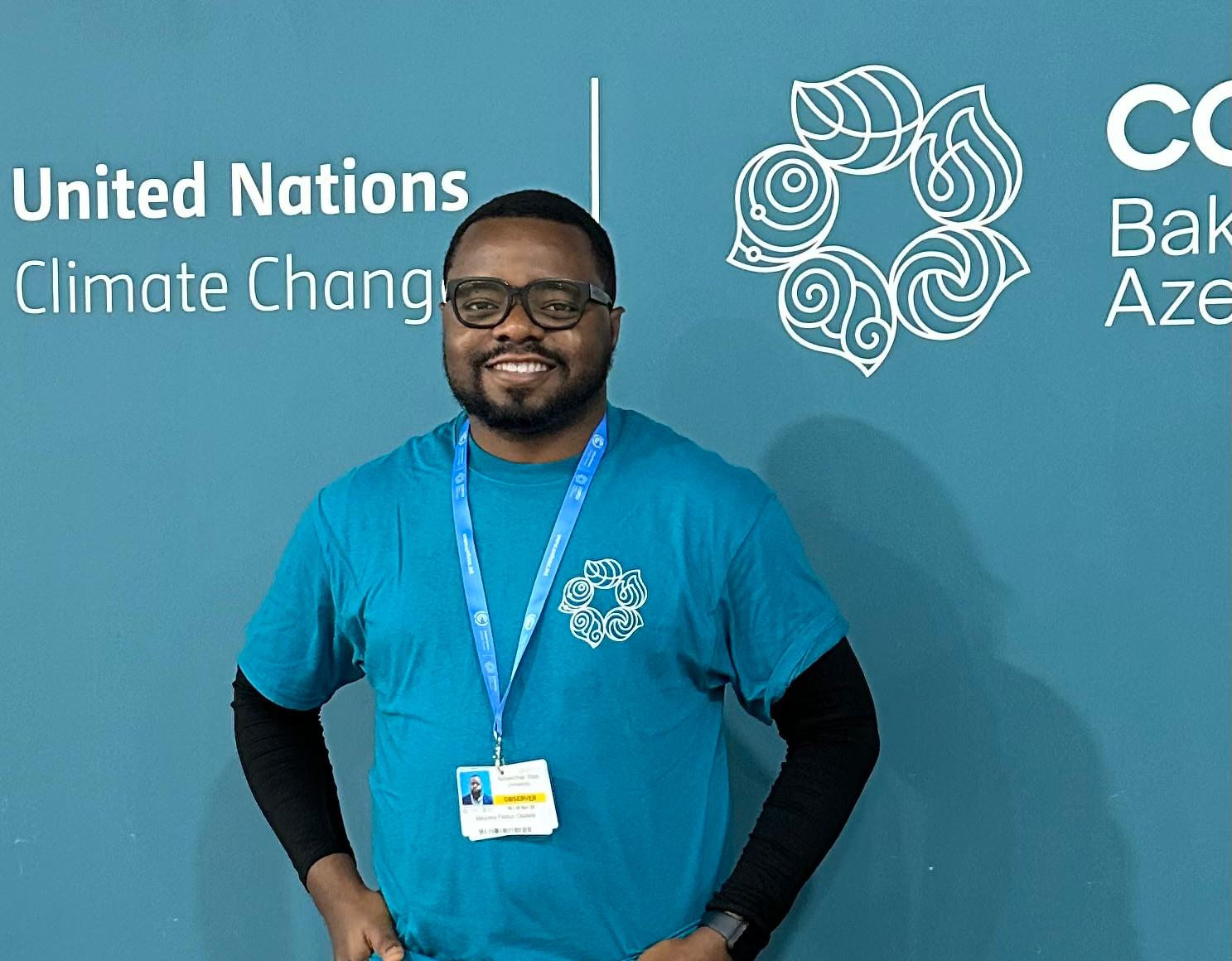
In 2024, Oladele joined UConn’s delegation to COP29, where he engaged global leaders on climate resilience, sustainable infrastructure and wastewater-energy transitions. His participation, according to UConn officials, highlights the university’s increasing role in shaping policy-relevant climate and infrastructure research.

Oladele has also been honoured with several engineering fellowships and academic awards, recognising both his technical contributions and his leadership in water-innovation spaces. Observers say such recognition underscores the rising influence of young African researchers in global sustainability science.
Deeply committed to impact-driven engineering, Oladele frames his work as a practical contribution to the United Nations Sustainable Development Goal 9, which focuses on infrastructure, innovation and industry. “As engineers, we’re not just improving efficiency on paper,” he stressed. “We’re solving real problems for real cities.”
Looking ahead, he hopes to expand digital-twin deployment across Africa to help modernise wastewater management and boost renewable-energy production in rapidly growing cities. His long-term mission, he said, is to “empower utilities with data-driven solutions that support environmental sustainability and resource recovery across the continent.”