For decades, one question has hung over Africa’s development ambitions: how can the continent industrialise without reliable power? It is a dilemma that continues to shape policy debates from Abuja to Pretoria as governments juggle the urgency of expanding electricity access with the global push toward cleaner energy systems.
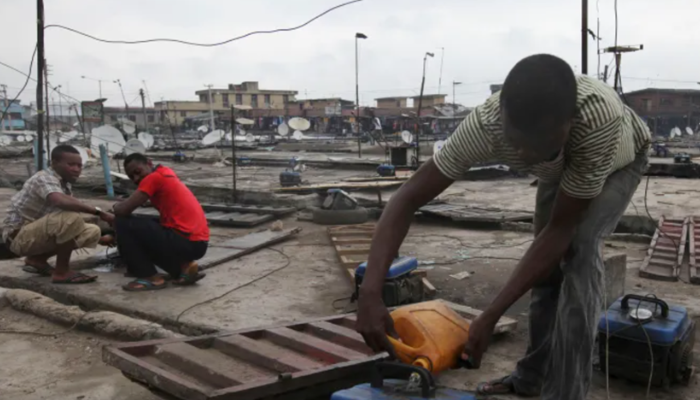
The challenge is immense. About 600 million people in sub-Saharan Africa still lack access to electricity, accounting for nearly 80 percent of the world’s unpowered population, according to the International Energy Agency.
The African Development Bank estimates that only 43 percent of Africans have access to electricity, compared with a global average of almost 90 percent. The economic cost is staggering; power shortages shave an estimated two to four percent off national GDPs annually, undermining competitiveness, investment, and industrial productivity.
Yet Africa’s energy debate is no longer simply about closing the access gap. As countries accelerate climate commitments and renewables expand, the continent is under pressure to define the role of natural gas in its energy future. For many policymakers, gas is less a contradiction to net-zero targets than a pragmatic bridge, cleaner than coal and diesel, flexible enough to stabilise grids, and abundant across the continent. Modern gas plants emit up to 60 percent less carbon dioxide than coal, making them a credible complement to intermittent solar and wind.

Read also: How Genesis Energy sparked a quiet boom in clean power
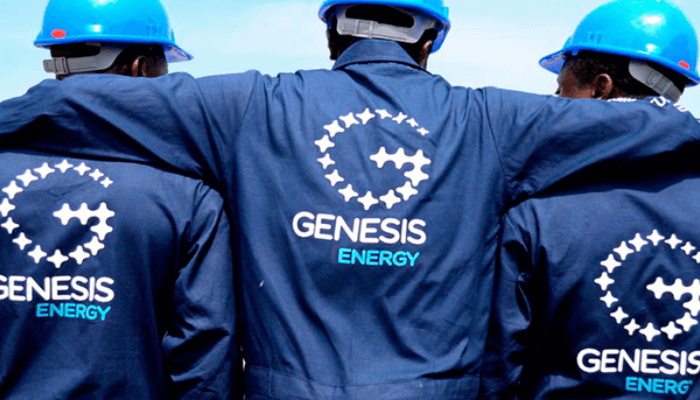
With more than 620 trillion cubic feet of proven natural gas reserves, 210 Tcf in Nigeria alone, African leaders are increasingly betting on gas-to-power as the backbone of industrial expansion. It is within this landscape that Lagos-based Genesis Energy Group has positioned itself as one of the continent’s fastest-growing private power providers.
Founded more than two decades ago, Genesis Energy has evolved from a niche energy services firm into a pan-African developer of gas-fired and hybrid power systems. Today, the company operates in 10 countries, including Nigeria, Benin Republic, Mali, Zambia, Mozambique, and South Africa. Its portfolio includes more than 458 megawatts of operational and under-construction capacity, with a development pipeline exceeding 4.5 gigawatts, an unusually large footprint for an African independent power producer.
“Genesis is building what many governments have struggled to deliver, reliable, distributed, commercially structured power projects that directly support industry,” said an energy sector consultant based in Johannesburg. “Their strategy is not just about electrons; it’s about enabling economic activity.”
At the heart of that strategy is gas.
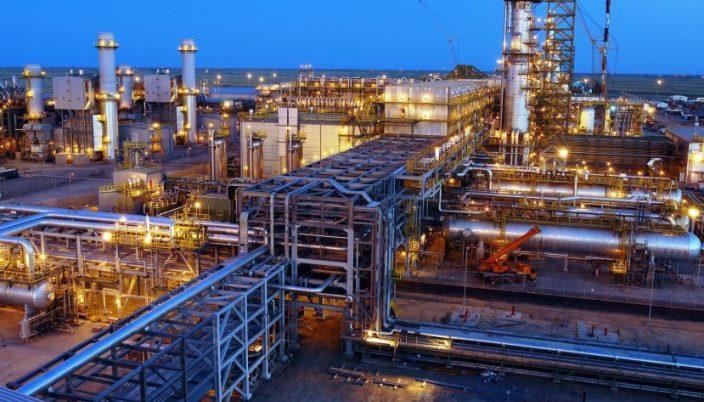
In Nigeria, Genesis Energy operates what is currently the country’s largest licensed private off-grid gas power plant, an 84MW independent power project supplying the Port Harcourt Refinery Complex.

The project is widely regarded as a milestone in Africa’s project-finance landscape, signalling renewed investor confidence in the viability of private gas-to-power solutions. Industry analysts say the project offers a template for powering heavy industrial clusters without straining fragile national grids.
The company’s reach extends well beyond Nigeria’s borders. In Mali, Genesis developed the country’s first LPG-to-power plant, a 600kW facility supplying cleaner, cheaper, and more reliable electricity to a cashew processing plant that previously depended on heavy fuel oil. This small-scale installation has become a case study for hybrid industrial electrification across francophone West Africa.
In the Benin Republic, Genesis is developing the country’s first independent power project, a 43MW gas-fired plant expected to generate 322 gigawatt-hours annually. The project is designed to cut Benin’s dependence on imported electricity, mainly from Nigeria and Ghana, while bolstering grid resilience.
Meanwhile, in Southern Africa, the company commissioned Africa’s first micro-LNG-to-power facility, a 1.5MW system built for off-grid industrial customers. The project demonstrates how modular gas solutions can serve remote mining, agro-processing, and manufacturing hubs that sit far from transmission lines.
Read also: Genesis Energy eyes 10.5GW in Nigeria, others
Across these markets, Genesis Energy’s solutions now reach an estimated 1.4 million households, with expansion plans targeting more than 11 million people by 2030 across 20 countries. For governments and development financiers, the company is increasingly seen as a bridge between large-scale national utilities and the distributed industrial power Africa urgently needs.
“Lighting Up Africa, One Community at a Time”, the company’s slogan, captures what executives describe as a blend of commercial discipline and development ambition. Genesis Energy’s model integrates local capacity building, environmental stewardship, and long-term operations and maintenance support, factors that have drawn partnerships with governments, multilaterals, and development finance institutions.
Speaking at the Africa Energy Week conference in Cape Town, the chairman of Genesis Energy Group underscored the company’s conviction that gas remains central to Africa’s industrialisation push.
“Gas-to-power is not a detour from climate action; for Africa, it is an accelerator,” he said. “By using domestic gas resources to generate reliable power, we can build industries, create jobs, and cut carbon faster than relying on diesel, coal, or biomass.”
As Africa races to meet the United Nations’ 2030 Sustainable Development Goal for affordable and clean energy, Genesis Energy’s gas-first but renewable-ready strategy offers one of the clearest illustrations of how the continent’s transition could unfold. It is a blueprint built on local resources, industrial demand, and pragmatic climate realities, one that positions gas not just as a fuel, but as a foundation for Africa’s next industrial era.