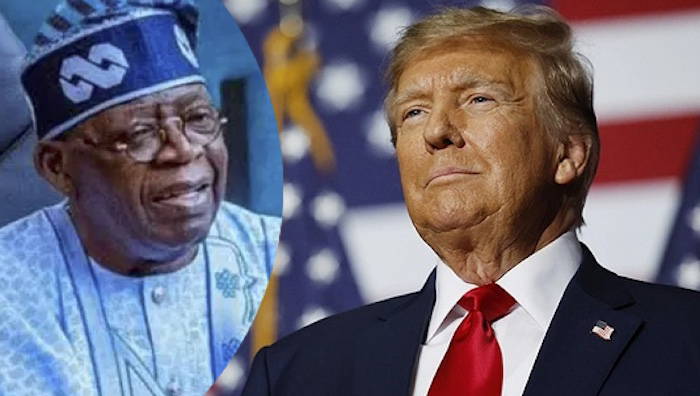
The United States House Subcommittee on Africa will, on November 20, 2025, hold a high-level public hearing to examine President Donald Trump’s redesignation of Nigeria as a Country of Particular Concern (CPC), a classification that could open the door to sanctions, restricted aid, and intensified US scrutiny of Nigeria’s handling of religious-freedom issues. The hearing, scheduled for 11:00 a.m. at the Rayburn House Office Building in Washington, marks the most significant congressional engagement yet on Trump’s revived claims of widespread Christian persecution in Nigeria.
The CPC label, currently awaiting Senate ratification, empowers Washington to impose targeted punitive measures on foreign officials deemed complicit in religious persecution. It also signals to the international community that the US believes religious freedom in Nigeria faces grave threats. The upcoming hearing will feature two panels of witnesses, including senior State Department officials Jonathan Pratt and Jacob McGee, alongside religious-freedom advocates and Nigerian clergy such as Bishop Wilfred Anagbe and Nina Shea.
Read also: US lawmakers to probe Trump’s CPC redesignation of Nigeria
President Trump reignited controversy on October 31 when he designated Nigeria a CPC, accusing the government of enabling severe violations of religious freedom and alleging that Christians face an “existential threat” from extremist groups. In subsequent remarks, he threatened to halt all forms of assistance to Nigeria and warned of potential US military action if the Nigerian government failed to “stop the killing of Christians.” Trump’s comments drew global attention and sharp criticism from Abuja.

President Bola Tinubu firmly rejected the US president’s assertions, describing them as a misrepresentation of Nigeria’s religious landscape. In a public statement, Tinubu stressed that Nigeria remains a democracy anchored on constitutional guarantees of religious liberty, insisting that the country does not tolerate or promote persecution of any faith group. He argued that narratives portraying Nigeria as religiously intolerant fail to reflect the nation’s multicultural and multi-faith reality.
However, several US lawmakers have echoed Trump’s concerns. Rep. Riley Moore, speaking on Fox News, accused Nigerian authorities of being “complicit” in religious persecution and cited blasphemy laws and high-profile legal cases as evidence of systemic violations. Moore insisted that Christians are disproportionately targeted, claiming a five-to-one ratio of Christian to Muslim fatalities in Nigeria’s conflict zones. He argued that the US has both a moral and strategic obligation to intervene when necessary.
Read also: US lawmakers push for visa bans, asset freezes in response to Nigeria’s violence
International voices have also joined the debate. Pope Leo XIV recently expressed alarm over escalating attacks on Christian communities in Nigeria and other countries, urging global prayers and collective action to end violence against religious groups. His comments followed mounting reports of killings, kidnappings, and destruction of worship centres attributed to extremist groups and militant herdsmen.
Amid the rising international attention, the Nigerian government has intensified local peace efforts. Last week, President Tinubu dispatched his community-engagement aide, Abiodun Essiet, to Plateau State, where she met Christian clerics, Fulani leaders, and community groups to address recurring tensions. Her visit resulted in the resolution of a local conflict involving farm destruction and compensation, part of broader efforts to reinforce peace and foster dialogue in the region.