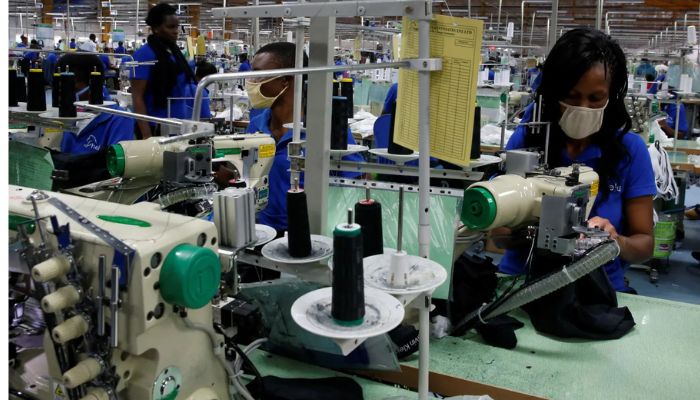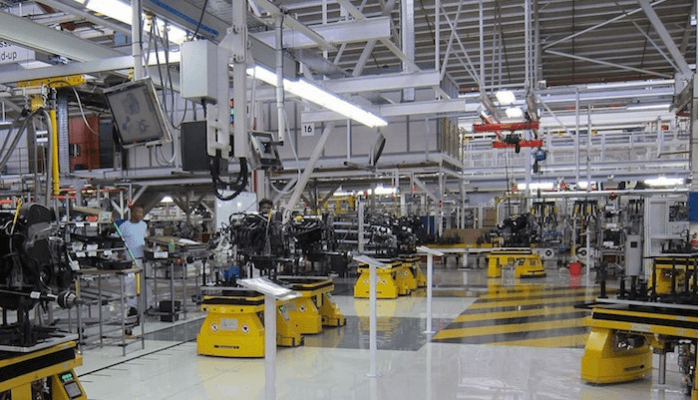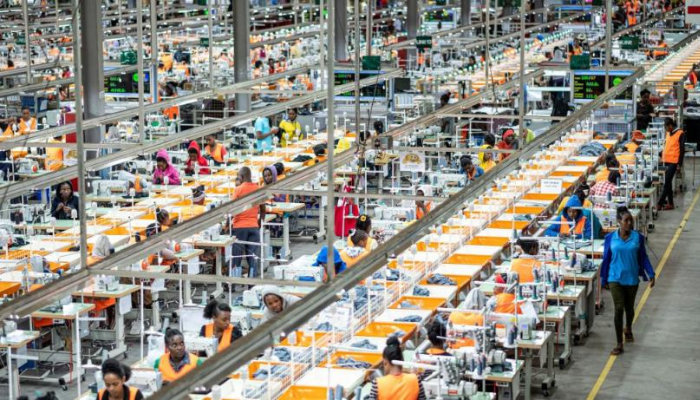
Nigeria’s future industrial success is heavily dependent on the productivity of its millions of small and medium-sized businesses, which form the backbone of the economy, according to experts.
The experts spoke at a press briefing on the Fate Foundation’s 11th Policy Dialogue Series on Entrepreneurship themed ‘From Enterprise to Industry: Unlocking MSME Potential for Nigeria’s Industrialisation.’
The experts noted that as the country strives to diversify and grow, enhancing the efficiency and output of small businesses is crucial.
This year’s theme really brings something important to the table, and the fact that Nigeria’s future industrial success depends on how productive our millions of small businesses are, said Cecilia Akintomide, chairperson, 2025 PDS technical committee, and chairperson at The Sanitation and Hygiene Fund.

Read also:Industrialisation, regional trade policy crucial to achieving Nigeria’s $1trn economy target – NESG
“We can’t keep treating entrepreneurship and industrialisation as two separate things,” she noted. “If we truly want growth that lasts, the two have to come together, and they have to come together fast,” she said.
She added that entrepreneurs need to be part of the country’s industrial story, and that Nigeria’s industrial policies need to make room for them to grow and scale.
She explained that despite SMEs accounting for more than 84 percent of employment in Nigeria, they are still stuck in low-productivity activities. “So, while entrepreneurship is booming, it’s not yet translating into the kind of productivity and industrial strength we need to move the economy forward.”
According to her, the country’s industrial future won’t be built by a few big players, but by millions of small producers upgrading their stills, improving productivity, and growing together to power a more inclusive economy.

She added that Fate Foundation will be launching two major reports next week on Wednesday at the Metropolitan Club in Lagos – the 2025 State of Entrepreneurship in Nigeria Report, and another titled “Beyond the Hustle: Nigeria’s Industrial Reawakening.”
“That second report takes a closer look at Nigeria’s industrialisation journey, and some of the findings are eye-opening.”
Femi Egbesola, vice-chair, 2025 PDS technical-committee and president, Association of Small Business Owners (ASBON), said that millions of small businesses struggle daily with power, finance, logistics, and inconsistent government policies.
These are not abstract issues, he noted, saying they are daily battles that determine whether a business survives or shuts down operations.
Giving highlights from the report, he noted that the report makes it clear that these obstacles to SMEs growth must be tackled. “If we don’t tackle these firm-level bottlenecks head-on, Nigeria cannot industrialise in a sustainable way.” “Industrial policy has to begin from where entrepreneurs are not from the top, but from the ground up.”
He said that Industrialisation is not just a policy slogan but about enabling production, helping businesses actually make things, adding that it is about creating decent jobs, and building strong domestic value chains that keep wealth circulating in our economy.
Read also: Manufacturers urged to embrace local machine building to drive industrialisation
“When small businesses thrive, industries are born, and when those industries begin to scale, entire economies transform. That’s the real pathway to inclusive growth,” he explained.
Nigeria’s industrial journey so far has been “top-heavy and bottom-fragile,” he said, explaining that it means only a few big conglomerates dominate, while millions of smaller entrepreneurs remain stuck in survival mode.
Speaking on the evolution of the policy series, Amaka Nwaokolo, director at The FATE Institute, said the Policy Dialogue Series began 11 years ago as a platform for constructive engagement between policymakers, business leaders, researchers, and development partners.
“Over the years, it has evolved into a national conversation platform that shapes MSME-related discourse.”
“Each year’s theme reflects the evolving policy priorities of our economy, and this year’s focus on industrialization through enterprise marks a critical pivot from entrepreneurship for survival to entrepreneurship for structural transformation.”