
Wike versus Naval Officer: Focus on civil-military relations in Nigeria’s democracy
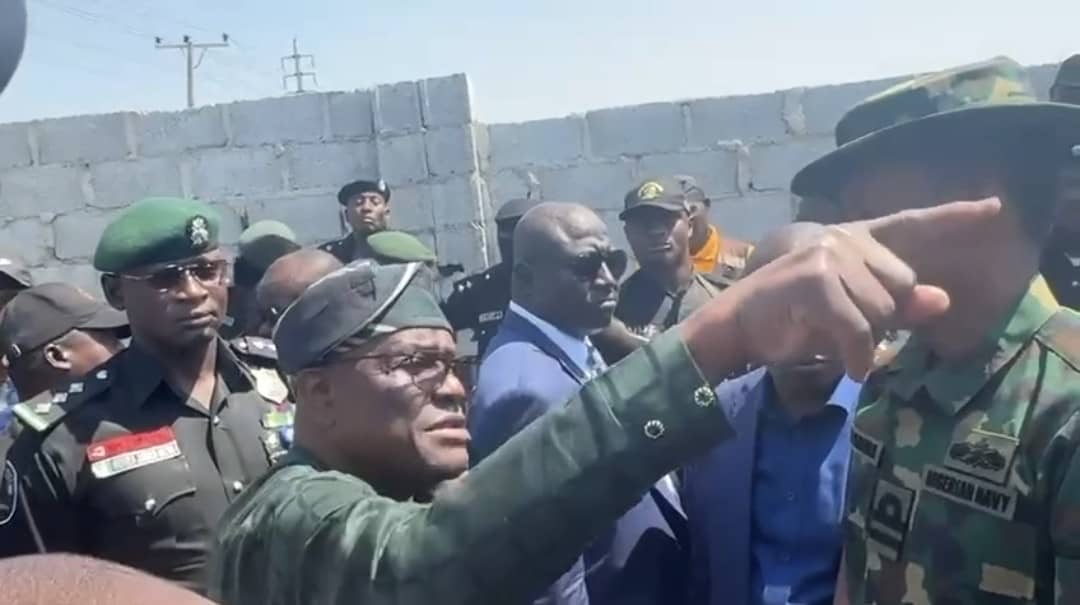
On 11 November 2025, Nigeria’s Federal Capital Territory (FCT) Minister, Nyesom Wike, became involved in a heated clash with naval officers during an official inspection of a disputed piece of land in Abuja. The incident, recorded on video, ignited a nationwide debate about power, authority, and the rule of law.
.
Wike was implementing the FCTA’s mandate against illegal development and land grabbing. The Ministry claimed that the contested land lacked valid ownership documents and building approvals.
Wike had a heated argument with the guarding officers, whom he accused of intimidating government officials. He used harsh language, calling an officer “a fool”.
The Naval Officer claimed he was acting on “orders from above”. The land is linked to a former Chief of Naval Staff, Vice Admiral Awwal Zubairu Gambo (rtd). He composed himself but maintained his stance against the minister’s team, insisting they were following orders and defending their integrity as commissioned officers.

Citizens and groups swiftly chose sides, with some backing the minister and others opposing him.
The decibel level against the minister and the stakes rose when General Tukur Yusuf Buratai asserted that Minister Wike had crossed the line. Buratai is a former Chief of Army Staff.
Buratai stated: “His public disparagement of a uniformed officer of the Nigerian Armed Forces transcends mere misconduct; it represents a palpable threat to national security and institutional integrity.
“A minister’s verbal assault on a military officer in uniform is an act of profound indiscipline that strikes at the core of our nation’s command and control structure. It deliberately undermines the chain of command, disrespects the authority of the Commander-in-Chief, and grievously wounds the morale of every individual who serves under the Nigerian flag.
“Such actions erode the very foundation of discipline upon which our national security apparatus stands.”
At play are constitutional, legal and political issues about the role of the military in Nigeria’s democracy. The problem has arisen frequently following an alleged failed coup that recently occurred.

Constitutional and political issues
In Nigeria’s democracy, the relationship between civil authority and military power is defined by constitutional provisions, shaped by a history of military rule, and tested by contemporary security and governance challenges.
The Nigerian Constitution establishes the legal basis for the armed forces and their relationship with the civilian government.
• Establishment and Duties: The Armed Forces of the Federation are constitutionally mandated to defend Nigeria against external threats, safeguard its territorial integrity, suppress insurrection, and assist civil authorities upon request by the President. This last role explicitly places the military under civilian authority.
• Reflecting the Nation: The constitution also requires that the composition of the armed forces “shall reflect the federal character of Nigeria,” integrating it into the democratic fabric of the state.
From Military Rule to Democratic Civilian Control
Nigeria’s history is crucial to understanding the current state of its civil-military dynamics.
• A Painful Past: The country was under military rule for most of its first 39 years of independence, a period marked by “economic collapse, political repression and systematic human rights violations”. This experience fostered a strong public aversion to military governance among those who lived through it.
• A Fragile Social Contract: Despite 25 years of continuous democracy, many citizens are unhappy due to economic difficulties and poor governance. This has led some younger Nigerians, who have no memory of military rule, to express a desire for its return, believing it might be more decisive—a view that often ignores the brutality and corruption of past regimes.
• Military’s Stated Position: The current military leadership has publicly affirmed its commitment to democracy. The Chief of Defence Staff stated that the armed forces are there to “protect democracy” and that those calling for a military takeover “do not love Nigeria”.
Read also: Meet Yerima, Navy officer who clashed with Wike
Contemporary Tensions and Challenges
In practice, the line between civil and military roles is often blurred, creating several ongoing challenges.
• The Militarisation of Civilian Tasks: Soldiers are often deployed to undertake responsibilities traditionally managed by the police, such as enforcing curfews, dispersing protests, and responding to natural disasters. This excessive reliance incurs serious costs, including human rights violations, corruption at checkpoints, and diverting resources away from primary security operations like counter-insurgency efforts.
• Erosion of Civic Space and Freedoms: Although the constitution guarantees freedoms of expression and assembly, these rights are frequently limited in practice. The government has disrupted public protests, as seen during the #EndSARS demonstrations, and has employed security forces to arrest activists. The previous ban on Twitter and the harassment of journalists also highlight a tense relationship between the state and civil society.
• Weak Oversight and Accountability: The constitution provides for parliamentary oversight of military deployment, but in practice, these checks are often feeble. This accountability gap can lead to military overreach in domestic operations with minimal consequences.
The Role of Civil Society
Civil society organisations serve as a vital counterbalance to state power and as protectors of democratic values.
• Promoting Accountability: They oversee government actions, reveal corruption, and champion the transparent management of public resources, which helps to establish a more accountable government.
• Defending Rights and Freedoms: These organisations serve as advocates for citizen participation, push back against restrictions on civic space, and work to uphold the rights of individuals and communities.
• Strengthening Democratic Processes: Through observing elections and promoting electoral reforms, civil society aims to safeguard the integrity of the political system, which is essential for maintaining legitimate civilian authority.
The balance between civil authority and military power in Nigeria remains a dynamic and evolving issue. The constitutional framework provides a strong basis for civilian control, but practical challenges related to insecurity, governance, and safeguarding civic freedoms demand constant vigilance from both the state and its citizens.
World Cup: Will the Super Eagles make it?
Sports-loving Nigerians will tune to their media channels tomorrow, Thursday, 13 November, as the national team takes on Gabon.
Pre-match reports focused on the suitability of their lodging and a boycott of their training yesterday.
Travel advisor Expedia.com said of the hotel. “Rive Hôtel in Quartier Hassan offers a peaceful escape from city bustle. Enjoy an English breakfast, explore, then savour international dishes at four restaurants or relax with drinks at the bar. Practical services include grocery shopping and dry cleaning.”
The Rive Hotel itself claims a four-star status.
Can the Super Eagles overcome their distractions? Tomorrow will tell.