Lagos says it is taking a deep plunge into its aquatic endowment with a view to exploring the ocean’s troves and harness the many potentials inherent in the blue economy.
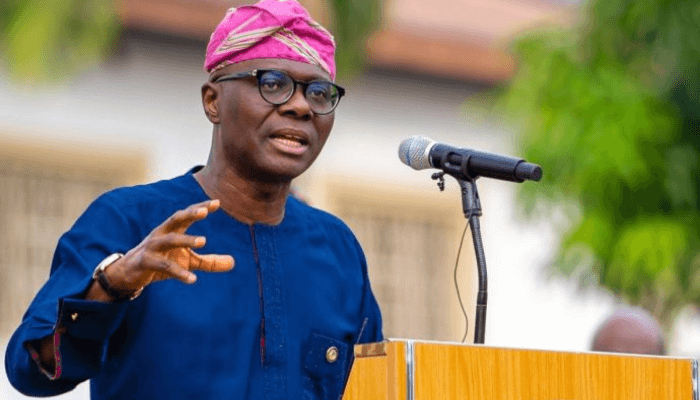
The state governor, Babajide Sanwo-Olu, says this new focus will unlock sustainable financing and pioneer innovative solutions that will safeguard the oceans, strengthen its coasts and usher in prosperity for future generations.
Sanwo-Olu, spoke at the 2025 Lagos International Climate Change Summit, which kicked off in Lagos on Thursday, with the theme: “Blue Economy, Green Money: Financing Africa’s Coastal Resilience and Ocean Innovation.”
The two-day summit drew participants from a large spectrum of stakeholders in both public and private sectors, including visionaries, innovators, financiers and policymakers.

The state’s Atlantic coastline has, over decades, been largely explored for recreational tourism, with limited economic attention to the vital elements in the aquatic ecosystem.
Sanwo-Olu said the time was ripe for Lagos to turn its blue waters into green wealth by fully exploring the water resources to build the economy of the future.
Creating a new economy out of the ocean, the Governor said, would be anchored on three interconnected pillars of building resilience, driving innovation and channeling financing into the aquatic ecosystem.
Read also: FG, LASG collaborating to broaden human development strategies – Sanwo-Olu
He said: “We are driving ocean innovation to reimagine commerce and mobility. And we are unlocking green and blue finance to power both. Lagos does not wait for the future; Lagos builds it. And this future is sustainable, inclusive and ocean-powered.

“Our approach to fully harness our aquatic ecosystem is anchored on three interconnected pillars of resilience, innovation and financing. We are building coastal resilience to protect lives and livelihoods.
“This offers a renewed call to global investors. We are saying that investing in Lagos’ resilience is not philanthropy; it is smart economics that will be seen as an investment in the stability of Africa’s most dynamic economy and the security of the continent’s coastal future.”
Sanwo-Olu said the summit was not only aimed at strengthening adaptation activities that would further secure the planet, but also creating a platform for innovators, policymakers and investors to develop a sustainable business model that would not alter the natural conditions of the environment.
Through the summit, the fovernor said Lagos was leading Africa’s efforts to explore green alternatives in building a sustainable economy. He said the State’s actions had proved that development and decarbonisation could be achieved together.
“The blue economy is not just an economic concept; it is a lifeline for the planet. The green transition is not an obligation; it is an opportunity to rebuild better. We must seize this moment to finance the tides of resilience, to turn our blue waters into green wealth, and to leave behind not just a livable Lagos, but a thrivable one,” Sanwo-Olu said.
Tokunbo Wahab, commissioner for the Environment and Water Resources, Tokunbo Wahab, said the summit offered participants a chance to reimagine their relationship with the ocean, not as a resource to be exploited but as a living system to be nurtured.
Wahab said despite the climate threats faced by the state, Lagos ocean remained a vital artery of commerce and source of countless livelihoods.