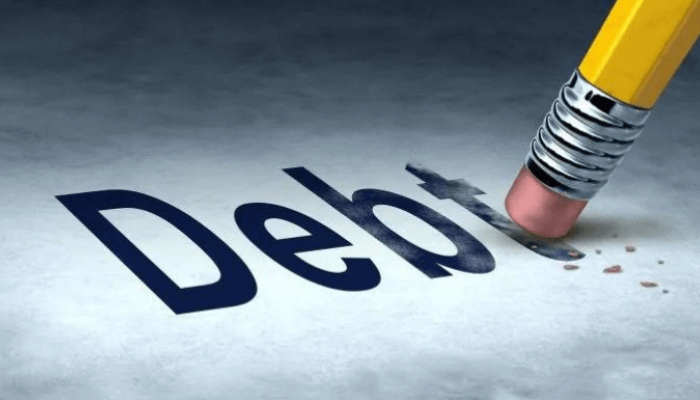
In the corridors of global finance, a quiet but consequential shift is underway. Wall Street is experimenting with a new phrase, “disaster debt”, shorthand for an emerging anxiety: that the developing world’s collective liabilities, now exceeding US$33 trillion, are approaching a breaking point. Behind the jargon lies a stark truth — global debt is entering an era of structural vulnerability. The question haunting trading desks in New York and London is no longer if sovereign stress will erupt again, but when and how it will be contained.
For Nigeria, this is not an abstract debate. It is a mirror reflecting our nation’s fiscal fragility, its reliance on debt-fuelled spending, and its exposure to volatile global liquidity. The country’s financing architecture, a complex weave of Eurobonds, domestic instruments, and swelling service obligations, places it squarely in the line of fire should the global order of sovereign credit be rewritten.
“Nigeria already faces some of the steepest sovereign yields globally, and embedding debt-relief expectations could push them higher still, crowding out private investment and deterring long-term capital.”
What was once taboo, sovereign debt restructuring, is rapidly becoming mainstream. Creditors and intermediaries are exploring frameworks that would allow debts to be automatically adjusted under conditions of extreme distress: contingent haircuts, coupon step-downs, or maturity re-profiling triggered by predefined economic thresholds. The rationale is practical. A rule-based, pre-emptive restructuring could avert the chaos of a disorderly default and prevent contagion across markets. Yet, for borrowing nations, the implications are far from benign. If investors internalise the idea that future relief is built into contracts, they will demand higher yields upfront. The invisible glue of sovereign finance — confidence — risks being permanently weakened.
This evolving logic is already reshaping emerging-market dynamics. Stronger credits, such as Chile or Indonesia, may remain within the “safe corridor”, while weaker credits drift into quasi-distress, where every policy misstep triggers capital flight. The result is a deeper segmentation of risk: wider spreads, heightened volatility, and a self-reinforcing cycle of fragility. Traditional mechanisms—the Paris Club, IMF programmes, and bilateral arrangements—are struggling to cope with the complexity and scale of modern sovereign debt, where private creditors now dominate exposure. The playbook for crisis management is being rewritten in real time.

As of June 2025, Nigeria’s external debt stood at US $45.98 billion, up from US $43 billion at the end of 2024, reflecting both new borrowing and revaluation effects. Domestic debt remains the mainstay of financing, with yields on 10-year FGN bonds hovering near 15.7 per cent — among the highest in the developing world. The Central Bank of Nigeria’s policy rate, even after a modest cut, remains elevated at 27 percent, underlining the cost of capital in an economy battling to reconcile growth with stability. Inflation, though easing, persists at roughly 22 per cent, while external debt now accounts for nearly 29 per cent of gross national income, a ratio trending upward. These metrics expose a painful squeeze: debt service consumes an ever-larger share of revenue, crowding out spending on infrastructure, health, and education.
If “disaster debt” clauses were to become standard, Nigeria could, in theory, gain breathing space during crises—a rule-based pause on payments triggered by oil-price collapse or sharp naira depreciation. But this relief is double-edged. Anticipation of future restructuring could push borrowing costs higher today, as investors demand a premium for uncertainty. Moreover, such frameworks could impose new constraints: tighter covenants, greater creditor oversight, and reduced fiscal autonomy. Nigeria’s reputation could slip from “high-yield” to “high-risk”, eroding access to markets and raising refinancing costs—a perilous loop of dependence.
The risk materialises through three interlocking channels. First, the cost of capital. Nigeria already faces some of the steepest sovereign yields globally, and embedding debt-relief expectations could push them higher still, crowding out private investment and deterring long-term capital. Second, rollover risk. A significant portion of Nigeria’s obligations must be refinanced annually; should investor appetite falter, maturities could cascade into technical default, unsettling domestic banks heavily exposed to government securities. Third, policy compression. Triggers for automatic restructuring could force fiscal and monetary tightening prematurely — imposing austerity just when stimulus is required, deepening recessions and stalling recovery.
Read also: More than just debt: The five hidden consequences of a bounced cheque in Nigeria
A plausible stress scenario brings this into focus. Imagine a 30 percent drop in global oil prices coupled with renewed naira depreciation. Revenues would collapse, reserves would drain, and credit markets would recoil. Under a disaster-debt framework, creditors could immediately invoke adjustment clauses, demanding coupon cuts or reprofiling. In such moments, Nigeria’s survival would hinge less on legal provisions than on credibility — the trust investors place in its institutions, coherence of policy, and political will to execute reforms.

Despite vulnerabilities, Nigeria is not without buffers. Adjusted for swaps and forward commitments, foreign-exchange reserves reached US $23.1 billion in April 2025—their highest in three years—offering modest liquidity protection. Investor sentiment, though cautious, has not evaporated. In the first half of 2025, foreign portfolio inflows surged to US$5.64 billion, a 67 per cent year-on-year increase — proof that yield-hungry investors still see opportunity amid risk. The government’s successful issuance of a US$500 million sovereign sukuk and planned US$2.3 billion in new borrowings suggest an effort to diversify financing through green bonds, diaspora instruments, and asset-backed structures. Handled prudently, these innovations could bolster Nigeria’s negotiating position in any future restructuring by showcasing proactive liability management rather than reactive crisis control.
Still, sustainability cannot be manufactured through clever instruments alone. True solvency requires economic transformation — productivity growth, export diversification, and institutional credibility. Without structural reform in power, manufacturing, agriculture, and public finance, any relief mechanism would merely defer insolvency. Oil revenues still account for about 80 percent of export earnings, leaving the economy perilously exposed to commodity shocks that can erase fiscal progress overnight. To fortify resilience, Nigeria must deepen financial transparency, strengthen debt reporting, and ensure hidden liabilities do not distort risk perception. Revenue reform is equally urgent: expanding the tax base, curbing leakages, and boosting non-oil income are essential to fiscal sustainability. Meanwhile, active liability management — through swaps, buybacks, and tenor extensions — should become a standing policy tool, signalling strategic intent to both domestic and foreign creditors.
Nigeria also has a strategic role to play beyond its borders. If the next generation of sovereign restructuring rules is drafted solely in New York or London, emerging nations risk negotiating perpetually from a position of weakness. As Africa’s largest economy, Nigeria has both the stake and the stature to advocate for fairer frameworks — ones that balance creditor discipline with developmental space.
Ultimately, “disaster debt” is both an opportunity and a warning — a promise of orderly relief that could, paradoxically, make debt costlier and capital more discriminatory. In this emerging order, survival will hinge not on optimism but on credibility. For Nigeria, resilience must become a deliberate policy — built through reform, transparency, and prudent engagement. The era of cheap, forgiving capital is almost certainly over; the next phase of global finance will reward nations not for avoiding crisis but for proving they can manage it with steadiness and strategy. Resilience is no longer optional. It is the new currency of trust.
Dr Hani Okoroafor is a global informatics expert advising corporate boards across Europe, Africa, North America, and the Middle East. He serves on the Editorial Advisory Board of BusinessDay. Reactions are welcome at doctorhaniel@gmail.com.