Nigeria’s path toward renewable energy is often told through numbers, either megawatts, investments, and capacity additions. But behind the figures lies a more fundamental challenge: the people who must install, maintain, and manage the systems that will power the future.
That is the gap Instollar, a Lagos-based renewable energy workforce platform, has been quietly filling for nearly three years. Founded in 2022, the company connects solar energy firms with vetted, certified technicians, ensuring that as the solar industry expands, there’s a capable and trusted workforce to sustain it.
Instollar’s model is both simple and transformative, which is a blend of digital technology, technical training, and data-driven management that formalizes what has long been an informal sector. By providing structure, visibility, and trust, it has turned scattered freelance labour into a reliable national network of green energy workers.
According to co-founder and CEO Chinwe Udo-Davis, the company’s mission is rooted in necessity. “We can’t talk about clean energy at scale if there aren’t enough people to build and maintain the systems,” she said.

A platform three years in the making
Before it officially launched, Instollar had already done the hard work through training, verification, and field deployment. The platform now boasts over 1,200 certified installers and has facilitated more than 2,000 solar installations across Nigeria’s 36 states.
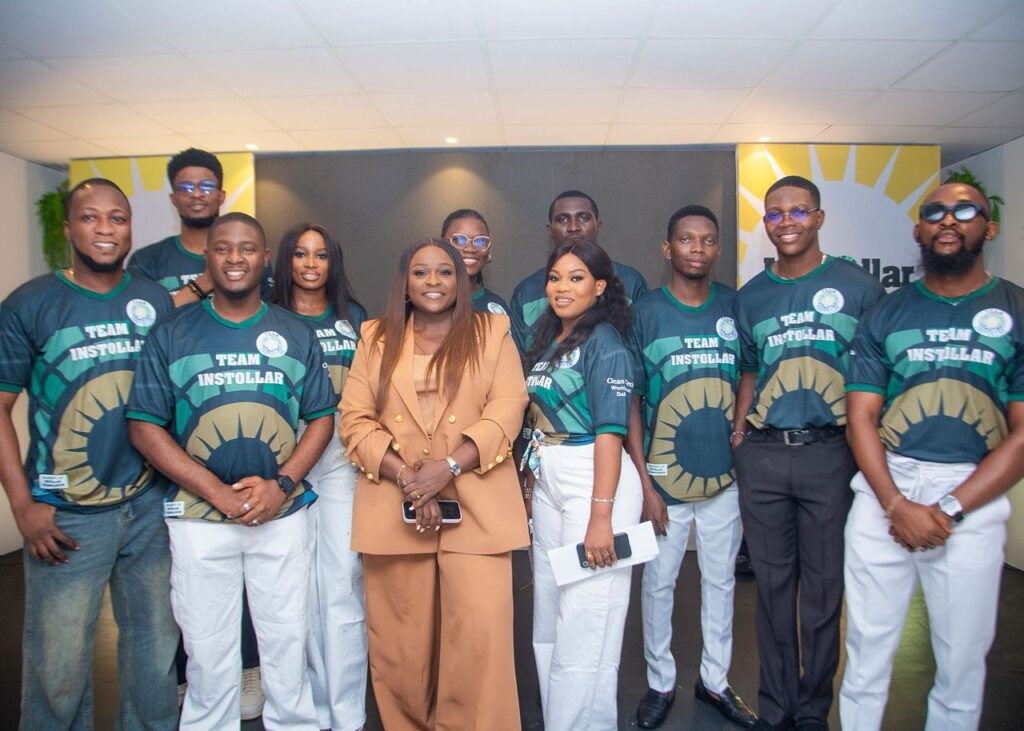
After almost three years of quiet operation, Instollar officially launched on October 27, 2025, in Lagos. The event brought together family, industry supporters, and partners, but the most compelling stories came from those whose lives the company had already touched.
Promise Okon and Ibrahim Adulwaheed, both trained engineers and trained through Instollar, spoke about how the platform helped them secure consistent work and improve their professionalism. “It’s more than a platform,” Okon said. “It’s a pathway to stability in a sector that’s often unpredictable”

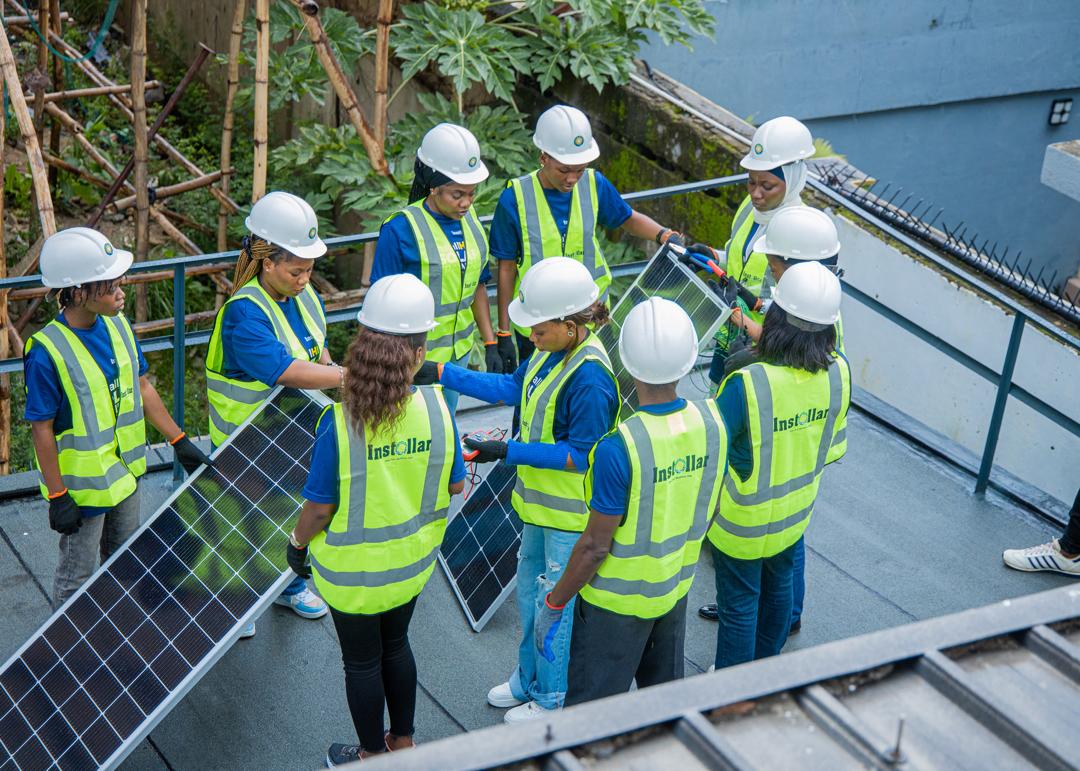
Empowering women through InstallHER
Among Instollar’s defining initiatives is InstallHER, a programme designed to train and empower women in solar technology, a field still largely dominated by men.
One of its early beneficiaries, Grace Gbengero, shared her experience at the launch. “Before InstallHER, I never thought I could work in energy,” she said. “Now I’m earning, and as a technical sales manager I have met my yearly target before the end of the year”
The programme aims to train 10,000 women technicians by 2030, creating a generation of women-led impact within Africa’s green workforce. InstallHER aligns directly with Sustainable Development Goals 5 and 7 , which focus on gender equality and affordable clean energy, demonstrating how inclusive participation can strengthen Nigeria’s energy transition.
Aligning policy and people for the energy future
Instollar’s relevance extends far beyond its business model. It offers policymakers and investors a blueprint for linking renewable energy expansion with job creation and inclusion.
By generating data on workforce capacity, skills gaps, and regional demand, the platform is helping shape conversations around how Nigeria can sustainably scale its energy transition. For investors, it signals a shift in how impact is measured, not just in kilowatts installed, but in livelihoods supported.
The company’s approach mirrors a broader truth: technology alone cannot solve Nigeria’s power challenges. The country’s energy future depends on human capital made up of skilled technicians, inclusive opportunities, and systems that recognize people as infrastructure.
As Udo-Davis reflected at the launch, “Africa’s energy transition won’t be driven by the sun alone. It will be driven by hands of people who are skilled, trained, and ready to work.”
As the country pushes toward cleaner, more sustainable power, it’s companies like Instollar that remind us that harnessing the power of the sun requires human capital.