…Sets 10-Year Minimum for rapists
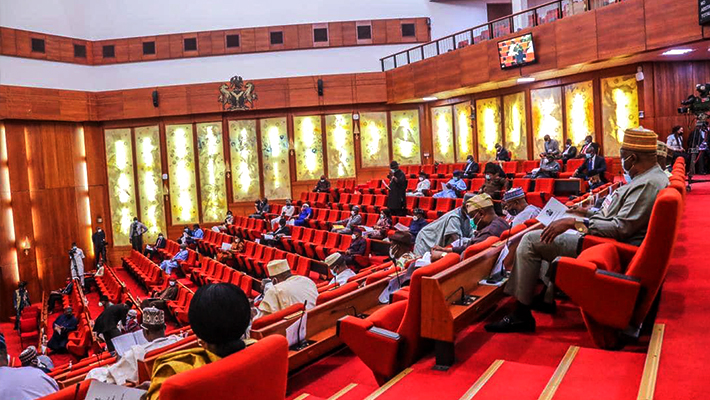
The Nigerian Senate, on Tuesday, approved life imprisonment for anyone convicted of sexually defiling a minor, as part of sweeping amendments to the Criminal Code Act (Amendment) Bill, 2025, transmitted from the House of Representatives for concurrence.
The upper legislative chamber said the new penalty was aimed at deterring offenders and protecting Nigerian children from sexual abuse, describing it as “a grievous crime capable of destroying a child’s life forever.”
Presiding over the session, Senate President Godswill Akpabio declared, “Defilement is even more serious than rape.

“It is a very serious issue and should carry the most severe punishment. Any defilement of a minor in Nigeria henceforth attracts life imprisonment.
“Let everyone be aware.”
The bill’s passage comes amid mounting outrage over rising cases of child sexual abuse, with reports from rights groups and law enforcement agencies indicating that Nigeria has recorded an alarming surge in cases involving children as young as five being assaulted by adults, including family members, teachers, and clerics.
Read also: Edo varsity queries lecturer over alleged rape of food vendor
Presenting the motion, former Nigeria Labour Congress President, Senator Adams Oshiomhole (APC–Edo North), argued that the offence of defiling a minor should be treated differently from that of raping an adult.

“A minor is a child who cannot give consent and whose life can be permanently damaged by such an act. Those involved in defilement deserve severe punishment,” he said.
He added, “I propose 20 years penalty for anyone found guilty. There are disturbing cases involving children as young as five or ten.”
Jibrin Barau, Deputy Senate President, supported Oshiomhole’s position, insisting that offenders should face punishment without the option of a fine.
Although Oshiomhole’s proposed 20-year sentence gained traction, Adamu Aliero (Kebbi Central) called for stiffer punishment, saying, “I want to propose that the punishment for defilement of minors should be life imprisonment, regardless of the offender’s gender.”
His position was backed by Senator Solomon Adeola (Ogun West), who maintained that the gravity of the crime warranted the maximum penalty.
When Akpabio put the motion to a voice vote, the “ayes” were overwhelmingly in the majority.
The Senate President then ruled, “I hereby move that henceforth, any man or woman who is guilty of defiling a minor should be sentenced to life imprisonment.”
In addition to the new penalty for child defilement, the Senate also approved a minimum of 10 years’ imprisonment for rape and other forms of forced sexual intercourse, regardless of the victim’s gender.
Read also: Kogi State Government pledges justice for 3-year-old rape victim
Clause 2(1) of the amended bill provides that, “Any person who detains a man or boy, a girl or a woman against his or her will in any premises to have unlawful carnal knowledge of him or her, commits a felony and shall be liable to imprisonment for not less than 10 years.”
Although, Adamu Aliero had earlier proposed life imprisonment for rape, the chamber settled on 10 years as the minimum sentence upon conviction.
During deliberations, Oshiomhole urged the Senate to recognize that rape victims could be of any gender.
He said, “The rapist could be a male raping a male, a male raping a female, a female raping a female or a female raping a male.”
Consequently, the Senate amended the clause to cover both male and female victims.
However, the Senate stepped down further consideration of sections relating to pregnancy termination and abortion, referring them to the Committee on Judiciary, Human Rights and Legal Matters for more detailed review.
Senators expressed concern that vague language in the abortion provision could criminalize doctors performing emergency life-saving procedures.
Senator Abdul Ningi warned, “If left vague, the provision could put doctors in a difficult position when they need to save a woman’s life through abortion.
“The law must clearly define what constitutes an unlawful abortion.”
A brief procedural disagreement also occurred when Senator Natasha Akpoti-Uduaghan sought to revisit the abortion clause after it had been stepped down.
Oshiomhole objected on procedural grounds, citing fairness to other lawmakers.
Ruling on the matter, Akpabio said, “Since the Senate has already reached a conclusion and stepped down this matter, it shall be out of order to reopen it. I therefore rule Senator Natasha out of order.”
The committee was given two weeks to study the matter and report back to the Senate.
If signed into law, the amended Criminal Code will replace outdated penalties under existing statutes and ensure stiffer sanctions for sexual offences, particularly against minors.