Buzz about the proposed Country of Particular Concern (CPC) on Nigeria by the USA
The Senate has tasked a committee with examining the issue and formulating an official position. However, the federal government dismisses these efforts as misguided and ill-intentioned, while a report from a “fact-finding” mission causes considerable embarrassment.
The buzz is about a plan in the United States Senate to designate Nigeria as a Country of Particular Concern.
A U.S. “Country of Particular Concern” (CPC) designation for Nigeria would have substantial consequences, potentially straining diplomatic relations, affecting security cooperation, damaging Nigeria’s international reputation, and impacting its economy.

What does a CPC label mean for Nigeria?
• It could strain bilateral relations and lead to diplomatic tensions.
• It might reduce US security aid, intelligence exchange, and joint counter-terrorism efforts.
• Effects on economic and trade cooperation. It could disrupt trade agreements, increase regulatory scrutiny on exports, and potentially reduce
Foreign Direct Investment (FDI)

• Furthermore, it could damage Nigeria’s international reputation, strengthening perceptions of human rights abuses and religious intolerance.
• Finally, it could prompt the US to apply targeted sanctions on officials, such as travel bans and asset freezes.
The Designation and Context
• What is a CPC? The “Country of Particular Concern” (CPC) designation is an official classification by the U.S. Secretary of State for countries accused of engaging in or tolerating “systematic, ongoing, and egregious violations of religious freedom” under the International Religious Freedom Act (IRFA).
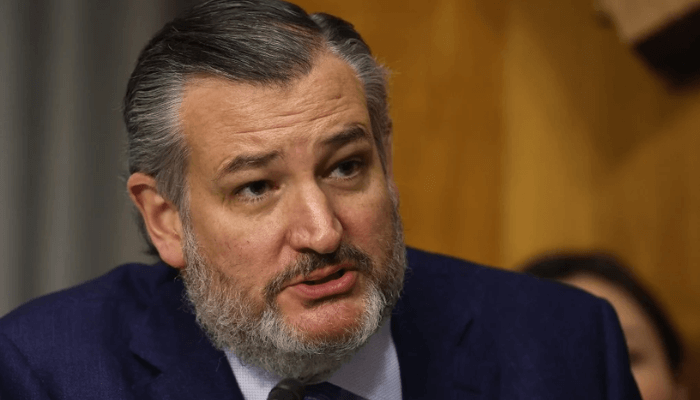
• The Current Push: In September 2025, U.S. Senator Ted Cruz introduced the Nigeria Religious Freedom Accountability Act of 2025. This bill seeks to compel the State Department to redesignate Nigeria as a CPC and impose targeted sanctions on specific Nigerian officials accused of enforcing blasphemy laws or tolerating religiously motivated violence. This push is supported by the U.S. Commission on International Religious Freedom (USCIRF), which has recommended this designation for years.
• Nigeria’s Official Stance: The Nigerian government, through its House of Representatives, has unanimously rejected the proposed U.S. bill.
Lawmakers argue that it is based on “incomplete and de-contextualised assessments” and mischaracterises Nigeria’s complex security crises—which involve insurgency, criminal banditry, and farmer-herder conflicts—as purely religious persecution. They have pledged to use diplomatic channels to counter these narratives.
Perspectives from Within Nigeria
Views within Nigeria, particularly among Christian leaders who are often the focus of these reports, are mixed, reflecting the complexity of the situation:
• Support for the Designation: Some religious figures, like Fr. Maximilian Okpong Peter, agree that the designation reflects a painful reality, stating it is “tied to deep socio-political divisions and bad governance.” Others see international pressure as a necessary check on the government, hoping it will force officials to “sit up” and prioritise protecting citizens.
• Belief that the Situation Has Improved: Some church leaders, such as Fr. Lawrence Emehel, question the timing, arguing that while severe persecution occurred in the past, “the situation today is not as widespread or as dangerous as it used to be.”
• A Nuanced View of Violence: Several voices warn against viewing all violence solely through a religious lens. Fr. Solomon Patrick Zaku observes that “the insecurity in Nigeria affects all. Christians, Muslims, and traditional believers,” even though Christians have experienced it in unique ways.
Expert testimony to the U.S. Congress also stressed that attributing the conflict to religion alone overlooks deeper causes, such as governance failures and competition for resources.
2. The Reno Omokri complication
Social media influencer Reno Omokri is actively leading a campaign against the potential U.S. designation of Nigeria as a “Country of Particular Concern” (CPC). His efforts involve public statements and organising a fact-finding delegation from the U.S., though his stance faces opposition from both American and Nigerian figures.
He is working with the Office of the National Security Adviser.
Complications set in at the press briefing, where a US delegation member denounced Mr Omokri’s claims and his description of the situation.
Mr Omokri argues that terrorists target both Christians and Muslims, with victims often belonging to the dominant religion of the area.
• Attributes insecurity to the aftermath of the 2011 NATO intervention in Libya.
• Organised a U.S. fact-finding delegation to Nigeria.
Mike Arnold, the former Mayor of Blanco, Texas, and a member of Omokri’s fact-finding delegation, believes that the violence constitutes a genocide against Christians. Arnold asserts that the violence is a “calculated and long-running genocide.” He based his perspective on numerous visits to Nigeria and interviews with affected communities.
3. No more Mathematics obstacle for Arts students
The Federal Government has officially removed the compulsory credit pass in Mathematics as an entry requirement for students seeking admission into Arts and Humanities programs. This change is part of the newly revised National Guidelines for Entry Requirements into Nigerian Tertiary Institutions announced in October 2025.
It cuts across the degree, National Diploma, and Higher National Diploma.
Reasons and Reactions Behind the Policy Change
The Minister of Education, Dr Tunji Alausa, stated that this reform is a “deliberate effort to expand access to tertiary education.” The government aims to remove a significant barrier for many qualified candidates who excelled in creative and literary subjects but struggled with Mathematics, thus preventing them from gaining admission. It is estimated that this policy could open opportunities for an additional 250,000 to 300,000 students to be admitted each year.
The policy has sparked a public debate:
• Supporters see it as a brilliant reform that democratizes education and allows students to focus on their strengths.
• Critics argue that it is a terrible idea, expressing concern that foundational numeracy skills are essential for everyone and that the move might be detrimental in the long run.
The optimistic view of the removal
For generations, the narrative for students passionate about literature, history, art, and philosophy was often overshadowed by the “obstacle” of mathematics. The idea that this obstacle is now disappearing is significant. Let’s examine what this means.
Why Mathematics Felt Like an Obstacle
The “Fixed Mindset’ Label: Struggling with maths was often misunderstood as a lack of overall intelligence, which could be very discouraging for a creative student.
Irrelevance to Passion: When your dream is to write a novel or understand Renaissance art, solving for x in a quadratic equation can seem not just tricky, but completely pointless.
Gatekeeping for Education and Careers: Certain university programmes and career paths require specific maths credits, effectively blocking talented arts-inclined individuals.
How the Obstacle Is Being Dismantled
The statement “No more Mathematics obstacle” is becoming increasingly true for several reasons:
1. The Redefinition of “Math Literacy. The focus is shifting from advanced calculus to practical, applicable skills. For arts students, this means:
-Data Literacy: Understanding charts, graphs, and statistics in social studies, economics, and polling data.
– Financial Literacy: Managing a budget, understanding taxes, and calculating royalties or project grants.
-Logical Reasoning: The core of maths is logic, which is essential for constructing a solid argument in an essay or thesis.
2. Technology as the Great Equaliser. We no longer need to be human calculators. Powerful tools handle complex calculations, allowing us to focus on application and interpretation.
– Spreadsheets (Excel/Google Sheets): For budgeting, data organisation, and analysis in arts management, research, and freelancing.
– Statistical Software: User-friendly programs can help sociology or psychology students analyse survey data without manual calculations.
– AI and Digital Tools: Can assist with everything from basic arithmetic to generating visual data representations.
3. The Rise of Interdisciplinary Studies
The modern world values hybrid skills. The most interesting solutions often emerge at the intersection of arts and STEM (STEAM). An arts student with even basic, comfortable numeracy is powerfully positioned:
– Digital Humanities: Using data analysis to study patterns in literature or history.
– Arts Management: Running a gallery, theatre, or non-profit requires budgeting and fundraising.
-User Experience (UX) Design: Combining psychology (a social science) with data-driven design principles.
– Tech Writing/Editing: Explaining complex technical concepts requires clear, logical thinking.
What This Freedom Actually Means
It does not mean “Arts students can now be ignorant of numbers.” It signifies:
The anxiety, gatekeeping, and sense of intellectual inadequacy are no longer necessary. Mathematics can be transformed from a feared obstacle into a practical toolkit.
You no longer need to be a “math person” to succeed. You just have to be a “curious person” who isn’t afraid to utilise the available tools to solve problems related to your passion.
Therefore, the new mantra for arts students is not ‘I can’t do maths,” but rather:
‘I can understand the data that informs my research.’
“I can manage the budget for my creative project.”
‘I can leverage technology to handle calculations.’
“My intelligence is not defined by my ability to integrate a function, but by my ability to think critically, create meaning, and communicate powerfully.’
The obstacle was not the mathematics itself, but the burden of anxiety and rigid systems built around it. Removing that burden allows the arts to embrace the parts of numeracy that genuinely serve its purpose: to understand, critique, and shape the human world.