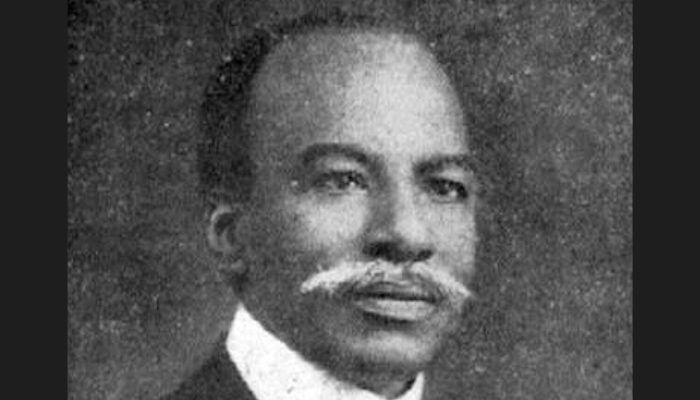
The news came out of Aso Rock the other day that Herbert Olayinka Samuel Heelas Badmus Macaulay, a man with several fond soubriquets, including ‘Ejò n’gboro’ (‘green snake on the loose’) has finally received executive pardon from the President of Nigeria for ‘crimes’ committed a century ago.
He had disputed the charges and averred that they were designed by the colonial authorities to destroy him politically. And they did, almost. He would have sat on the Lagos Legislative Council from 1923 onwards without the conviction, and who knew what could have happened subsequently on the national scene, after he co-founded and led the National Council of Nigeria and the Cameroons (NCNC)? His grip on the party, with the massive support of Lagos elites and the financial muscle of Madam Pelewura and her Market Women, would have been unshakable, with eyes bent towards eventually becoming leader of Nigeria, in the manner that his deputy Nnamdi Azikiwe eventually did. The story of Politics in Nigeria would have been different, perhaps.
“He was convicted of embezzlement and sentenced to five years imprisonment – a harsh punishment, according to historian Patrick Dele Cole.”
After studying the UK and becoming Nigeria’s first Surveyor, Macaulay joined the colonial service as ‘Surveyor of Crown Lands’ in 1893.
A growing disgruntlement with colonial rule led him to resign in 1898, opting for private practice, which became quite lucrative. He was responsible for the construction of some of the stately houses on the Marina and Broad Street, including Alex Taylor’s house and the Tinubu mansion of his then friend, Henry Carr.

His relationship with the colonial government and its agents became increasingly sour.
In1913, Macaulay was arraigned in court, charged with tampering with the willed inheritance of his niece, for which he was an executor. His explanation that he took a loan to cover certain debts owed by the deceased was rejected, even though the beneficiaries of the Will did not complain.
He was convicted of embezzlement and sentenced to five years imprisonment – a harsh punishment, according to historian Patrick Dele Cole.
Macaulay was undeterred.
Read also: Hebert Macaulay family rejects ‘lumped pardon’, demands independent honour

He founded one of the earliest political parties, the Nigerian National Democratic Party (NNDP) and fielded candidates for elections in the Lagos Legislative Council, winning all the seats.
He was very involved in matters concerning the traditional institution of Èkó.
According to the recent book PELEWURA, Oba Esugbayi Eleko ascended the throne at Iga Idunganran in 1901. He had frequent run-ins with Governor Egerton and his successors over various issues, as he sought to protect his authority and what he perceived as the interests of his people.
A crisis arose when a local Idejo chief named Amodu Tijani took the government to court over ownership of indigenous land. After losing the case in the colonial court in Lagos, he appealed to the Privy Council, the highest court in the British Empire. There, to the chagrin of the Lagos government, he won a famous victory.
Macaulay had accompanied the litigant to England, ostensibly as a translator. He was sighted with the staff of the office of Eleko in different parts of London. To cap it, he gave an interview to the London Daily Mail in which he criticized the government of Nigeria for disrespecting and under-paying the Oba of Lagos. He ensured a copy of the publication got to the Governor’s table back in Lagos.
Predictably, Hugh Clifford, Governor-General of Nigeria, sitting in Lagos House, was incandescent with rage. Henry Carr, Macaulay’s erstwhile friend, who had by now become the first indigenous Head of the nascent Nigerian Civil Service, wrote a rude letter to Esugbayi Eleko, instructing him to get a town-crier to go round Lagos denouncing Macaulay. Eleko refused.
In 1925, Eleko was deposed and sent into exile in Oyo.
It was a tumultuous time in Lagos, and Macaulay was in the thick of it.
The people went to court.
When the High Court in Lagos upheld the government’s position, the people of Lagos employed a top-notch King’s Counsel, and appealed to the Privy Council in London.
The Privy Council instructed that the matter be examined again in Lagos.
Read also: Tinubu pardons Herbert Macaulay, Vatsa, Lawan, grants clemency to 175 inmates
Again, the Lagos court decided in favour of the government.
Again, Lagosians headed to the Privy Council.
This time the Privy Council directed the government to find a political solution.
The only solution possible was to reinstate Esugbayi.
It was a humiliating climb down for His Majesty’s colonial government.
Lagos was agog. A rumour circulated on the streets that government agents would detonate gunpowder hidden in a ship at Marina harbour when Oba Esugbayi made his imminent return from exile. Macaulay’s tabloid – The Lagos News splashed the rumour on its pages.
He was arrested, tried for sedition, and sentenced to six months with hard labour in Broad Street prison.
Esugbayi Eleko eventually returned to Iga Idunganran in triumph. At the gate, he burst into song, praising Macaulay.
Macaulay went on to lead the NCNC- the first pan-Nigerian political party. To sensitise the nation, he went on a national tour, starting with a rally in Lagos hosted by his allies – Pelewura’s Market Women’s Association.
It is fitting to close the story with a snippet of the unfriendly exchange between two high-flying Ọmọ Èkó – Macaulay the radical ex-convict, maverick ‘Babalawo’, and descendant of Bishop Samuel Ajayi Crowther, and his contemporary, the erudite conservative, ‘black white man’ and pillar of the Establishment, Head of the Nigerian Civil Service, pioneer of Girls’ Education in Nigeria, and first Chancellor of Lagos Anglican Diocese, Henry Carr. Both wanted, at heart, the same thing – the emergence of a great Nigeria for future generations.
Henry Carr: ‘(Macaulay)…is a crooked mind and a dangerous fool…’
Macaulay: (After viciously demarketing Carr’s parentage in ‘Lagos News’) ‘…Henry Carr must go!’
Herbert Macaulay died in his bed at Kirsten Hall, off Broad Street, after being brought back ill from the NCNC national tour. He was aged eighty-one.
He would smile contentedly through his moustache, hearing of the pardon from President Tinubu, almost a century after his suffering in Broad Street prison.