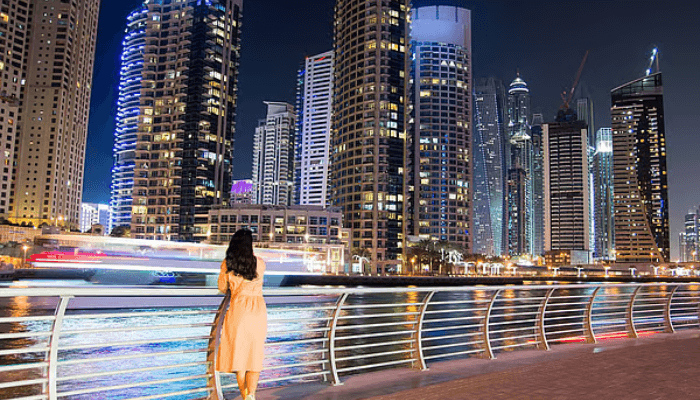
Gallup’s 2025 Global Safety Report has ranked the countries where people feel safest walking alone at night, with results underscoring how governance, law enforcement, and social trust shape public perceptions of security. The survey, which covered more than 100 nations, shows that safety is not defined solely by crime levels but by systems that convince people their surroundings can be relied upon.
One of the report’s most striking findings is the dominance of the Gulf. Oman, Saudi Arabia, Kuwait, Bahrain, and the United Arab Emirates all appear in the global top ten. The alignment highlights how security has become as central to the region’s identity as its economic growth. For residents and expatriates alike, the consistency of these systems reinforces stability and makes the Gulf one of the most attractive destinations to live and work.
Elsewhere, foundations of safety take a different shape. In Norway, for example, high rankings stem not from visible enforcement but from trust and social cohesion. Strong faith in institutions and a collective sense of responsibility encourage lawful behaviour, creating communities where people assume others will act in good faith.
In Asia, Singapore and China exemplify how centralised governance and the visibility of law enforcement contribute to security. Investments in infrastructure and surveillance make order part of everyday life, giving citizens confidence even after dark.

Together, the findings show that while approaches differ, from social trust in Scandinavia to governance in Asia and the Gulf, safety remains a defining feature of national identity.
Here are the 10 countries where most residents feel safe after dark:
1. Singapore – 98%
Almost all respondents in Singapore said they feel safe walking alone at night. Centralised governance, strong law enforcement, and significant investment in surveillance contribute to this level of confidence.
2. Tajikistan – 95%
Tajikistan ranks second, with nearly everyone surveyed reporting a sense of safety after dark. The country’s systems of community policing and visible authority play a role in shaping this outcome.

3. China – 94%
China records high levels of perceived safety, driven by a combination of state-led security, infrastructure investment, and the visibility of law enforcement in public spaces.
4. Oman – 94%
Oman shares third place with China. Residents report high trust in institutions and law enforcement, which supports feelings of order and predictability at night.
5. Saudi Arabia – 93%
In Saudi Arabia, safety perceptions are closely tied to governance structures and strict enforcement measures, giving people confidence when moving around after dark.
6. Hong Kong, SAR of China – 91%
Hong Kong combines dense urban life with strong policing. The survey shows that a majority of residents feel safe walking alone at night.
7. Kuwait – 91%
Kuwait ranks alongside Hong Kong, with trust in public order systems and the visible presence of authority contributing to high perceptions of safety.
8. Norway – 91%
Norway is the only European country in the top 10. Its ranking reflects strong institutions and public trust, which support feelings of security in both urban and rural areas.
9. Bahrain – 90%
In Bahrain, clear enforcement and community-level order make residents feel safe after dark. This aligns with patterns seen across the Gulf region.
10. United Arab Emirates – 90%
The UAE closes the list, with high confidence in governance, surveillance, and policing helping residents feel secure in public spaces.