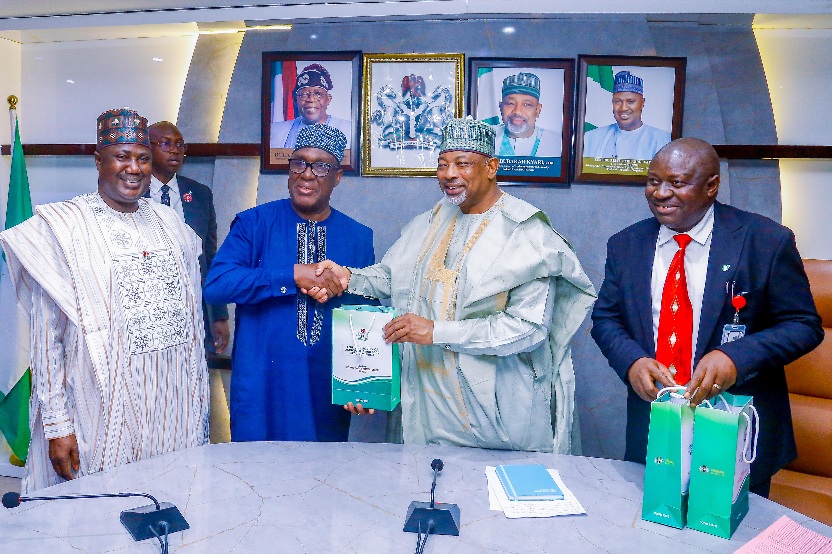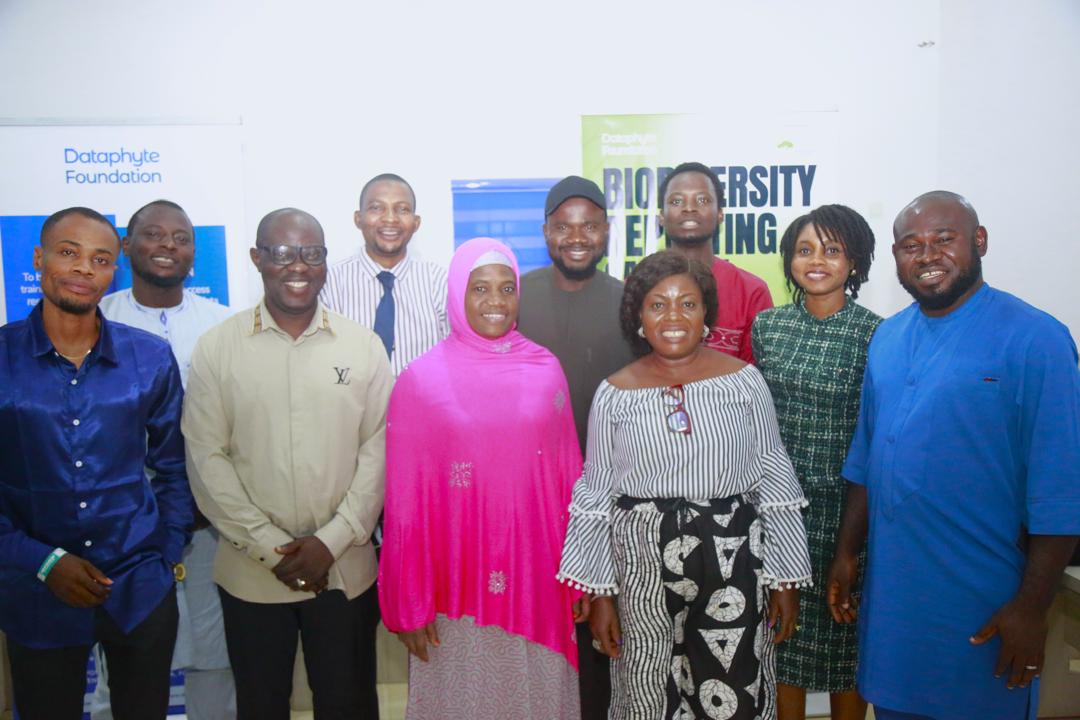
Dataphyte has trained and induced 10 journalists into its 2025 Biodiversity Reporting Fellowship programme. Journalists selected across various media houses were trained on data-driven reporting skills and strategic storytelling techniques to highlight major biodiversity and environmental issues in Nigeria.
Stella Egbe, senior conservation manager at Nigerian Conservation Foundation, stressed that biodiversity efforts “are not elitist because they concern everybody”.
Egbe noted that the concept of conservation stems from a “chop today, chop tomorrow” mindset that ensures that people think of tomorrow as they engage with nature — animals, plants, water bodies and forests.
She added that Nigerians need to begin to think about the future while carrying out different activities like agriculture and real estate expansion in forests.

“Many Nigerians do not think that our species can finish,” she started. “But sustainable conservation should be encouraged, like agroforestry, which involves the planting of food crops amongst trees.”
Despite a plethora of policies that address issues of conservation of nature’s resources, biodiversity continues to face a series of threats in Nigeria.
Although no reliable record yet exists for assessing the rate of biodiversity loss in Nigeria, substantial evidence suggests that biodiversity is being lost at an alarming rate.
Egbe noted that data gap further reflects how the federal government perceives conservation efforts. “The government sees conservative efforts as a waste of resources.”
However, regardless of the limitations surrounding biodiversity in Africa’s most populated black nation, Abdulkareem Mojeed, award-winning agriculture and environment journalist at Premium Times, said the onus lies on journalists to tell the stories of the value chain as this can drive awareness.

Biodiversity stories are about humans, he said. He urged journalists to keep track of environmental policies so as to be able to hold government accountable.
Mojeed reiterated that biodiversity reporting is linked to environmental laws. “Understanding Nigeria’s biodiversity and connections to other environmental issues like deforestation, oil spills in Niger Delta, forests, wetlands, and desert is key in reporting biodiversity.”
The best stories, he says, are always human-centred. For instance, he cited telling stories of communities that are affected by environmental challenges, or highlighting efforts of communities in protecting their environment.
According to Mojeed, every great story must contain diverse voices from community members, policy makers, scientists, and marginalised groups.
Adding his voice, Kehinde Ogunyale, data journalist at Dataphyte, who took a session on understanding data in biodiversity reporting, said data journalism is the ability to examine data – find, modify, analyse and visualise data.
He said pairing facts with faces and statistics with stories will tell a better story. “Data informs, stories move.”
Biodiversity is all the different kinds of life you’ll find in one area—the variety of animals, plants, fungi, and even microorganisms like bacteria that make up our natural world.
Each of these species and organisms work together in ecosystems, like an intricate web, to maintain balance and support life.
The overall conversation around biodiversity supports everything in nature that we need to survive: food, clean water, medicine, and shelter, Ogunyale said.
He called for well rounded storytelling in proper reportage of biodiversity issues, noting that utilising data helps to better inform the audience.
The Dataphyte fellowship is supported by Earth Journalism Network.