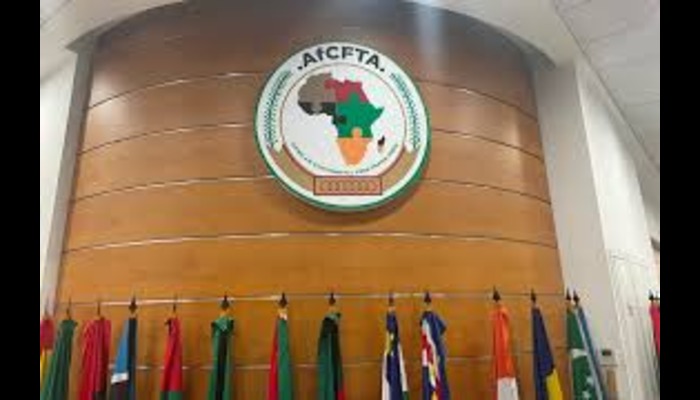
When AfCFTA was signed, the excitement was loud, focusing largely on tariff reductions. Tariffs matter, yet they’re only surface-level changes. The deeper story involves financial systems, infrastructure financing, and capital flows that actually make trade work. Nigeria, as one of Africa’s largest economies and its biggest consumer market, sits at the heart of this story. Without aligning its financial architecture to AfCFTA’s ambitions, Nigeria risks leaving the project underpowered, another grand plan lacking transformational capital.
To understand what’s at stake, consider AfCFTA through four connected lenses: history’s lessons, the hidden plumbing of payments, the paradox of trapped capital, and the places where policy ambition stalls.
History’s warning: ECOWAS dreams deferred
West Africa has spent decades chasing integration. The ECO currency project, envisioned as a shared regional currency, has been pushed back again to 2027. Meanwhile, the ECOWAS Bank for Investment and Development has disbursed just $2.5 billion across 300 projects over more than two decades; this is at best modest capital for a region of 400 million people.
The lesson here is sobering: announcements are easy, execution is hard. If AfCFTA follows the same path, it will meet the same fate. Nigeria’s actions will help decide whether this round is different.

The plumbing of trade: Ahead and behind
Trade flows depend on money flows. Here, Nigeria shows both progress and gaps. On the positive side, 22 Nigerian banks are connected to the Pan-African Payment and Settlement System (PAPSS), more than any other country. Earlier this year, the Central Bank simplified low-value cross-border transaction rules and allowed banks to source FX directly from the market, cutting procedural bottlenecks.
Yet the gains remain thin. PAPSS handles only a small fraction of Nigeria’s cross-border trade, settlement volumes remain shallow, and FX scarcity continues to clog payment flows. The infrastructure is being built, but usage lags far behind potential.
Infrastructure as trade policy
Even smooth payment systems can’t unlock trade if roads, rails, and power lines remain disconnected. Nigeria has made important moves: a $747 million Deutsche Bank-led syndicated loan to fund the first phase of the Lagos-Calabar coastal highway and a $652 million China Exim Bank package to finance the Lekki corridor linking the deep-sea port and Dangote Refinery.
Scale matters as much as momentum. Tariff cuts won’t change the economics if it still takes 72 hours and 16 checkpoints to move a truck from Lagos to Accra. Every kilometre of financed corridor represents more than domestic development; it is AfCFTA policy in action. The challenge is doing more and doing it strategically so projects form a connected network that supports regional trade rather than isolated infrastructure pockets.
The pension paradox
Nigeria’s pension funds hold over ₦24 trillion in assets, one of the deepest capital pools on the continent. Yet regulatory restrictions keep most of that money locked in government securities and domestic investments. This creates a striking imbalance: significant local savings exist, yet little flows into the infrastructure AfCFTA depends on.

Unlocking even a fraction of this capital for regional infrastructure would change the financing landscape. Regulatory reforms, risk-sharing partnerships with DFIs, and co-investment structures could make pension funds an engine of AfCFTA’s success instead of a sidelined spectator.
Where policy falls short
Nigeria has signed protocols and embraced AfCFTA’s vision, yet translating intent into results has proven harder. Exporters struggle with delays in repatriating earnings. Banks face liquidity bottlenecks in cross-border settlement. Infrastructure financing relies heavily on foreign syndicates rather than Nigeria’s own deep capital markets. PAPSS, despite the headlines, still accounts for only a slice of actual trade flows.
This is the pattern that plagued ECOWAS for decades: policy ambition colliding with operational gaps. AfCFTA cannot afford the same outcome.
Nigeria’s role in making AfCFTA real
AfCFTA represents Nigeria’s test of financial leadership. Three priorities stand out:
First, expand FX convertibility to allow PAPSS to scale beyond its current limited use. Second, mobilise pension and institutional capital for infrastructure that supports cross-border trade. Third, build infrastructure corridors as deliberate AfCFTA policy tools, rather than one-off projects.
Nigeria cannot achieve this alone. A coordinated approach with other African economies and regional institutions is essential. Countries must harmonise FX rules, onboard more banks to PAPSS, and standardise settlement frameworks so trade flows can move seamlessly. As Nigeria reforms its financial plumbing, others must follow suit. Only collective effort will shift AfCFTA from paper to practice.
Trade follows the money. If Nigeria and its partners create the pathways for that money to flow, financing the rails, roads, and payment systems integration demands, AfCFTA will finally begin to function as a marketplace, rather than just an idea.
Nathan Olaníyì works at the intersection of finance, strategy, and analytics, helping businesses turn complex challenges into sustainable growth. With a background in investment banking, fintech strategy, and data-driven decision-making, he has advised on M&A, capital markets, and transformation initiatives across African and U.S. markets.