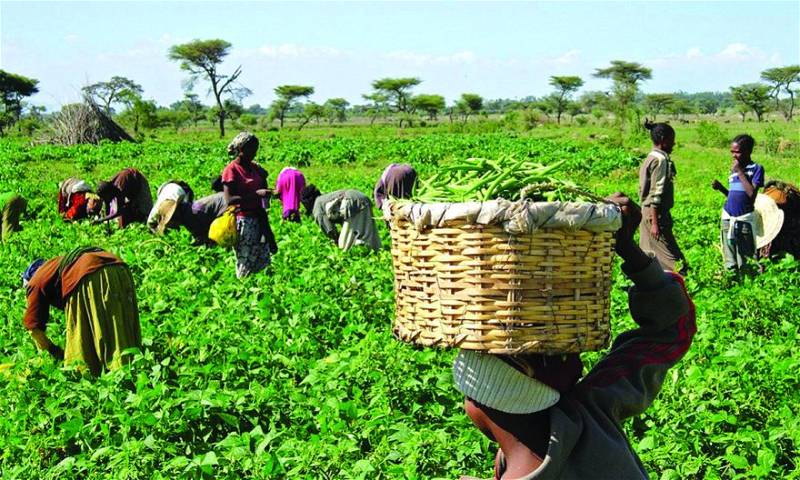
The naira slump against the CFA franc – the currency used by francophone West and Central Africa – is fuelling a shortage of farm workers in Nigeria.
For decades, workers from neighbouring countries such as Togo and the Benin Republic were attracted by the once-strong naira and the reluctance of Nigerians to take up farm jobs. However, since the 2023 devaluation, the trend has reversed.
Experts who spoke with BusinessDay explained that there are huge farm labour shortages in most farming communities, leading to a sharp surge in wages.
Read also: Afreximbank, Bank of Agriculture sign $1bn deal for smallholder farmers

Abiodun Olorundero, managing partner at Prasinos Farms, told BusinessDay that farming communities are experiencing labour shortages since the devaluation of the naira in 2023.
This, according to him, has made it difficult to get people to work on farms as Nigerians are not interested in farm labour.
Olorundenro noted that the cost of farm labour has surged by 160 percent in two years from a monthly average wage of N25,000 to N65,000.
In Nigeria, much of the farmland is still cultivated by hand tools, he said, noting that with the average age of farmers around 60 years, carrying out labour- duties has become costly amid other expenses.
As young people move from rural areas to urban centres in search of white-collar jobs and away from the drudgery of manual farm labour, achieving self-sufficiency in food production is becoming a herculean task.

“About 70 percent of farm labour is provided by human power, 20 percent is provided with draft animal power and less than 10 percent by mechanical power,” according to data from the Tractor Owners and Operators Association of Nigeria (TOOAN).
The International Food Policy Research Institute (IFPRI) says that Nigeria is still at the early stage of agricultural mechanisation. But experts acknowledge that mechanisation of power-intensive operations has been slow.
Ibrahim Kabiru, president of All Farmers Association of Nigeria (AFAN), said that the naira fall against the CFA franc is discouraging workers from tilling the farms.
“The reason why there is a shortage of farm labourers is because of the devaluation of the naira,” he said.
“It used to cost about N5,000 per day to feed a labourer who had to travel from another country, which was a great appeal in the past. Now, with the fall of the naira, there is no appeal anymore.”
Kabiru added that many farmers cannot even feed themselves, not to mention other people.
Following the multiple devaluations of the naira since 2023, shedding more than 50 percent of its value, the CFA franc is now stronger than the Nigerian currency.
Meanwhile, as of the time of writing this report, the CFA franc was exchanged for 2.71 to N1, reflecting its rebound.
Read also: How bad roads frustrates farmers, stifle intra-Africa trade
Farmers’ woes
Oyewole Okewole, senior associate consultant of FutuX, an agri-tech and food security advocacy firm, said the surge in the cost of farm labour due to shortages places a financial burden on farmers. He noted that it is creating a gap in the food sector.
“We now have labourers with insufficient hands-on farm experience because those with knowledge are no longer affordable,” he said.
Without experienced labourers, Okewole said, food production will decline and prices are likely to surge as well.
“There is a lot of labour incompetence prevalent in the agric sector today. This is making farmers spend more money in terms of operational costs, which can eventually lead to a further spike in food prices,” he added.