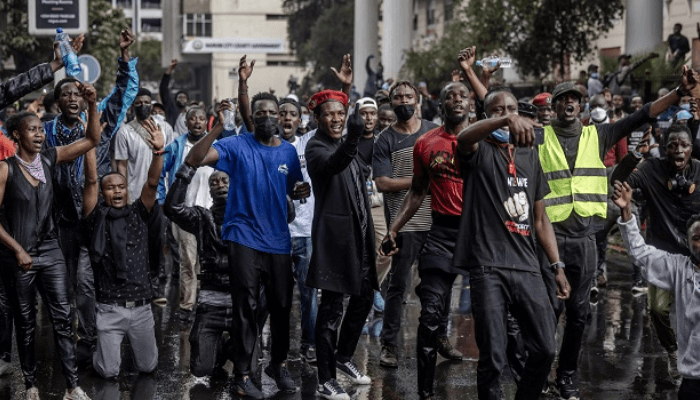
Protests over what demonstrators have condemned as excessive pay and housing allowances for parliamentarians in Indonesia offer a profound lesson for Nigerians and pro-democracy advocates. The protests began on Monday last week and escalated into riots by Thursday after a motorcycle rideshare driver was killed during a police crackdown at a protest site.
For Nigeria, this uprising represents a call to action: citizens must resist excessive pay and allowances for federal and state legislators. Indonesia’s example has put Nigeria’s lawmakers, both at the federal and state levels, on notice. Since the granting of autonomy to state Houses of Assembly, many state legislators have begun to collect allowances comparable to those of their federal counterparts. The events in Jakarta could mark a new dawn for democratic accountability in Nigeria.
Indonesian President Prabowo Subianto has already announced that political parties agreed to revoke numerous perks and privileges for parliamentarians, a major concession to protesters that signals the power of citizen action.
Jakarta’s unrest reflects more than mere political theatre; it embodies deep civic anger. On 25 August, thousands of mostly young Indonesians poured into central Jakarta after revelations that members of the House of Representatives were receiving a monthly housing allowance of Rp50 million (about US$3,075). For many Indonesians living on meagre wages, this was an insult. Outrage over lawmakers’ excesses soon sparked broader unrest: shops shuttered, toll roads were blocked, and train services were disrupted as the protests halted Jakarta’s daily rhythms. Police deployed over 1,200 officers, tear gas, and water cannons to disperse crowds, underscoring how street protests remain a critical outlet when institutional mechanisms feel inaccessible.

This fury is rooted in genuine economic pain. Indonesia is reeling from fiscal shocks, such as a 250 percent land tax hike in Pati Regency that triggered earlier protests, as well as widespread manufacturing job losses. In the first half of 2025 alone, Indonesia lost roughly 42,000 manufacturing jobs, a blow to the employment prospects of graduates and young workers. Youth unemployment stood at around 13 per cent in 2024, adding a sharp economic edge to the protests. When citizens see lawmakers enriching themselves while public services are squeezed, street protests become a potent form of fiscal dissent.
Lessons from Jakarta
Viewed through a governance lens, Jakarta’s protests highlight three key deficits: transparency, voice, and opportunity.
Transparency: Parliamentary decisions with fiscal implications must be made public and subjected to scrutiny. Indonesians are justified in questioning why lawmakers’ allowances, which far exceed average wages, were implemented without transparent debate or accountability.
Voice: When institutional mechanisms for redress appear closed, citizens will take to the streets.

Opportunity: Sustainable, inclusive economic opportunities remain the strongest deterrent to unrest.
Governments must act decisively on these fronts. Full disclosure of lawmakers’ compensation and benefits should be mandatory, with independent audits and public consultations required before any significant adjustment. Such measures would diminish the perception of elite impunity and restore public confidence.
Reports confirm that Indonesia’s 580 parliamentarians each receive a monthly housing allowance of Rp50 million (US$3,000), nearly ten times Jakarta’s minimum wage and twenty times that of rural areas. The scale of inequality underscores the legitimacy of protesters’ demands.
A Nigerian parallel
Nigeria is no stranger to similar controversies. Prominent human rights lawyer and Senior Advocate of Nigeria (SAN), Femi Falana, has accused the National Assembly of contempt and illegality following revelations that senators receive a monthly “running cost” of ₦21 million.
This disclosure, made by Senator Abdurrahman Kawu Sumaila of Kano State, has sparked outrage and legal threats. Falana condemned the increase from ₦14 million to ₦21 million, citing a 2021 Federal High Court ruling by Justice Chuka Obiozor, which affirmed that only the Revenue Mobilisation, Allocation, and Fiscal Commission (RMAFC) is empowered to determine the salaries and allowances of federal legislators.
“The Senate, the House of Representatives, and the National Assembly Service Commission have no power, or semblance of power, to determine, direct, or fix their own salaries, wages, or allowances,” Falana stated, quoting the court judgement.
Civil society organisations, including the Socio-Economic Rights and Accountability Project (SERAP) and Enough is Enough (EiE), have consistently challenged lawmakers’ self-approved benefits, culminating in the 2021 ruling against such practices. Yet, the culture of impunity persists.
A call for reform
The outrage in Jakarta should serve as a wake-up call to Nigerian citizens, civil society groups, and policymakers. Without urgent reform, Nigeria risks deeper inequality and eroded trust in democratic institutions. Lawmakers’ pay and allowances must be subjected to public scrutiny and constitutional oversight.
Indonesia’s protests prove that democracy is strengthened, not weakened, when citizens demand accountability. If Nigerians channel similar energy, it could indeed be a new dawn for democracy in Africa’s largest nation.
Inwalomhe Donald writes via inwalomhe.donald@yahoo.com.