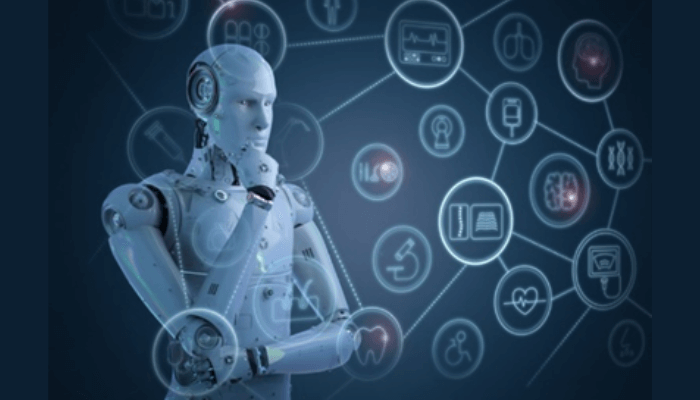
Strategic planning is evolving. As AI reshapes how product managers think, plan, and act, the roadmap itself is becoming a living, adaptive tool. Strategic planning has long been the backbone of product management. Roadmaps, prioritisation frameworks, and market analysis tools have helped product leaders navigate uncertainty with structured thinking. But today, a quiet revolution is underway; AI is transforming the core of product strategy. And while human judgment remains irreplaceable, AI is reshaping how we plan, decide, and adapt. Its influence may not always be visible on a slide deck, but it is already changing the DNA of strategic road mapping.
“Now, generative AI can simulate scenarios on demand. It can surface competitive intelligence, model market reactions, or even generate user feedback for hypothetical features. This makes “what-if” planning cheaper, faster, and more realistic.”
Read also: How AI is quietly revolutionising Nigerian business security
1. From static to dynamic
Traditional roadmaps are often static documents: linear timelines, quarterly goals, and prioritised features. They are also particularly difficult to maintain. The pace of change in customer needs, market conditions, and tech capabilities makes most roadmaps obsolete the moment they are shared.

AI changes this dynamic. Predictive models, real-time user data, and generative insights enable continuous planning, not just quarterly updates. Tools powered by machine learning can now flag usage patterns, detect churn signals, and propose new features in real time. As a result, roadmaps are becoming living documents, constantly adapting to inputs, much like a GPS reroutes based on traffic.
2. Data-driven ≠ Data-burdened
The product world is not short on data. If anything, we are overwhelmed by it. What AI offers is sense-making at scale. Natural language models can summarise NPS feedback in seconds. Image recognition systems can spot UX inconsistencies across thousands of screens. Time-series models can predict when a feature might become irrelevant.
For example, Airbnb uses AI to analyse guest reviews and surface themes that inform product decisions. Instead of manually combing through thousands of comments, PMs get synthesised insights that guide roadmap updates.
The shift is not about having more data but about having a better signal. AI filters noise and offers actionable insights faster than a team of analysts ever could. For product leaders, this means less guesswork and more confidence in their strategic direction.
3. The PM’s role: From owner to orchestrator
As AI takes over more of the pattern recognition and decision support, the role of the product manager must evolve. The future PM is not the sole owner of the roadmap but an orchestrator of insights, integrating signals from AI tools, customers, and cross-functional teams to make better decisions.

Read also: AI and the future of African business
Spotify’s PMs, for instance, use AI to personalise user experiences but rely on human judgement to balance personalisation with brand integrity and user trust.
In this new paradigm, soft skills, curiosity, critical thinking, and ethical reasoning become as important as technical knowledge. The PM of the future is not just an operator; they are a translator between what the model says and what the team should do.
4. Scenario planning, reimagined
Before AI, scenario planning was often manual and speculative. What if our competitor launches a feature? What if a regulation changes? What if we enter a new market?
Now, generative AI can simulate scenarios on demand. It can surface competitive intelligence, model market reactions, or even generate user feedback for hypothetical features. This makes “what-if” planning cheaper, faster, and more realistic.
Imagine asking a model: “If we delay feature X by two quarters, what might happen to churn among power users?” AI cannot predict the future with certainty, but it can give you a head start in thinking through consequences.
5. The risk of over-reliance
All this power comes with a caveat. AI is only as good as its training data and assumptions. Blindly following its recommendations can lead to ethical blind spots, biased prioritisation, or over-optimisation at the cost of innovation.
The job of the PM is not to defer to AI; it is to interrogate its outputs, challenge assumptions, and synthesise a broader context. In this sense, AI becomes not a decision-maker but a thinking partner.
Read also: How AI can boost economic growth, drive data driven insights in SMEs
6. Conclusion: Strategy is still human
AI is transforming how we plan, decide, and adapt, but it does not replace the strategist. It augments them. The most effective product leaders won’t be those who rely on AI blindly, but those who challenge its outputs, interpret its signals, and apply human wisdom to guide their teams. Strategic clarity still demands empathy, ethical reasoning, and the courage to make hard calls.
In this new era, the roadmap is no longer a static artefact; it is a living dialogue between data and judgement. AI can illuminate paths, but only humans can choose the right one.
Agathas Agu is a product and programme management expert with a background in enterprise technology and experience as an Oracle Applications Developer. She combines technical skill with strategic leadership to drive digital transformation, streamline operations, and deliver user-focused solutions. Agathas is known for bridging business and technical teams to deliver impact at scale.