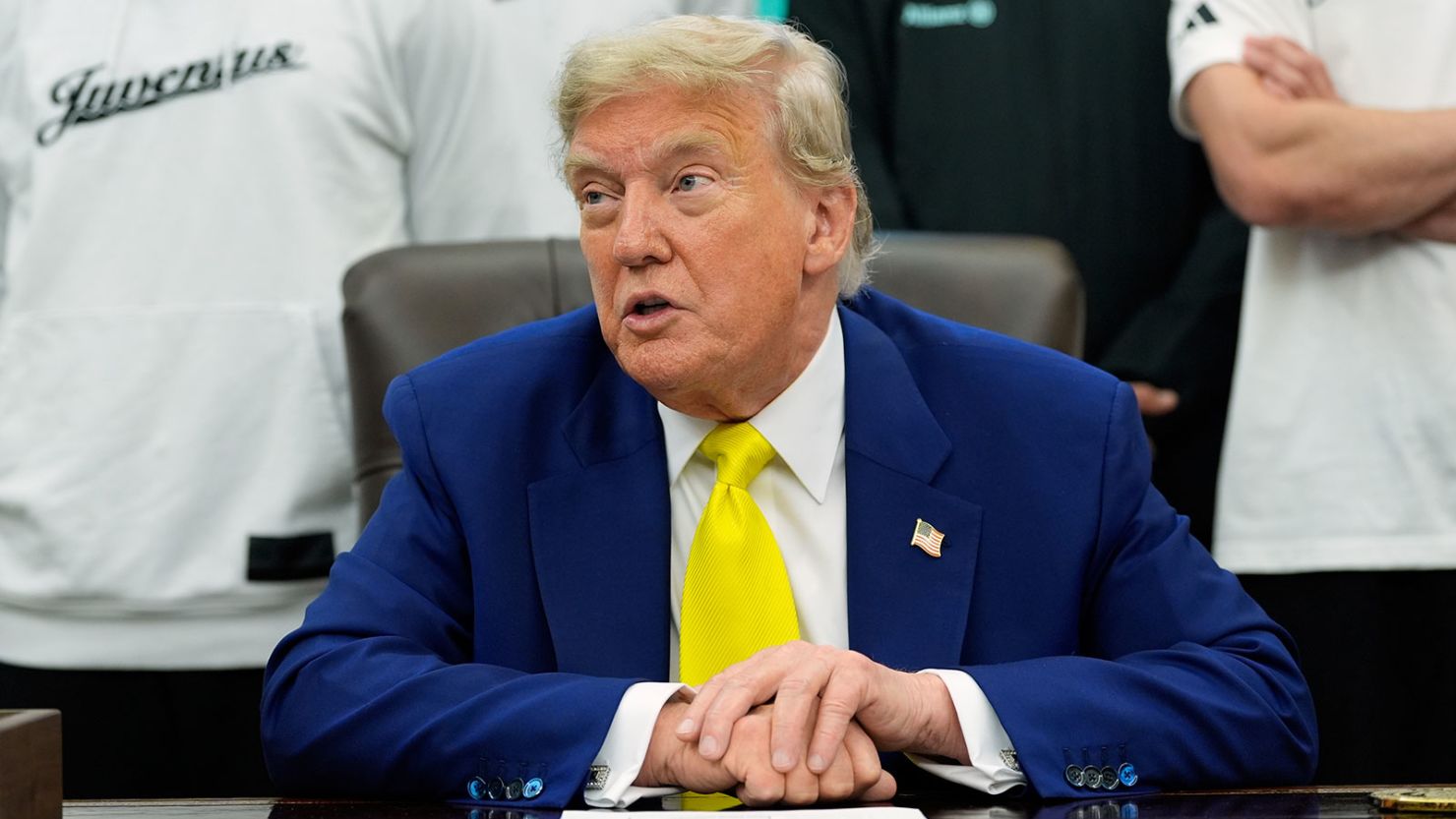
Donald Trump, United States president sweeping new tariffs on goods from more than 60 countries officially came into force early Thursday morning, marking a sharp escalation in his administration’s push for what it calls “reciprocal” trade practices.
The tariffs, which range from 10 to 50 percent depending on the country, were authorised last week through an executive order and began being collected at 4:oo pm by the US Customs and Border Protection agency.
Read also: Trump raises tariffs on Nigerian imports to 15% in fresh round of trade bout
Trump has hailed the move as a “historic win” for American industry, boasting that the levies will funnel “billions of dollars” into the US treasury. But economists, foreign governments and even some US industry groups have sounded alarm bells, warning the measures could drive up prices, hurt small businesses, disrupt supply chains, and trigger retaliatory measures.

“THE ONLY THING THAT CAN STOP AMERICA’S GREATNESS WOULD BE A RADICAL LEFT COURT THAT WANTS TO SEE OUR COUNTRY FAIL!” the president posted on his Truth Social platform hours before the new tariffs took effect.
Who’s hit hardest?
At the top of the tariff list is Brazil, now facing a 50 percent duty on its exports to the US. Switzerland follows with a 39 percent rate, while Laos and Myanmar were each handed 40 percent. Iraq and Serbia join Canada at 35 percent.
Read also: Trump warns Iran of renewed strikes over uranium enrichment
India is set to face a 25 percent tariff on most exports — a figure that could rise to 50 percent by 27 August unless it halts purchases of Russian oil, the White House said.
Even key allies like Taiwan (20 percent), Vietnam (20 percent), and Thailand (19 percent) weren’t spared, sparking concern over Washington’s trade posture in Asia.

Read also: Nigeria turns to alternative markets as Trump’s tariff takes effect
Still, some countries have successfully negotiated deals to avoid the harshest tariffs. The United Kingdom, Japan, and South Korea secured lower rates — with Britain settling at 10 percent. The European Union also reached a framework agreement that caps tariffs at 15 percent on goods from the bloc, including pharmaceuticals.
But not all negotiations were successful. Swiss officials failed to strike a deal ahead of the deadline and have called an emergency meeting to discuss the fallout. With its 39 percent tariff rate, Switzerland stands to suffer some of the worst economic impacts from the policy shift.
Industry reaction: cautious optimism, growing concern
Trump’s team insists the tariffs are designed to punish what it calls “unfair” trade practices by foreign governments — and to push nations to increase their imports of American products.
Scott Bessent, Secretary of the Treasury estimates tariff revenues could exceed $300 billion annually. A significant portion of those funds, Trump says, will come from countries that agree to boost purchases of US goods, including oil, defence equipment, cars, and agricultural products.
Read also: Trump fires US Labour Statistics chief after weak jobs report
In one apparent sign of success, tech giant Apple announced a $100 billion investment in US operations after White House pressure to shift more production stateside. Trump also said Japan had agreed to purchase Ford trucks, though Japanese officials have contradicted his claim, saying key terms remain unresolved.
Still, many American businesses — particularly small and mid-sized importers — are bracing for disruption. Some industry associations have warned the tariffs could increase costs for consumers, while others fear retaliatory taxes from foreign governments could damage US exports.
Exemptions and special clauses
Despite the sweeping nature of the new tariffs, several product categories have been spared for now. Smartphones are not subject to any of the new duties, while sectors already under separate tariff regimes — such as pharmaceuticals — are temporarily exempt.
However, Trump has hinted that further duties could soon be on the way. Semiconductors, lumber, and pharmaceuticals have all been named as potential targets for future tariffs, including a possible 100 percent levy on foreign-made computer chips.
Read also:Trump open to talks with Putin, Zelensky as white house confirms push for Ukraine ceasefire
Another key clause in the executive order stipulates that goods transshipped through third countries to bypass tariffs will incur an additional 40 percent duty — though enforcement details remain murky.
Political and legal battles loom
While the Trump administration is confident in the legality of the new tariff regime, legal experts say the move could face stiff challenges in US courts. A coalition of companies has already filed a lawsuit arguing the president exceeded his authority by bypassing congressional approval.
Yet Trump appears undeterred. On Wednesday, he boosted tariffs on Canadian goods from 25 to 35 percent, citing Ottawa’s alleged failure to stem the flow of fentanyl and other drugs across the border.
The Canadian government insists it is working to dismantle drug trafficking networks, and under the terms of the United States-Mexico-Canada Agreement (USMCA), most Canadian exports will remain unaffected.
Meanwhile, negotiations with Mexico continue, with a 90-day pause on new tariffs as both sides seek a broader trade deal.
Uncertainty ahead
The full impact of Trump’s tariffs may take months to materialise. While the White House projects major economic gains, independent analysts say the risks of inflation, supply chain chaos, and diplomatic rifts are very real.
With several countries still in talks and others already signalling discontent, the global trade landscape has entered a volatile new phase — one that may reshape international commerce for years to come.