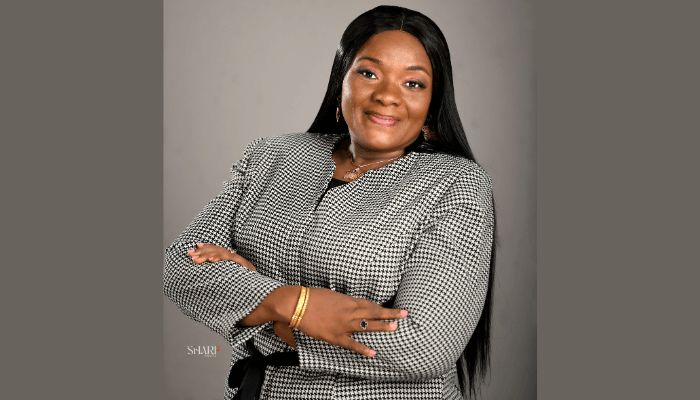
Ijeoma Azi is a multi-award-winning Architect, project management expert, and transformational leader with over 20 years of experience designing and delivering high-level architecture and infrastructure solutions across Nigeria and beyond.
Trained at the prestigious University of Nigeria, Nsukka (UNN), she emerged as the Best Graduating Student in Architecture, earning multiple departmental and faculty prizes. She went on to complete her Master’s degree in Architecture and is a registered Architect with ARCON and a Member of the Nigerian Institute of Architects (MNIA).
She is the Director and Principal Consultant at IMarc-Projects Ltd, an architectural and project management firm headquartered in Lagos. She has led large-scale developments across corporate, hospitality, residential, healthcare, and aviation sectors, including high-profile national projects such as the CBN Centres of Excellence (Enugu, Zaria, Ibadan), ARM Building in Victoria Island Lagos, Sam Maduka University Enugu, Ilorin Airport and Library, Port Harcourt International Airport to mention a few.
Her pursuit of sustainable, high-impact architecture has taken her across Spain, Greece, Turkey, France, Germany, Denmark, the U.S., and the UAE, where she continues to source innovative technologies for sustainable design implementation in Nigeria.

Beyond architecture, Ijeoma is a certified project manager, World Bank Scholar, and Leadership Fellow. She has completed executive programmes and certifications from institutions such as Harvard Business Online, University of California Irvine, Lagos Business School, National Institute of Policy and Strategic Studies (NIPSS), and the School of Politics, Policy & Governance (SPPG). Her credentials span urban development, entrepreneurship, strategic governance, leadership, and risk management.
She is a Doctoral Fellow of the International Certified Risk Management Professionals (UK) and a Fellow of the Chartered Institute of Loan and Risk Management of Nigeria, actively contributing to governance discourse and policy development.
Currently, she is pursuing her doctorate degree at UNN, and is preparing for her Fellowship induction with the Nigerian Institute of Architects, as well as her membership induction at the Chartered Institute of Directors (CIoD).
Ijeoma is deeply passionate about women’s empowerment and social impact. She is the founder of She Thrive Network and Thrive On Demand, mentoring hundreds of women through business coaching, leadership retreats, and structured capacity- building initiatives. Her foundation also drives entrepreneurship development through tailored programs like The Growth Code Bootcamp, SME Skill-Up, and Scale-Up Programmes.
She also hosts The CEO Strategy Room, a growth space for leaders, founders, and executives to plan, reflect, and build bold strategies for scaling impact.

Her civic engagement includes active facilitation roles with Golden Heart Foundation, IMarc Foundation, and WIMBIZ. She brings her voice, strategy, and resources to bear in key conversations around youth, governance, and enterprise development. Ijeoma is a recipient of several outstanding awards.
Can you share a specific project from your career that you consider a turning point in your architectural journey? What made it significant?
One project that stands out as a turning point was the development of the Central Bank Of Nigeria Centre Of Excellence projects in Enugu and Zaria. It was my first multi-billion naira project. I was part of the design team but had to steer the construction of those projects as a young architect.
I remember following through the needs assessment process alongside my boss, who later stepped aside and gave me the opportunity to lead. It was both exciting and terrifying, but I embraced the challenge. I flew monthly to the University of Nigeria, Enugu Campus, and Ahmadu Bello University, Zaria, overseeing site work, solving issues on the ground, and making decisions that truly shaped the outcome.
While others shied away from those demanding trips, I leaned in because I genuinely loved the process. These weren’t just architectural jobs; they were complex, strategic developments that involved multiple stakeholders, community considerations, and long-term infrastructure planning.
That experience pushed me far beyond design. It drew me into leadership, negotiation, and even policy conversations. It stretched me and it was in that stretch that I found my voice in large-scale public projects. Since then, I’ve gone on to deliver numerous others.
As a multi-award-winning architect, what do you believe are the key factors that have contributed to your success in the industry?
Consistency, excellence, passion and purpose have been my pillars.
I’ve always believed that how you handle small projects says a lot. So, I treated them like major ones. From simple renovations to multi-million-naira developments, we always aim for the highest standards. I treated small projects like they were multi-million projects. We maintained excellence across the board. I was concerned about the brand we were building and we were consistent in delivering and meeting client expectations. We understand that every client is unique, and we worked toward providing peculiar service delivery to meet their expectations. There were times in the early stage of our business that I stayed awake because of project problems and challenges, not because I didn’t want to sleep. The truth was that I couldn’t sleep because I was thinking deeply about how to solve project challenges. Our clients and projects are personal to us. I learnt not to run away from new opportunities. We accepted them as they came and stayed committed until we delivered. That’s how we grew. We started with residential buildings and over time moved into designing commercial spaces, schools, transportation hubs, healthcare facilities, and more. Every new project stretched us, but we kept showing up and doing the work.
I also committed myself and the team to continuous learning. Mentoring others has also fuelled my growth and visibility. I also invest in relationships, clients, teams, and communities, and ensure that my work delivers functional beauty and lasting value. It hasn’t always been a walk in the park, God helped us and we pulled through at every stage. He provided us with the opportunities and also gave us the wisdom we needed all the time.
Working in a male-dominated industry hasn’t always been easy, but we carved out a niche for ourselves. We weren’t trying to compete with others, our focus was on meeting and exceeding our own goals, both as a business and on every project we took on.
With over 20 years in the industry, how do you think the field of architecture has evolved in Nigeria and globally during that time?
Architecture in Nigeria has matured remarkably. When I began, there was limited emphasis on environmental design or technology integration. We were fortunate to start with CAD – computer-aided design tools, which has evolved. Today, there’s more awareness of climate-responsive architecture, digital tools like BIM, and collaboration across disciplines. Globally, the profession is becoming more inclusive, tech-driven, and socially responsible, and it’s exciting to see Nigerian architects rising to the challenge. There is still space for more development and improvement as we are still stuck with proprietary building materials like concrete and blocks but technological development is catching up with that in Nigeria.
Sustainability is a significant focus in your work. What innovative technologies have you incorporated in your projects, particularly those inspired by your travels?
Traveling has really expanded my design experience. It allows my mind to breathe, gives me fresh perspective, and often sparks new creative ideas. Every place I visit adds something to the way I think, design, and solve problems. Currently, we are incorporating EDGE principles in our designs as this provides energy, water and co2 savings within the building envelope. EDGE means Excellence in Design for Greater Efficiencies. It’s a green building certification system developed by the International Finance Corporation (IFC), a member of the World Bank Group.
It helps architects, developers, and builders design buildings that are energy and water efficient, cost effective and environmentally friendly. In some of our recent projects, we are adopting the use of green architecture materials, and environmentally friendly construction materials creating long-term value for all stakeholders in the green building ecosystem.
Energy savings means including features that reduce how much energy a building uses, such as: Energy-efficient lighting (like LED), solar panels, bio-digesters, efficient air conditioning systems and windows, natural ventilation and daylighting, Water savings includes features that reduce water usage, such as low-flow faucets, showerheads, and toilets.
CO₂ (Carbon Dioxide) savings tracks the overall reduction in carbon emissions by using sustainable materials with low embodied energy.
Environmentally friendly means using less power and clean energy (like solar), reducing water waste, designing for comfort and natural light. So, when a building is EDGE-certified, it means it’s built to protect the environment and save money over time.
You are passionate about women’s empowerment and mentorship. What inspired you to found the ‘She Thrive Network’ and what impact have you seen so far?
The She Thrive Network was born from a burden to help women rise beyond survival into significance. I noticed that many talented women were stuck due to lack of clarity, structure, and support. So, we built a platform that equips women to grow their influence, income, and impact through mentorship, training, and accountability. The results have been incredible.
We’ve been able to train and mentor hundreds of women through our programmes. Many have gone on to start or grow their businesses, get promotions at work, or finally take bold steps they had been scared to take before. Seeing these women rise, become confident, and achieve results is what keeps me going.
Ibukun Awosika says: “Women work in silos but we get more results when we leverage communities.” We do better when we work together. This is true and that’s why we have an online community where we meet monthly and provide resources on the following 4 major pillars, leadership, business/career, relationships and wellness.
Two are better than one because they have a good reward for their labour.- Ecclesiastes 4:9, Community multiplies impact, and that’s exactly what ‘She Thrive’ is all about.
Can you share some success stories from your mentoring programmes that particularly moved you?
One of the most inspiring things about our mentoring programmes has been seeing real transformation in the lives of women and professionals. We’ve also seen incredible results like women creating digital products, publishing books on Amazon, launching platforms, and winning grants. Some have built their own mentorship communities, while others have improved their business operations by learning to delegate and focus on what they truly enjoy. Over the last 12 months, 85% of our active participants launched or significantly improved their personal or professional projects. 30% reported doubling their productivity through better structure and mindset shifts, including acceleration programmes, structured delegation, and time blocking. 90% reported improved confidence and clarity, citing breakthroughs in purpose, career growth, and faith/business balance. These stories are proof that with the right support, structure, and inspiration, people can truly grow personally and professionally. That’s the heartbeat of everything we do.
How do you balance your roles as an architect, project manager, and mentor while pursuing your doctorate?
The truth is that it hasn’t been easy. My mum often says I work too hard, and maybe she’s right. But I also believe strongly in the saying, “an idle mind is the devil’s workshop.” I’m very intentional about my time. I set clear priorities each week, rely on a strong team, and delegate tasks effectively. I also use systems that help me stay focused and organised. Rest is important to me, so I’m intentional about carving out time to recharge. Most importantly, God has been pivotal in this journey. I truly couldn’t have done it all without His guidance. I can’t trade my daily devotion, it aligns me. I’ve had to rely on divine strategies and wisdom to navigate my roles and still be fully present as a wife and mother.
The good thing is that my life revolves around what I love doing. It’s a mix of building physical structures and building people. Just like we create building plans and bring them to life, I also help women design clear, transformative paths that support them as they grow or scale.
Pursuing my doctorate has taught me that growth requires structure and sacrifice, but the rewards are worth it. I love to learn. It’s also a way of keeping me abreast of facts. Being in that kind of environment also exposes me to new ideas and diverse perspectives.
What are some of the unique challenges you face in managing large-scale developments in Nigeria, and how do you overcome them?
In Nigeria, issues like inconsistent power supply, regulatory delays, and supply chain disruptions can threaten timelines. I tackle this by planning ahead, maintaining strong government and vendor relationships, and building in contingency strategies. Clear communication and proactive risk management are also essential. Another major concern is the rising cost of building materials, which is significantly impacting projects, especially those that were not accurately budgeted. To stay ahead, clients now have to make substantial advance payments to fix their project costs and hedge against price inflation. It’s a tough reality, but one that can be managed with foresight and professional guidance. Additionally, compliance remains a major issue. In many projects, what isn’t monitored doesn’t get done, leaving room for poor quality and corner-cutting. That’s why I consistently advocate for clients to be well-informed and intentional about the consultants and contractors they engage.
Can you discuss a time when effective project management led to a successful outcome in one of your projects?
One notable example was a major project in Benin City, Edo State, we were facing delays due to weather and contractor inconsistencies. Through agile project management, stakeholder briefings, and real-time collaboration tools, we completed the project to enable the client utilise the project for their annual scheduled maintenance activities. It reinforced that great design must be matched with good contract execution.
In my view, successful projects are secured by clear, enforceable contracts. These contracts should outline roles, responsibilities, timelines, deliverables, and accountability structures. If all stakeholders understand and commit to playing their part, there’s a much higher chance of success. As I often say, “what doesn’t get monitored, doesn’t get done.” Successful projects work when you have clear, enforceable contracts with well-defined responsibilities, timelines, and accountability structures.
In your opinion, what qualities are essential for effective leadership in the architecture and construction sectors?
Effective leaders in our space must be visionary, adaptable, and deeply collaborative. This is because you have to engage with several stakeholders at various stages of the project. You need the ability to mobilise people and resources. Integrity, communication, and a growth mindset are non-negotiable if you’re to lead sustainably. Decision-making is key. No two projects are the same, and each one comes with its own set of risks and complexities. Delays often occur because critical decisions aren’t made on time. An effective leader must be able to assess situations quickly, weigh options, and take decisive action to keep the project moving forward.
How do you see the role of architects in contributing to community development and social change, particularly in Nigeria?
Architects are more than building designers. In Nigeria, where infrastructure gaps and urban challenges persist, our role becomes even more critical. We have the responsibility to design spaces that are not just beautiful but functional, inclusive, and responsive to real human needs.
While we have worked on large infrastructure projects that enhance the environment, as part of our Corporate Social Responsibility CSR, we collaborate with NGOs to provide NEEDS infrastructure for schools and also build WASH projects for communities in need of water infrastructure in Borno, Jos, Gwagwalda, Edo, Ogun and so on.
In 2023, I had the privilege of attending a short course on Policy Making and Strategic Planning at the National Institute of Policy and Strategic Studies (NIPSS), Kuru. That experience exposed me to the critical role strategic policy plays in national development. Through engaging discussions and case studies, we examined how well-crafted policies can directly influence socio-economic growth, infrastructure, and quality of life. Since then, I’ve become increasingly committed to exploring practical systems that can drive improvement in one of Nigeria’s most pressing challenges which is affordable housing.
In the 1960s, Singapore faced a severe housing crisis, overcrowded slums, poor sanitation, and inadequate infrastructure. But through the creation of the Housing and Development Board (HDB) in 1960 and a series of smart, inclusive policies, the government transformed the situation.
Today, over 80% of Singaporeans live in government-built housing, and the majority own their homes. Housing quality is high, and public estates are well-integrated with infrastructure.
I firmly believe that many of the housing issues we face in Nigeria can be addressed through intentional, inclusive, and data-driven policy frameworks developed in partnership with both public and private sector stakeholders. Housing sits at the base of Maslow’s hierarchy of needs. It’s a core indicator of a nation’s development.
Your work with organisations like Golden Heart Foundation and IMarc Foundation shows your commitment to civic engagement. How do these activities inform your professional practice?
I learnt early in my career as a young architect to give back, starting with pro bono work for religious organisations. Today, through the Golden Heart Foundation and IMarc Foundation, I’m constantly reminded that design is ultimately about people, not just buildings. Civic engagement helps me stay focused on creating solutions that truly help people and make a difference.
Through these organisations, I engage directly by supporting orphans, organising skills empowerment for women, or leading youth empowerment initiatives. I’ve seen how safe spaces and well-designed buildings can improve lives.
These experiences influence how I design and manage projects. Civic work gives me the right perspective. It helps me understand people better, think creatively, and stay focused on creating spaces that truly help those who use them.
We can’t rely only on the government to meet all community needs. Civic growth is a shared job. When professionals, businesses, and individuals take action on issues like housing, education, and youth support, real and lasting change can happen.
I believe that if we all share what we know and take action within our capacity, the ripple effect will go far and wide. It’s not about waiting, it’s about leading from where you are. I am learning to use whatever gift I have received to serve others, as faithful stewards of God’s grace. This principle reminds me that our skills are tools for service.
Looking ahead, what do you envision for the future of architecture in Nigeria, particularly regarding sustainability and technology?
The future is digital, green, and inclusive. Inclusive design means creating buildings and spaces that everyone can use and enjoy. I see Nigerian architecture moving towards smart cities, modular construction, and sustainable housing. I envision a shift towards climate-responsive and sustainable design, not as a luxury, but as a necessity. I love the Dubai and Singapore story and hope we get there one day as a nation. Architects will need to embrace renewable energy and use materials that reduce environmental impact and possibly construction costs. Affordable and sustainable housing for low and middle-income earners should be a national priority if we want real progress in our nation. Technology will play a transformative role. I see increased adoption of Building Information Modeling (BIM) for project management. Hopefully, we’ll also see a rise in the use of AI-supported planning, designing, modeling that will improve the architectural process. People are worried about losing jobs to Ai. I really don’t think that is the issue. We should be bothered about utilising AI more efficiently in the profession. But beyond tools and trends, the future will belong to architects who design buildings and spaces that serve people, communities, and the planet. That’s the kind of future I’m building toward.
What motivates you to continue pushing boundaries in your field, and how do you maintain your passion?
I’m deeply motivated by impact and legacy. Every time I see a project come to life whether it’s a building that serves a family, an office, hundreds of users or meeting a woman or professionals who finds clarity through one of our mentorship programmes, I’m reminded why I do what I do. What keeps my passion alive is constant growth. I travel, I study, I mentor, and I learn. I learn from people, places, and problems. I love to network with people. I have discovered you need people to succeed. You need to expand your network to grow. Architecture, for me, is more than buildings; it’s about creating environments that shape lives. It’s about solving problems. I also stay connected to my “why.” Knowing that my work contributes to nation-building, every completed project has put food on the table for families throughout the duration of the project. Running our offices have also provided a means of living and mentorship to everyone that has worked with us. Creating platforms that empower women to see more, believe more and be more, keeps me inspired and energised. So, we let our light shine before others, that they may see and glorify the Father.
How do you personally define success, both in your career and in your contributions to society?
For me, success is about impact; in my career, it’s about how those projects improve lives and serve their real purpose. Every building tells a story, we always want our buildings to tell the right stories. Beyond buildings, success means legacy and finishing well. How many lives have you impacted? Whether it’s mentoring young professionals, creating jobs, supporting women through my initiatives, or being part of something that lifts a community when people become better because I showed up, I consider that to be a win.
Concluding words
To every aspiring architect, professional, woman, or dreamer reading this: Don’t wait till you’re ready before you show up because you may show up too late. Start with what you have. Take the first step in faith. The path will become clearer as you move.
It hasn’t been an easy journey, no one has promised that life will be easy. I have learnt to celebrate my wins. I have decided not to walk alone. Community, collaboration, and connection have been part of my strength. Surround yourself with people who inspire you, challenge you, and remind you of who you are when you forget.
My message to you is this: Design your life. Don’t just exist, live with purpose. Know that your work, voice and presence matter. Trust God and take the needed steps even when you’re afraid. Stay open to growth. Keep learning and evolving. When you feel stuck, don’t stay stuck. Speak up, ask the right questions, and seek help. There’s always a way forward, out or around it.