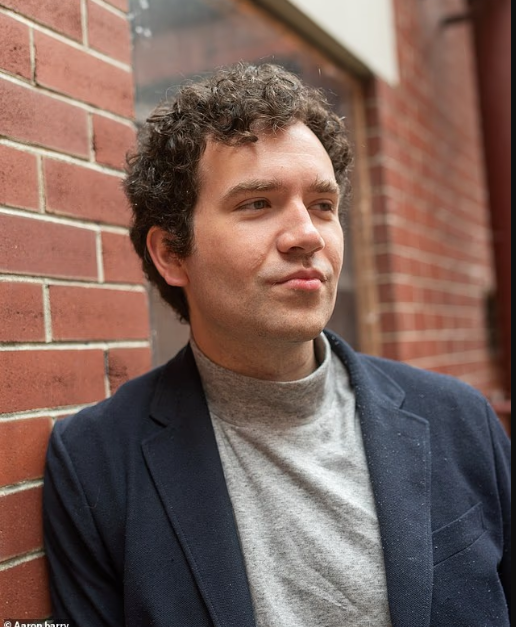
When 29-year-old Aaron Barry sat at his desk in Vancouver and submitted a poem under the name “Adele Nwankwo,” a gender-fluid Nigerian poet navigating identity and diaspora, he had no idea it would ignite a firestorm across the global literary community, or maybe he did.
Barry, a straight white man, had been quietly publishing his own work for years with modest success. But it wasn’t until he assumed the identities of multiple marginalized personas, Nwankwo among them, that his poetry began landing in acclaimed literary journals. Dozens of them, in fact.
“I wanted to test what the gatekeepers were really looking for,” Barry later confessed in a piece published under one of his many aliases, Jasper Ceylon. “It seemed identity had become more important than the writing itself.”
By all accounts, it worked. From 2023 to 2024, Barry writing as queer, gender-fluid, biracial, neurodivergent, and trans characters, got more than 50 poems accepted into respected journals and anthologies. One of his personas, B.H. Fein (pronouns: “its/complicated”), was even nominated for a prestigious Best of the Net award. The kicker? Barry now admits every single poem was intentionally nonsensical.

The pen names that paid off
At first glance, the story reads like a twisted parody of the contemporary literary scene. But Barry says his motivations were less about mockery and more about probing the motivations of an industry he felt was broken.
“I’ve seen brilliant work from unknown authors tossed aside,” he said in an interview with The Free Press. “Meanwhile, I sent out gibberish dressed up in identity politics and it got published.”
Take, for instance, his poem “After Coming Out: A Wrestling Promo,” submitted under Nwankwo’s name. It opens with lines that mimic the hype of a wrestling monologue and references Toni Morrison, drag culture, and macho bravado all in one breath. “The CisBoys thought they could gang up on me… I’ve got Toni Morrison books that hit harder than those bozos,” it reads.
And the editors? They ate it up.
One poem that launched his experiment began with a fake Morrison quote and included gibberish like “voodoo prak tik casta oyal drip drip.” Another poem, titled Shakespeare’s Cmslt, opens: “To ?️ or not to ?️ William Shakespeare’s ??? little cmslt ???: that is the question.”

Barry now claims all the work shared one thing in common: “It was trash.”
A literary industry duped
It wasn’t until earlier this year that Barry, under the name Jasper Ceylon, posted an exposé revealing his multi-character deception. By then, he’d amassed a considerable body of “anti-poetry,” even self-publishing a collection called Echolalia Review, supposedly an anthology of work from underrepresented writers. None of them existed.
The backlash was swift and predictable.
Chris Talbot, a freelance editor and DEI consultant who uses they/them pronouns, was among those who published one of Barry’s poems while believing it was written by a real gender-fluid Nigerian poet. “He thinks he’s being clever, but really he’s just playing dress-up with identities that aren’t his,” they said.
Derek White, who edited a novel Barry wrote under the persona of S.A.B Marcie, a biracial woman loosely based on Barry’s then-girlfriend, was furious when Barry came clean. “I haven’t published a white male author in two years,” Barry claims White told him, “and if I had known you were a white man, I would not have accepted the book.”
White later clarified that it wasn’t about Barry’s identity per se, but the ethics of a white man writing from a perspective that wasn’t his to claim. “It would be unethical for me to publish it,” he told The Free Press. “I only agreed to edit the book because I thought I was helping a young Black woman find her voice.”
Not everyone was angry, though. Maxwell Rosenbloom, who is editing Barry’s upcoming novel £, flesh, shrugged off the controversy. “I didn’t care. I thought it was funny,” he said. “The work is very good. That’s what’s important to me.”
The larger debate
While Barry’s “social experiment” has ignited fierce debate about diversity, authenticity, and merit in publishing, it’s also prompted deeper questions about the assumptions embedded in the modern literary ecosystem.
Is the industry more interested in identity than content? Are editors unconsciously applying double standards? And what happens when those assumptions are exploited, even cynically?
Barry insists he’s not out to cancel anyone. “I don’t care much for being swept up in the so-called culture war,” he told DailyMail.com. “My aim is to explore ideas of artistic freedom and what I call non-denominational creative liberty.”
Yet, paradoxically, the fact that Barry succeeded may prove part of his point. For an industry that prides itself on progressive values, few questioned the authenticity of the work, until the author’s race and gender were revealed.
Now fully unmasked, Barry says he’s ready to continue his poetry career under his real name. Whether the literary world will welcome him back is another question entirely..
And as the dust settles, perhaps the question isn’t just whether Barry was right, but whether anyone will change anything as a result.