



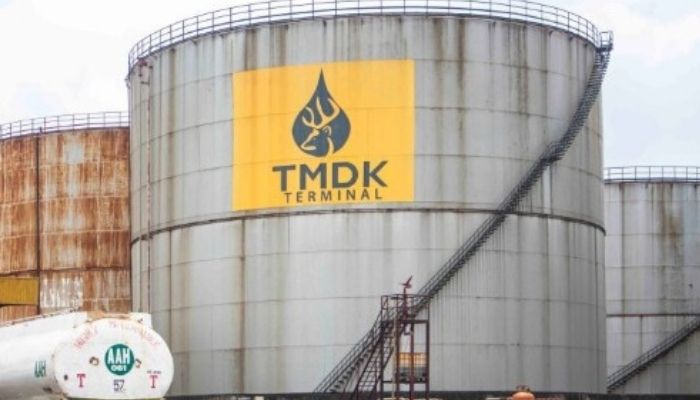
TMDK Terminals Ltd., one of the petroleum products depots in Lagos shut down due to non-compliance with the International Ship and Port Facility Security (ISPS) Code, has denied the claim, stating that it has never deliberately disregarded maritime security protocols and has made “substantial” upgrades to meet compliance standards.
In a statement on Thursday, the company described the Nigerian Maritime Administration and Safety Agency’s (NIMASA) enforcement action as a “mischaracterisation” of its status.
“Contrary to the impression created, TMDK has never at any time deliberately disregarded compliance directives or security protocols,” it said.

TMDK acknowledged NIMASA’s role as the designated authority on ISPS compliance but insisted it had constructively engaged with the agency over several months, responding to all recommendations in good faith.
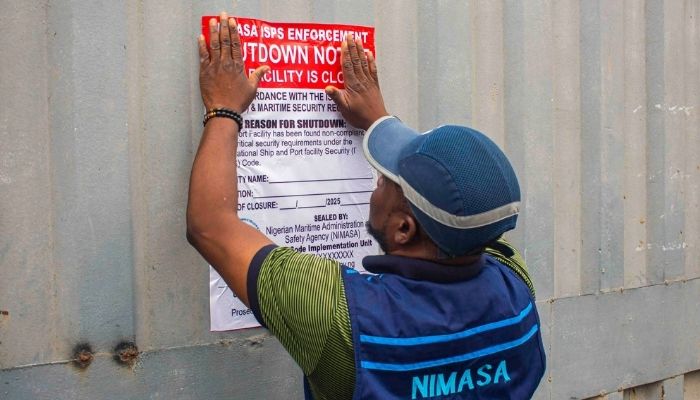
NIMASA said it closed the facilities “only as a last resort” after several warnings during the three-month window the code allocates. TMDK denies this.
Read also: NIMASA shuts down petroleum products depots over security violations
“At no point were we under formal notice that we had exceeded the three-month window of non-compliance that could trigger a shutdown under Section 79(f) of the ISPS Code Implementation Regulations, 2014,” it said.
The terminal operator said it had undertaken significant security improvements in the last six months, including the installation of advanced access control and surveillance systems. It added that it had intended to invite NIMASA for a re-inspection before the shutdown was enforced.

“It is disheartening that enforcement was initiated before this re-inspection could be carried out,” the company said.
The company urged NIMASA to conduct an immediate reassessment and lift the shutdown, warning that the continued closure of the facility poses risks to cargo movement and regional trade.
“Our terminal handles critical cargo for domestic and regional markets, and the continued closure has far-reaching implications on supply chain efficiency and trade facilitation.”











