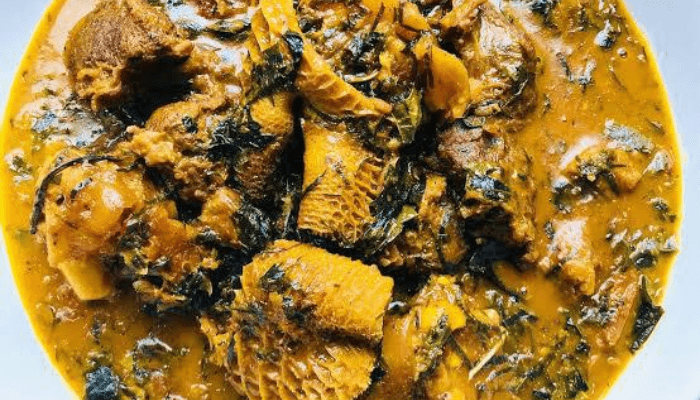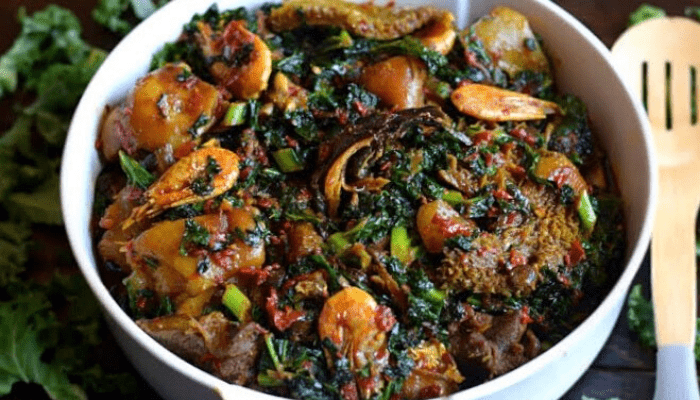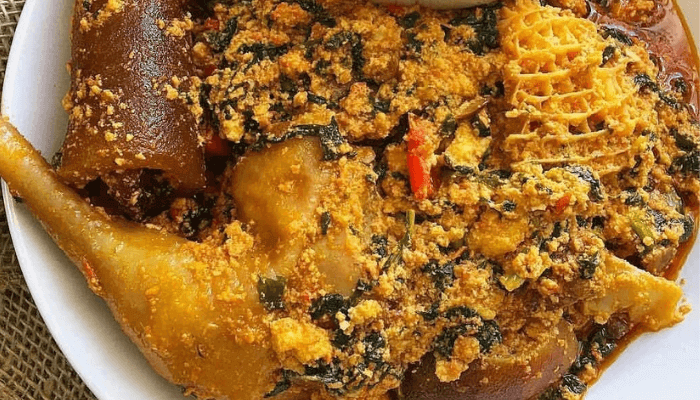
Mixed Egusi Vegetable Soup is a beloved soup that is relished across Nigeria and West Africa, as well as Africa and beyond, as a cultural unity soup. Unity because it is known and relished by virtually every family.
With the way Egusi has travelled from generation to generation, this soup is on track to gain recognition as part of UNESCO’s Intangible Cultural Heritage list.
Known for its rich flavour, nutritional value, health benefits, and cultural significance, Egusi soup is more than just a meal, it is a culinary emblem of unity and identity amongst Nigeria’s diverse ethnic groups.
Egusi, the key ingredient for the preparation of sumptuous Egusi Soup, comes from protein-rich melon seeds (Cucumeropsis mannii or Citrullus lanatus), commonly used as a thickening agent in many traditional soups. The seeds can be ground into fine powder or blended into a thick puree with water and often used l as a cultural ingredient in most Nigerian soups.

Whether it is among the Igbos of the South East, the Yorubas in the South West, the Itsekiris, Efik and Ibibio of the South South, or the Hausa in the North, Egusi soup holds a central place at communal tables, celebrations, and cultural ceremonies. Egusi is also very popular amongst the Esan and Etsakos.
The preparation, however, varies by region. Some fry the ground or blended seeds before mixing other ingredients, while others steam them; some mix in waterleaves and ugu leaves, while others add seafood like periwinkles, Isam and crayfish.
Still, every version shares the same base of rich melon seed paste, palm oil, assorted meats or fish, and a medley of local vegetables. The vegetables are always ranging from bitter leaves to any of scent leaves, tete, uziza, efo, soko, water leaves, ugu [pumpkin] leaves, okazi leaves and many others. Some people fry their egusi while cooking, others add directly to the pot of cooking stock with oil. Some other people, especially the South Western Ijebus, usually make the soup in a stew-like manner, known as Egusi Ijebu. With this, the soup is used for eating rice, yam or boiled plantain as well as any swallow, especially iyan, lafu and amala. The likes of fufu, tuwo, semo, and eba can also be enjoyed with the soup!
Beyond its taste and texture, Egusi soup offers impressive nutritional value. It’s packed with protein, healthy fats, and essential vitamins like A, B1, B2, and E. It provides vital amino acids like arginine and lysine, making it a key food source in communities with limited access to meat or assorted seafood. Egusi is composed of nearly 50 percent edible oil and another 30 percent pure protein.
Egusi seed as a great source of Arginine helps in regulating metabolism and improves the cardiovascular system while Lysine helps in the formation of collagen and connective tissues in the body. It is also low in calories and very good for those who are looking to shed some fat or run away from obesity. The Egusi seed is an excellent source of nutritional minerals and vitamins such as carboahydrate, fat, zinc, vitamin B1 (Thiamine), dietary fibre, sulphur, magnesium, vitamins B2 (Riboflavin), niacin and manganese amongst others.

Through the voice of this write-up, efforts are underway to list Mixed Egusi Vegetable Soup as an intangible cultural heritage item, starting with its inclusion in Nigeria’s national heritage inventory.
Once this move is successful, this could help preserve traditional cooking methods, empower local farmers and cooks, as well as attract food journalism and tourism.
As Nigerians continue to celebrate their culinary diversity, Egusi soup stands tall, not just as food, but as a symbol of culture, culinary heritage, tradition, health, and homeliness.
Recipe for 4 servings
2 smoked catfish
1 kilogram assorted meat
2 bunches ugu leaves [washed, shredded]
1 large stockfish
3 cups egusi [ground]
3 tablespoons ground crayfish
1 onion [shredded]
5 red pepper [ground]
Method:
1. Wash, salt, season, and cook the beef, stockfish and fish until the meat is quite tender.
2. Add the palm oil, crayfish, pepper and the onions and boil for another three minutes.
3. Stir and add the ground egusi, cover and simmer for two minutes.
4. Stir before adding the shredded ugu leaves.
5. Stir the soup thoroughly and simmer for one minute.
6. Remove from heat and serve alongside any hot iyan, that is pounded yam or any other swallow of your choice.