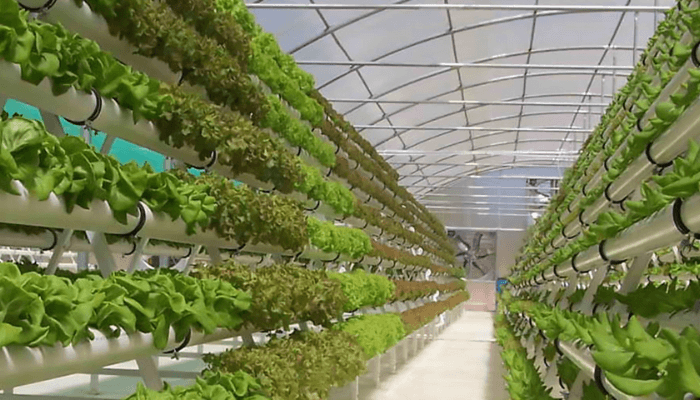
According to statistics provided by 2024 Cadre Harmonise report over 31.8m Nigerians are suffering from acute food insecurity, affecting mostly women and children who are also victims of malnutrition in the country. The food crisis is traced to high inflation, insecurity, economic hardship and climate change.
It all got worse after May 29 2023 as the surge in food commodity prices came as a result of the removal of fuel subsidy.in addition to security challenges has placed millions of Nigerians in the poverty and hunger bracket. Development partners which include the Food and Agriculture Organization (FAO), GAIN, GIZ, Agsys, made this known to the public at the Joint review meeting on implementation of the Food systems in Nigeria. It was held from the 26th -27th August, 2024.
In specific terms, the stakeholders advocated for a multi – sectoral approach of collaboration and partnerships between the public and private sectors in tackling food insecurity. While it is noteworthy that the Green Money Project, GMP recently launched as a presidential initiative is to involve the youths in modern agricultural practices, virtually all of us can play our parts in increasing food production, before the application of technology across the value chain of processing, preservation before marketing.
One of the ways to do that is by growing plants using air right from our homes. In fact, a group of farmers in Nigeria is using a technology-based method to grow crops from moisture in the air. The method, which is known as aeroponics, does not involve soil. Rather, plant roots hang in the air. The roots take in or directly absorb a nutrient solution from a watery mist.

But the truth is that aeroponics is not yet well-known in Nigeria, hence the need for public enlightenment as it is being done right here.
According to Timothy Obieze writing for VOA, the chemist Samson Ogbole, popularly known as Nigeria’s smart farmer and his team are growing crops without soil at the technology-based farm they started few years ago in Abeokuta, Ogun state. He stated that they are on a campaign to end seasonal food scarcity in Nigeria.
“Because we are the ones controlling everything that the plant requires, we are not depending on seasons. So it’s no longer seasonal farming. It is just farming anytime of the year, meaning you can plant anytime of the year, we can harvest anytime of the year.” he stated.
According to him, setting up the aeroponic farm was not easy. It required financing of more than $180,000, Ogbole said. And, some people in Abeokuta were very much against this non-traditional method of farming.
“We were called wizards, demons, that we are doing something unnatural.” He added that it took a lot of effort to change people’s minds about aeroponics. So, others interested in aeroponics should learn from this experience.

It is worthy of note that in Nigeria, about 30 million hectares of farmland is being used, instead of the 78.5 million hectares required for food security. It means that thee is scarcity of land for farming.In fact, in the north, communal conflict, militancy and desertification are thetop reasons the farmland is being lost. And only 49 percent of the land is fertile.
According to Philip Ojo the Director General of Nigeria’s National Agricultural Seeds Council the government welcomes new farming methods, including aeroponics.
The agricultural industry represents about 40 percent of Nigeria’s economy. The government has to greatly expand this percentage.
For now, most farmers lack the technical knowledge to increase productivity. They also need access to high-quality seeds to guarantee better harvests.
The benefits of aeroponics include the fact that it can be used in areas with limited land, or where soil is unsuitable for farming.
Indeed, tech-savvy farmers in Nigeria are using aeroponics to grow food in areas affected by land degradation and violence. Tillandsias or air plants are epiphytes, meaning they attach to other surfaces (like rocks, tree branches, or even decorative objects) but they do not need soil to survive.
With regards to nutrient and water absorption, they absorb moisture and nutrients from the air, rain, and mist. But it is necessary to care for them as they need to be misted or soaked regularly and should be placed in bright, indirect sunlight.
On understanding and taking good care of air plants, Ann Whiteman writing for ‘ Gardens’ platform offers some useful insights. According to her, some of the air plants cling to trees mainly for structural support. They do not harm the trees they are perched in. It has been discovered that tiny scales on their leaves, called trichomes, absorb water and nutrients directly from the air, and even help shade the plant from scorching sun. The plants’ “roots” are used only for clinging and do not absorb water and nutrients like earthbound plants.
With regards to temperature it should be noted that all air plants come from tropical climates where cold and freezing never occur. So, it is important to keep them at temperatures you find comfortable without a sweater — generally from the 60s and warmer. Do not place them close to air conditioner vents and cold winter windows.
Generally, air plants do best with at least a few hours of bright, indirect sun daily. Placement within 1 to 3 feet of an east- or west-facing window, or within a foot or two of an artificial light source is ideal. If you keep them well watered, they can have hotter, more direct sun and longer exposure. Avoid dimly lit locations.
On the issue of watering like other houseplants, air plants have many biological adaptations resulting from millenia of evolving in their native habitat. The appearance of your air plant’s leaves can give you clues about how to care for it:
Fuzzy leaves with feathery, white, silvery, and dusty coatings indicate xeric types that come from sunny, dry climates, where rainfall is less frequent. Their pronounced trichomes collect maximum water when it falls and hold it for use during dry periods. They need watering only once or twice a week and can tolerate more sun.
But the smooth, glossy leaves are most common on mesic types that come from shaded, moist rain and cloud forests, where water is plentiful. They have less pronounced trichomes and less protection from drying out and hot sun. They need more frequent watering.
The best way to water your air plant depends on the plant, its location and your own preferences. Use room temperature tap or rainwater, but never softened water because the salt in it can damage your plants.
Misting is perfect for plants inside globes or displays, and for people who like daily interaction with their plants. Mist three to seven times a week, depending on the type of plant, and try to wet all surfaces.
Dunking is good for plants that are attached to wood or freestanding, as well as those with dense or very curly leaves that are hard to mist thoroughly. Dip the whole plant briefly into a pan of water or a freshwater fish tank, or put under a running faucet. Use this method two to four times per week for mesic types and once a week for xeric types.
Soaking helps revive dry plants. Submerge the whole plant for 1 to 3 hours. Use this method once a week or after a period of neglect.
After watering, shake out the excess so that no standing water remains in the center.
Let plants dry in a well-ventilated place so they don not remain wet. Water more frequently in air conditioning, hot weather and desert climates, and less frequently in cool, cloudy weather.
This is one topic that has to be updated to enlighten Nigerian farmers who are ready to engage in it to boost food security.