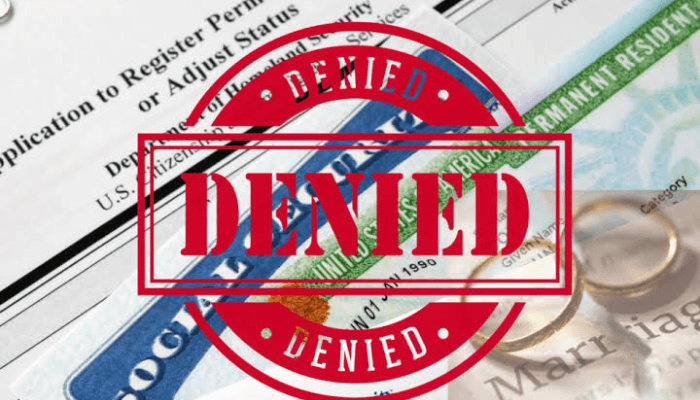
Marriage has become a go-to route for those looking to secure residency in the United States. With other visa options becoming tighter, more people are turning to the aisle as their pathway to the American Dream. But what many don’t expect is how often this ‘shortcut’ hits a dead end.
The U.S. Citizenship and Immigration Services (USCIS) is not as blind to the game as some assume. In fact, there are numerous reasons why a green card marriage application could be rejected.
Here are some of the most common pitfalls and how to avoid them.
Paperwork mistakes

It might sound simple, but mistakes on your green card application can easily lead to rejection. USCIS is incredibly strict when it comes to paperwork, and even minor errors can result in your application being denied. Missing signatures, incorrect information, or failing to provide certified translations for documents in foreign languages are just a few of the common mistakes. If you are submitting documents such as marriage certificates or birth certificates in a language other than English, make sure they are accompanied by a certified translation. Also, remember to sign where required and ensure all fields on the forms are completed. If a question does not apply to you, it is best to write “N/A” rather than leaving it blank. Always double-check your paperwork before submission to avoid costly mistakes.
Insufficient proof of a genuine marriage
One of the most common reasons for a green card marriage denial is not providing enough evidence that the marriage is real. USCIS needs to be convinced that your relationship is not just a convenient arrangement to secure a green card. They are not looking for just the marriage certificate, you need to show that your life together is genuine. This means providing joint financial documents like bank accounts, credit card statements, or tax returns, which show that you and your spouse are sharing financial responsibilities. Proof of cohabitation is also essential, such as joint utility bills, a shared lease agreement, or a mortgage document. Even personal evidence, like photos of you and your spouse with family and friends, can play a crucial role. If you are unable to provide sufficient documentation to prove the authenticity of your relationship, it could lead to a denial. Make sure your evidence is thorough to avoid unnecessary setbacks.
Read also: 5 high paid jobs abroad that people are reluctant to take
Criminal records and other factors

A criminal record or certain medical conditions can make you ineligible for a green card. While not all criminal records will result in a denial, some especially those related to immigration fraud, could be problematic. Additionally, certain medical conditions, such as communicable diseases or a history of drug abuse, might prevent you from securing a green card. If you or your spouse have lied or misled immigration officials during the application process, even in small ways, your application can be denied.
Failure to meet financial requirements
When applying for a marriage-based green card, one of the key factors USCIS looks at is your financial situation. The spouse who is sponsoring the green card must demonstrate that they can financially support the applicant. They must earn at least 125% of the Federal Poverty Level, which can be proven with tax returns, pay stubs, or other financial documents. If the sponsoring spouse does not meet the income requirement, there are options to make up the difference. You can include income from other household members, assets, or even get a co-sponsor, a family member or close friend who meets the income requirement. Without proof that the sponsoring spouse can financially support the applicant, the green card application is likely to be denied. Make sure all your financial documentation is in order before applying.
Eligibility issues when applying inside the U.S.
While many expect to apply for a green card from within the U.S., this option is not available to everyone. Some situations can make you ineligible to apply for a green card while inside the U.S., even if you are married to a U.S. citizen or green card holder. For instance, entering the U.S. on a tourist visa and then applying for a green card within 60 days of arrival could raise suspicions that you had premeditated the green card application. Similarly, if you entered the U.S. illegally, or if you entered on a J-1 visa (a type of exchange visitor visa), you might be ineligible to apply from within the country. In these cases, you would need to apply for a green card from outside the U.S., typically at a U.S. embassy or consulate.
Missing supporting documents
When submitting your green card application, it is crucial that all required documents are included. Missing or incomplete documentation is a common reason for application denials. Make sure to include all essential documents, such as marriage certificates, birth certificates, financial records, joint bank statements, utility bills, and photographs that demonstrate the authenticity of your marriage. Missing even one crucial document could delay your application or result in its denial, so it’s important to carefully review your application before submission.
Interview slip ups
The green card interview is one of the final steps in the process, but it can make or break your application. USCIS uses the interview to assess the authenticity of your marriage, and any discrepancies between your application and your answers during the interview can raise red flags. During the interview, you’ll be asked questions about your life together, how you met, your daily routines, and more. If you and your spouse give inconsistent answers or appear unprepared, the immigration officer may suspect marriage fraud. To avoid this, it is important to be well-prepared and ensure that both you and your spouse know key details about each other’s lives. If you are unsure about anything, consider practicing together before the interview. Being honest and transparent throughout the process is the best way to ensure a smooth interview.