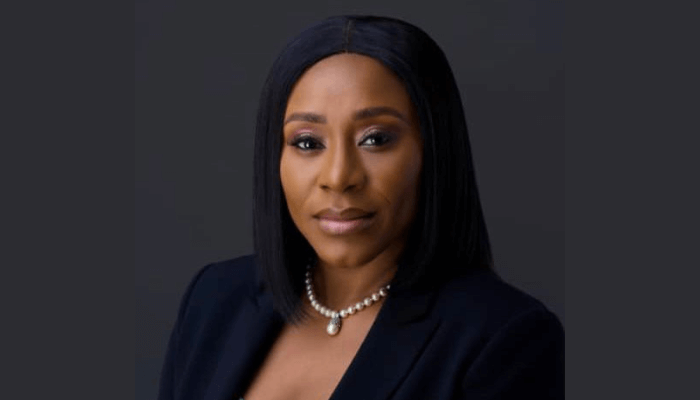
Uche Uzoebo is the Managing Director and Chief Executive Officer of SANEF Limited. With over 20 years of experience in banking and financial services, Uzoebo brings deep expertise in digital payments, financial inclusion, and gender advocacy.
Prior to her appointment, Uzoebo served as the Chief, Distribution & Stakeholder Engagement Officer at SANEF. She played a key role in advancing SANEF’s mission to expand digital financial services and promote financial inclusion across Nigeria. Her leadership in business development and financial literacy significantly contributed to SANEF’s growth.
Uzoebo is a Certified Product Manager and holds the prestigious Honorary Senior Member (HCIB) title from The Chartered Institute of Bankers of Nigeria (CIBN). She is also a Fellow of Acumen West Africa and The Microfinance Association, UK. Throughout her career, Uzoebo has demonstrated a strong commitment to advancing financial inclusion and digital payments. She has collaborated with regulators, financial service providers, and government agencies to improve economic inclusion, particularly through agent networks and digital solutions.
A passionate advocate for women’s empowerment, Uzoebo’s leadership has driven initiatives to support gender equity in business. She is a certified Licensed National Business Development Service Provider (BDSP), She is also a certified trainer for the LPI-IFC TPMA program and an active member of the Association of International Product Marketing & Management (AIPMM) and Global Women in Management (GWIM).

In this interview with Lehle Blade, Uzoebo takes us through her career journey and how she hopes to ensure SANEF remains at the forefront of technological advancements by building upon a legacy of financial inclusion amongst others.
Career Journey: A Foundation Built on Financial Services and Leadership
Over the course of my career, I have developed a strong and multifaceted foundation in financial services, which has been instrumental in shaping my leadership approach and vision for the future. My professional journey spans several key milestones, each of which has provided valuable lessons and experiences that continue to guide my work. From retail and commercial banking to transaction banking, merchant acquiring, digital payments, project and product management, and financial inclusion, I have had the privilege of working in various sectors that are critical to the development of an inclusive financial ecosystem.
One of the highlights of my career has been my focus on driving change and innovation across these different areas. Throughout my roles, I worked towards the continuous improvement and expansion of digital financial services, recognizing their potential to bring transformative change to underserved communities. By strategically aligning my efforts with the evolving needs of the market, I have been able to lead initiatives that foster the growth and scalability of digital financial solutions. From the launch of new products to the establishment of partnerships with fintech companies, my journey has been defined by a commitment to improving access to finance and facilitating the digitization of payments in Nigeria.
My appointment as the Managing Director and CEO of SANEF (Shared Agent Network Expansion Facility) reflects my deep commitment to advancing financial inclusion, particularly through the expansion of digital payment systems and agent banking networks. At SANEF, I am responsible for ensuring that more Nigerians have access to secure, affordable, and reliable financial services through agent banking—particularly those who are underserved or excluded from traditional banking systems. My leadership approach prioritizes inclusivity, collaboration, and innovation, as I believe these are the key drivers for achieving long-term progress in financial inclusion.

Leadership Transition: Building Upon a Legacy of Financial Inclusion
As I step into the role of Managing Director and CEO of SANEF, I am mindful of the strong foundation laid by my predecessor, Ronke Kuye, who has played an integral role in promoting financial inclusion in Nigeria. Under her leadership, SANEF has made significant strides in enhancing access to financial services, and my goal is to continue building upon this legacy.
One of the key areas I will focus on is further strengthening SANEF’s role in expanding access to financial services, particularly in underserved areas. In Nigeria, there are still vast swathes of the population that lack access to formal financial services, especially in rural and remote communities. By enhancing the agent banking network, we can ensure that individuals and businesses in these areas can access the financial tools they need to thrive. I plan to work closely with our partners, including banks, regulators, fintechs, developmental organizations and local communities, to drive forward these initiatives.
In addition, I will focus on leveraging technology to improve the efficiency and scalability of digital payments and financial services. With the rapid rise of mobile phones, internet connectivity, and digital platforms, there is an unprecedented opportunity to reach more Nigerians with digital financial solutions. I aim to ensure that SANEF remains at the forefront of these technological advancements, continually innovating to meet the changing needs of our population.
Agent Network Expansion: Strengthening the Backbone of Financial Inclusion
One of the cornerstones of SANEF’s mission is the expansion of the agent banking network, which plays a critical role in bringing financial services to underserved areas. While we have made significant progress in expanding this network, there is still much work to be done to ensure its sustainability, viability and growth. In my role, I will prioritize agent sustainability by focusing on key areas such as agent recruitment (onboarding, KYC), training, capacity building, and retention.
To ensure that agents are well-equipped to serve their communities, we will implement robust training programs that cover not only the technical aspects of digital payments but also customer service and financial literacy. These programs will empower agents to provide the highest level of service to their customers and build trust in the system. In addition, I will work to expand the types of services offered by agents, moving beyond basic cash-in, cash-out services to include more comprehensive financial products such as basic savings accounts, micro loans, micro insurance, pension and other value-added services.
I also recognize that agent banking is not just about deploying agents in communities but about ensuring that those agents are accessible to the people who need them most. This means collaborating with local communities to identify areas where agents can be strategically located, whether in markets, villages, or other hubs of economic activity. By working closely with communities, we can build a more robust and efficient agent banking network that meets the needs of Nigerians across the country.
Digital Financial Services: Leveraging Technology for Greater Inclusion
In an increasingly digital world, technology has become a key enabler of financial inclusion. In Nigeria, where a significant portion of the population still lacks access to traditional banking services, digital financial services have the potential to bridge the gap and bring millions of people into the formal financial system. As the CEO of SANEF, I am committed to harnessing the power of technology to expand access to financial services for underserved populations.
One of the core components of my strategy will be to leverage mobile technology, data analytics, and digital wallets to reach individuals in rural and remote areas. These technologies have already shown tremendous promise in providing access to banking services, and we are only beginning to scratch the surface of their potential. By partnering with fintech companies, we can offer seamless, affordable, and accessible digital services that meet the unique needs of Nigerians, regardless of their location or economic status.
Alongside expanding access to digital platforms, it will be critical to educate users on how to effectively use these tools. Financial literacy campaigns that focus on digital literacy will be a key part of our efforts. We will collaborate with local communities, developmental organizations, school and other stakeholders to ensure that Nigerians understand how to use mobile banking apps, digital wallets, and other financial technologies to manage their money safely and effectively.
Stakeholder Collaboration: Strengthening Partnerships for Financial Inclusion
Achieving financial inclusion requires collaboration across various sectors and stakeholders. At SANEF, we understand that no single organization can achieve this goal alone. It is essential to work together with regulators, banks, fintech companies, development organizations, and local communities to create a sustainable and inclusive financial ecosystem.
I plan to prioritize collaboration with regulators to ensure that the regulatory environment remains conducive to financial innovation while protecting consumers and maintaining stability in the financial system. Striking the right balance between regulation and progress is essential for creating an environment where financial inclusion can flourish. I will also work closely with banks and fintech companies to build partnerships that expand the range of digital financial services available to Nigerians. This collaborative approach will enable us to scale up our initiatives and reach more people with the services they need.
Women’s Empowerment: Promoting Economic Inclusion for Women
Women’s economic empowerment remains one of my top priorities. I believe that empowering women with the tools and resources to succeed in the digital economy is essential for promoting gender equality and improving financial inclusion. As part of this vision, I will work to ensure that women are active participants in the financial ecosystem, both as consumers and as agents.
A key component of this strategy will be providing women with access to microfinance and financial management training. These resources will enable women entrepreneurs to build sustainable businesses and improve their financial resilience. Additionally, I will advocate for greater representation of women in the agent banking network, ensuring that they have access to the training and support needed to succeed in this space.
Furthermore, we will promote tech literacy among women and encourage their participation in the digital economy. By improving access to digital platforms, we can empower women to take full advantage of the opportunities available in the growing fintech sector.
Financial Literacy: A Critical Component of Financial Inclusion
Financial literacy is a cornerstone of SANEF’s strategy for promoting financial inclusion. Without an understanding of how to manage money, save, and invest, individuals are less likely to take advantage of the financial services available to them. For this reason, financial literacy will remain a key priority for SANEF under my leadership.
To enhance financial literacy across Nigeria, we will collaborate with regulators, financial service providers, and development organizations to create educational content and campaigns. These initiatives will be designed to raise awareness about the importance of financial management, savings, and investments, while also providing practical tools and resources to help Nigerians make informed decisions.
Challenges in Financial Inclusion: Addressing the Barriers
Despite the progress made in expanding financial inclusion, there are still significant challenges to overcome. In Nigeria, limited access to banking infrastructure in rural areas, low financial literacy, and distrust in financial institutions remain key barriers to full inclusion. To address these challenges, SANEF is focused on expanding agent networks into areas where financial access is limited, providing financial education, and working with regulators to create policies that support financial inclusion.
Future Trends: The Digital Revolution in Financial Inclusion
As we look to the future, I believe that advancements in mobile banking, digital wallets, and blockchain technology will continue to drive financial inclusion. These innovations will make financial services faster, more affordable, and more accessible to individuals in remote or underserved areas. The continued growth of the fintech sector will also democratize financial services, enabling a wider range of individuals and businesses to benefit from these advancements.
Personal Motivation: A Passion for Transforming Lives
My passion for financial inclusion stems from a deep belief that access to financial services can be a catalyst for meaningful economic change. I have witnessed firsthand how financial services can lift individuals out of poverty, empower small businesses, and create new opportunities for people to improve their lives. This belief drives my commitment to continue advocating for inclusive financial systems that benefit everyone, regardless of their background or economic status.
Advice for Aspiring Women Leaders: Embracing Leadership with Confidence
To aspiring women leaders, my advice is simple: be bold and persistent in your pursuit of leadership roles. Step outside your comfort zone, take on challenges, and believe in your ability to lead and make a difference. Surround yourself with a strong support network of mentors and peers and never stop learning and growing. Leadership is about making an impact, and you have the power to do so.
Integrating Experiences: A Comprehensive Understanding of Financial Inclusion
My diverse experiences across various roles in leadership, innovation, and financial services have provided me with a comprehensive understanding of the challenges and opportunities within the financial sector. These experiences have shaped my approach to leading SANEF, driving its mission forward, and fostering collaboration among stakeholders to promote financial inclusion in Nigeria. Through a combination of strategic thinking, technological innovation, and deep collaboration, I am confident that we can build a more inclusive and accessible financial system for all Nigerians.