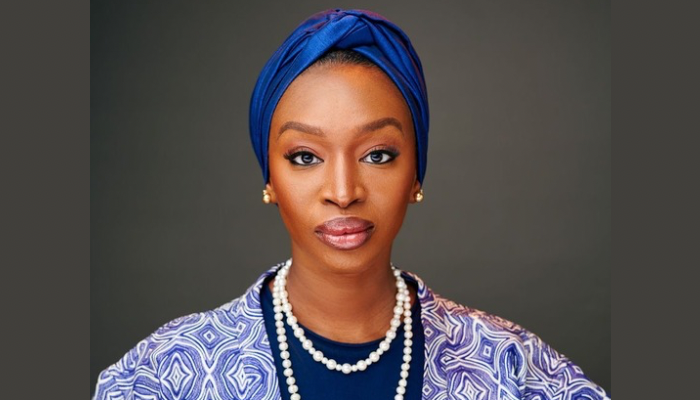
Nabila Aguele is Chief Executive, Nigeria at the Malala Fund, where she leads the organisation’s country strategy and operations, and oversees the external affairs portfolio. She is a lawyer, public policy expert and advocate for gender equality with more than 20 years of experience.
As an expert in sustainable development, she employs data-driven and narrative-based advocacy to drive policy change and shift societal norms.
Aguele also serves on the boards of Women for Women International, INSEAD, and Girl Rising. At Girl Rising, she is Vice-Chair of the Board and Chair of the Nominating & Governance Committee. She is a Non-Resident Fellow with the Center for Global Development and a Senior Fellow with the African Center for Economic Transformation.
Before joining Malala Fund, Aguele served as a Special Adviser to Nigeria’s Minister of Finance. In her role, she championed gender-responsive fiscal policies and budgets and helped craft Nigeria’s Integrated National Financing Framework. Prior, she was a Special Adviser to Nigeria’s Minister of Finance, co-leading the Strategic Revenue Growth Initiatives; and a Technical/Special Assistant to Nigeria’s Minister of State for Budget & National Planning.

Before transitioning into the policy and governance space, Aguele served on the full-time faculty at American University Washington College of Law (AUWCL), co-leading the GlushkoSamuelson Intellectual Property Law Clinic (an in-house pro bono law firm). She also designed and taught the school’s first Patent Litigation course. Prior, she represented Fortune 500 companies in complex civil patent litigation at large law firms, including Morrison Foerster, and was appointed Special Assistant Attorney General with the District of Columbia Office of the Attorney General, on secondment.
In this interview with Lehlé Baldé, Nabila Aguele speaks on Malala Fund and its mission in Nigeria and how the initiative helps to challenge societal norms and push for policy shifts in girls’ education, amongst others.
Can you share an overview of the Malala Fund and its mission in Nigeria?
Malala Fund is an international non-profit organization co-founded by Malala Yousafzai and her father, Ziauddin Yousafzai, aimed at ensuring every girl accesses quality education. In Nigeria, our focus is on removing the barriers that prevent girls from going to school, particularly in regions where cultural norms, economic challenges, and security issues limit educational opportunities. We work closely with our partners to advocate for gender-responsive education policies that ensure girls can access and stay in school.
What inspired the creation of Malala Fund, and what have been some of your key achievements since its inception?

Malala Fund was inspired by Malala’s personal fight for education, which began when she spoke out against the Taliban’s efforts to deny girls’ access to education in her home country of Pakistan. Since its inception, Malala Fund has achieved remarkable milestones.
Some of our more recent key achievements can be found in our Annual Report but in Nigeria specifically, Malala Fund has actively advocated for increased education funding resulting in a 10 percent increase in the national education budget. We have invested over $8 million in programs, policy work, and advocacy led by local partners to address the unique challenges faced by girls in accessing education.
Our grantee, Invictus Africa for instance, is working with Oyo and Gombe states to incorporate a Gender Responsive Education Budgeting framework into various phases of their education budgets. The framework helps policymakers address gender inequalities in education by ensuring that they consider gender in all steps of the budget process. It also outlines activities to improve girls’ enrolment and completion rates.
Just recently, the Centre for Advocacy, Transparency and Accountability Initiative (CATAI) supported Adamawa in developing and launching the state’s first gender responsive Policy on Education. It includes provisions on mentorship programs, safe school environments, gender-sensitive leadership, and active parental involvement to enhance opportunities for girls.
Our goal in Nigeria is to ensure that more girls not only have the opportunity to go to school but also to stay in school and complete 12 years of education. We will continue to work tirelessly until all girls can learn and choose their own futures.
As a lawyer and public policy expert with over 20 years of experience, how has your narrative-based advocacy approach influenced policy change and societal norms?
I strongly believe that advocacy is fundamentally about getting people to care—and to do that; you must have data and stories because while numbers provide evidence, stories create urgency. Policy change isn’t just about presenting the right facts; it’s about shifting mindsets and making issues human and personal. My approach is informed by my time as a lawyer and law professor in Washington, DC. As a patent litigator, I worked on high-profile federal court cases on behalf of Fortune 500 companies, and learned quickly that success hinged on presenting facts compellingly, and leveraging persuasive arguments. Later, as Professor and Practitioner-in-Residence at American University Washington College of Law, I educated senior law students to recognise the importance of knowing their audience and tapping into the power of advocacy and strategic storytelling – be it in representing independent filmmakers, entrepreneurs, or preparing Amicus Briefs.
In government, working on gender-responsive fiscal policies, I saw first-hand how framing issues through real stories of women and girls changed perspectives. When stories are rooted in facts and enriched by real human experiences, they have a direct impact on decision-makers. Fiscal policies and budgetary choices resonate most when they move beyond abstractions and reflect real life experiences. They become tangible issues– determining whether a girl remains in school, a mother receives life-saving prenatal healthcare, or women-owned small businesses secure the critical financing they need to thrive.
All of these experiences have reinforced a fundamental lesson: policy cannot stand alone. It must be human-oriented, responsive, and accountable.
At Malala Fund, we use narrative-based advocacy to challenge societal norms and push for policy shifts in girls’ education. We center the voices and needs of girls so that their real lived experiences and stories drive policy conversations and inform policy decisions. Data can tell you that millions of girls are out of school, but hearing from a 14-year-old girl who has had her education disrupted by insecurity, hidden school fees, or child marriage, presents an important and sobering sense of urgency.
Ultimately, advocacy is about connection. Policymakers and other key stakeholders, like all of us, are moved by what they can relate to. It is therefore critical to bridge the gap between policy and lived experience to create real, lasting change.
Could you tell us about your roles with Women for Women International and Girl Rising? What impact have these organisations had in advancing women’s rights?
My commitment to gender equality is rooted in shifting systems and narratives to create real opportunities for women and girls. Serving on the boards of Women for Women International (WfWI) and Girl Rising allows me to contribute in complementary ways.
WfWI equips women in conflict-affected regions with the skills and resources to rebuild their lives. Beyond economic independence, the organisation fosters agency and advocacy, ensuring women can drive change in their lives and for their communities. At Girl Rising, storytelling is a tool for advocacy and education, shifting global perceptions about girls’ potential.
Both organizations reinforce what I deeply believe: investing in women and girls isn’t just the right thing to do—it’s essential for sustainable development.
During your time as a Special Adviser to Nigeria’s Minister of Finance, what key initiatives did you champion that focused on women’s empowerment?
As Special Adviser to Nigeria’s Minister of Finance, I was privileged to lead on the development of and advocacy related to gender-responsive fiscal policies and budgets — ensuring that inclusive policy design was not just as an afterthought, but as a strategic priority. One of the most impactful policies I helped shape was integrating gender-responsive budgeting into the National Budget process (as reflected in the Budget Call Circular), driving targeted investments in education, healthcare, and women’s economic empowerment programs.
I also led work on the development of Nigeria’s gender-responsive Integrated National Financing Framework (INFF) – a tool developed by the United Nations to help countries strengthen planning processes and finance national priorities. This framework helps align public and private sector investments with the Sustainable Development Goals (SDGs), including those focused on women’s economic participation. As a pioneer INFF country, Nigeria was among the very first countries to develop and launch an INFF Report – during a landmark presidential launch event that took place in New York on the sidelines of the 2022 United Nations General Assembly (UNGA). As a technical lead and advocate for implementation of INFFs, I made technical presentations at global meetings, G20 side events, and senior-level regional meetings.
Finally, I supported the development of the national Women’s Economic Empowerment (WEE) Policy, a first of its kind, cross-sectorial roadmap for enhancing women’s economic empowerment in Nigeria.
What was your journey like serving as a Special Adviser to Nigeria’s Immediate Past Minister of Finance, Budget and National Planning and what challenges did you encounter in that role?
My time in government was both rewarding and transformative. After returning to Nigeria in 2016, I spent seven years supporting the Honourable Minister across three ministries—Budget and National Planning (2016 – 2018), Finance (2018 – 2019), and the combined Ministry of Finance, Budget, and National Planning (2019 – 2023). Switching careers and returning home to work in government after having practiced law in the United States required adapting to a different personal and professional culture, building new networks, and understanding the nuances of policy implementation within the local context. While it was an adjustment, it also gave me a unique perspective. My work spanned development cooperation, integrated and inclusive financing frameworks, monitoring and evaluation, and gender responsive fiscal policy.
I began as a Technical Assistant to the Honourable Minister of State for Budget and National Planning, supporting the implementation ofNigeria’s National Monitoring and Evaluation Framework–tracking progress, measuring impact, and contributing to the development of the draft National M&E Policy. In 2018, following a transition to the Ministry of Finance, I shifted focus to support the development and implementation of the Strategic Revenue Growth Initiatives (SRGI), a key fiscal reform effort. I also supported implementation of Nigeria’s Open Government Partnership (OGP) revenue transparency commitments, aimed at driving greater fiscal accountability. In 2019, the two ministries merged to form the Ministry of Finance, Budget and National Planning. As Special Adviser to the Honourable Minister, I led initiatives on performance management, gender-responsive fiscal policy, and international development cooperation.
One of my biggest takeaways was that governance is complex, and driving sustainable policy change requires more than evidence and advocacy. Success depends on stakeholder buy-in, alignment with national priorities, and strategic engagement across ministries, agencies, and partners. Taking the time to build consensus and ensure reforms were well understood and positioned for long-term implementation was essential—especially in a rapidly shifting economic landscape, including during the COVID-19 pandemic. I quickly realized the value of drawing from the rich experiences of global convenings like the UN General Assembly, the World Economic Forum Annual Meetings, and the World Bank IMF Spring and Annual Meetings to gain a broader perspective on how our work in Nigeria connected to the global landscape, and to develop a network of like-minded professionals.
On a personal level, balancing public service with motherhood was both a challenge and a blessing. I had all three of my children while serving as an advisor in government, navigating pregnancy, maternity leave, and a high-pressure role simultaneously. I found this experience incredibly grounding amid the often dizzying and all-consuming demands of being an Adviser. It taught me the importance of setting priorities and embracing flexibility.
Despite these challenges, my time in government reinforced the power of collaborative policymaking and strategic advocacy. It was an opportunity to work within existing structures to drive meaningful change, and to help ensure that gender equality was not just seen as a social issue but as a critical driver for economic development.
Before your transition into policy and governance, you were part of the faculty at American University Washington College of Law. What motivated that shift?
My time as a law professor at my alma mater, American University Washington College of Law was an incredibly fulfilling experience. Teaching gave me the opportunity to mentor and help shape future lawyers, with a focus on clinical legal education, which prioritizes hands-on learning through pro bono client representation. What made it even more special was the chance to teach in the same classrooms and alongside the very professors who had shaped my own legal perspective—one grounded in the belief that social justice and inclusivity should not be confined to social impact law but should be embedded in every aspect of one’s life and practice.
During my time as a full-time member of the Glushko-Samuelson Intellectual Property Law Clinic (a non-profit law clinic within the law school’s top ranked clinical education programme), I taught, supervised, and mentored student attorneys on real-world cases at the intersection of law, business, and human rights. I also created and taught the school’s first Advanced Patent Litigation course. A highlight was leading a team of student attorneys who co-authored an amicus brief in a landmark U.S. Supreme Court gene patent case – an experience that underscored the strength of narrative and framing to inform legal and policy decision-making at the highest level.
I enjoyed teaching and strongly considered staying on that path. Over time, I felt drawn to working on systemic reform beyond legal practice and academia. I also wanted to experience life and work in Nigeria—a homeland I had left at 7 and knew only through family, visits and diaspora connections. I wanted to be in spaces where law, policy, and governance intersected – where decisions that shaped entire economies and societies were made.
I wanted to be in spaces where law, policy, and governance intersected – where decisions were being made that shaped entire economies and societies. Transitioning into government allowed me to work on structural reforms, economic policy, and gender-responsive governance, applying my legal expertise in ways that could drive large-scale impact.
The shift wasn’t about leaving law behind—it was about using what I had learned to help shape inclusive, forward-thinking policy decisions with lasting impact.
What lessons from your academic experience have significantly influenced your decisions and initiatives?
My academic journey has shaped how I think and lead. Studying law and business gave me the tools to analyze complex challenges, but more importantly, both experiences taught me resilience and adaptability.
At American University Washington College of Law, I learned that systems are designed – but they can also be changed. Law school sharpened my ability to advocate effectively and communicate with the audience in mind, skills that have been invaluable throughout my career. Returning to the school as a law professor added another layer. It reinforced that true impact comes from not just knowing the law, but from shaping how others engage with it.
My MBA at INSEAD, a top international business school, reinforced the importance of diverse perspectives and of the powerful interplay between business and society. It was a truly transformative experience that laid the foundation for my transition to Nigeria.
One of the biggest takeaways from my academic journey is that knowledge alone isn’t enough – execution and coalition-building matter just as much. Whether in government, advocacy, or business, change doesn’t happen in isolation. Good ideas need the right people, the right timing, and the right strategy to turn them into action.
What fuels your passion for women’s equality and empowerment? Are there specific experiences from your childhood or career that shaped this commitment?
My passion for women’s equality and empowerment is deeply personal. It’s shaped by both lived experiences and the systemic barriers I’ve seen women and girls face – whether in my own life, in policy spaces, or through my work in advocacy and governance.
Growing up, I was fortunate to be surrounded by strong women—especially my mother— and to be raised by a father with an unwavering belief in the power of educating and empowering all his children. I also saw how opportunity isn’t evenly distributed. I grew up in multiple countries – Nigeria, England, Qatar, and Canada – which meant I saw, firsthand, how access to education and economic independence shaped women’s lives differently across and even within cultures. Even in spaces of privilege, the barriers for women were undeniable. This awareness deepened in my career, and through my work in the national planning and fiscal policy space I was able to support policies and initiatives that recognized the important link between women’s empowerment and improved economic, health, and broader development outcomes.
I also believe strongly in the power of storytelling. Whether through our advocacy work at Malala Fund alongside incredible partners, or through my board responsibilities, I’ve seen how amplifying the voices of women and girls, sharing their stories, and ensuring they have platforms to advocate for themselves can be transformative.
At the heart of all of this is a fundamental truth: when women and girls succeed, societies progress. This isn’t just about fairness – it’s an economic and social imperative. Giving women the freedom, resources, and opportunities to thrive isn’t a luxury – it’s essential.
Who do you consider your role models, and what qualities do they possess that inspire you?
My parents, Prof. Isa Odidi and Dr. Amina Odidi, both pharmaceutical scientists and entrepreneurs, have been my greatest role models. My mother, in particular, has been my biggest inspiration. She embodies strength, resilience, and quiet leadership, showing me what it means to lead with purpose and integrity.
She has always balanced career, family, and service with a deep sense of responsibility – proving that ambition and kindness can go hand in hand. She taught me that leadership isn’t about titles but about how you show up for others and the impact you leave behind. Watching her navigate challenges with grit and grace reinforced my belief in the power of perseverance, adaptability, and staying true to your values.
Both of my parents instilled in me a deep respect for education, hard work, and the responsibility to give back. Their example shaped my approach to public service, advocacy, and leadership, reminding me that success isn’t just about what you accomplish—it’s about what you build for others.
What’s next for you, Nabila Aguele? Are there any upcoming projects or initiatives you’re particularly excited about?
Right now, I’m deeply focused on our work at Malala Fund, particularly on advocating and grantmaking to push for policies that ensure that girls have access to 12 years of free education, securing increased and better quality education financing, and shifting social norms around girls’ education in Nigeria.
In the coming months, I’m excited to unveil Nigeria’s priority focus areas under the incoming 2025-2030 Malala Fund strategy. Our team is also looking forward to continued engagement with key stakeholders, and to working closely with our partners to ensure that more girls can learn, lead and choose their own futures. More updates to come!