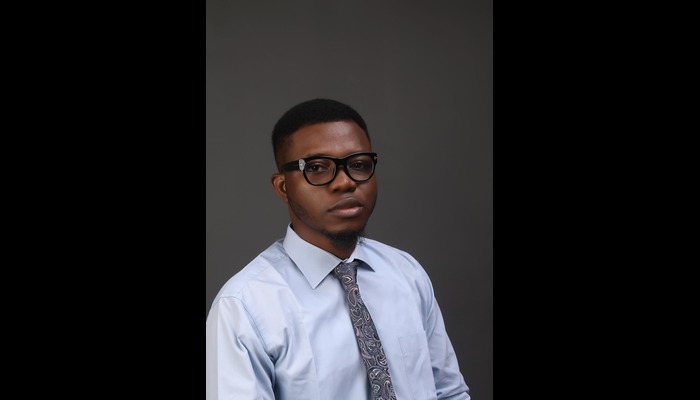
In observance of the International Day of Education 2025, themed “AI and Education: Human Agency in an Automated World,” and amid renewed global focus on how artificial intelligence is reshaping governance, risk, and education across Africa, BusinessDay turns its spotlight on one of the continent’s emerging thought leaders — Courage Oko-Odion.
As African corporations confront the realities of rapid digital transformation, few professionals have made as strong an impression in governance, compliance, and AI-driven risk management as Oko-Odion. Known for his impactful work at Deloitte, one of the world’s “Big Four” firms, and for his growing body of scholarly research, he has become a standout voice redefining how technology, data, and accountability intersect across emerging markets. His perspective, situated at the crossroads of AI innovation and corporate transformation, offers timely insight into how Africa can balance automation with human oversight in an increasingly data-driven world.
In this conversation with BusinessDay Nigeria, he shares insights from his journey from auditing and AI risk assessment to leadership in global consulting and his vision for the continent’s governance future.
Q: Courage, you’ve become widely recognised for your expertise in risk and corporate governance. How did this journey begin for you?

Oko-Odion: It started quite naturally for me. I’ve always been fascinated by how finance, data analytics and technology can be designed to manage risk and uncertainty. My early background in Economics and Statistics from the University of Benin gave me that analytical foundation. Over time, as I moved into professional risk advisory, I realised that the fields of artificial intelligence, data intelligence and governance were becoming inseparable.
Joining Deloitte was transformative. It’s one of the world’s most respected professional-services firms, and working in such a high-performance environment challenged me to think not just about compliance, but about resilience. How organisations can use data, AI, and control systems to stay ahead of risk.
Q: Deloitte is known for its rigorous standards. What were some of your most impactful projects during your time there?
Oko-Odion: Deloitte sets a very high bar, and I’m grateful for that. I had the privilege to design and execute Risk and Control Self-Assessments (RCSAs) for high-profile clients across different industries, aligned with frameworks like COSO and ISO 31000, tailored to regulatory bodies such as the Securities and Exchange Commission (SEC).
We saw measurable results; some projects achieved over 20 per cent savings in annual compliance costs and 35 per cent reductions in financial losses tied to control failures. I also led a Board Evaluation and Corporate Governance Review for a major multinational bank operating in 20 African countries. That project became a benchmark for governance reform and is still cited internally as a success story.

Q: Your publications on AI and predictive analytics have also gained attention. What inspired you to merge risk management with AI research?
Oko-Odion: The integration of AI into corporate governance is the next frontier. My recent article, “Forecasting Techniques in Predictive Analytics: Leveraging Database Management for Scalability and Real-Time Insights,” published on Aijourn.com, explored how forecasting models like ARIMA, Decision Trees, and LSTM networks can be connected to dynamic databases such as MongoDB or PostgreSQL to power real-time risk intelligence.
I’ve also written on Leveraging Technology in Internal Audit Processes, where I discussed how AI, RPA, and blockchain are transforming internal control and compliance oversight. My motivation is simple: as organisations digitise, they must ensure that the technology they rely on does not create blind spots or systemic biases.
Q: What inspired you to pursue research in this space?
Oko-Odion: My research comes from a conviction that data and governance must evolve together. As organisations expand and decision cycles shorten, traditional approaches to risk management no longer suffice. I’ve always wanted to understand how AI and predictive analytics could make governance systems more proactive rather than reactive.
In my paper “Forecasting Techniques in Predictive Analytics: Leveraging Database Management for Scalability and Real-Time Insights,” published on Aijourn.com, I explored how algorithms like ARIMA, Decision Trees, and Long Short-Term Memory (LSTM) networks can interact with scalable database systems such as MongoDB and PostgreSQL to deliver real-time insights. The goal was to show that forecasting is no longer just about predicting trends; it’s about building systems that learn continuously and respond instantly to new information.
Another article, “Leveraging Technology in Internal Audit Processes for Streamlined Management and Risk Oversight” in the International Journal of Science and Research Archive, examined how AI, data analytics, robotic process automation (RPA), and blockchain are transforming internal control functions. That research highlighted both the opportunities and the risks automation can shorten audit cycles and increase transparency, but it also raises new challenges around integration, ethics, and data privacy.
Ultimately, my work is about bridging technology and accountability. If we can build intelligent systems that understand context, we can reduce human error, strengthen oversight, and ensure that the future of AI in governance remains both ethical and inclusive.
Q: How do you see Africa’s corporate landscape evolving in this space?
Oko-Odion: Africa is undergoing a governance revolution, even if it’s happening quietly. Institutions are realising that risk management isn’t just a regulatory box-ticking exercise, it’s a driver of efficiency and investor confidence.
The rise of AI-driven compliance systems means that decision-makers now have the tools to identify vulnerabilities before they escalate. However, we must be intentional about ethical AI, avoiding algorithmic bias and ensuring fairness in how data influences decisions. I hope that African organisations will not only adopt these technologies but also set their own global standards for responsible use.
Q: You’re known for mentoring younger professionals. What drives that passion?
Oko-Odion: Mentorship is at the heart of professional sustainability. At Deloitte, I’ve always made time to coach junior colleagues not just on technical work, but on strategic thinking and communication. Some of my proudest moments are seeing those I mentored now leading risk or audit client projects of their own.
Africa’s next decade will depend on how well we transfer knowledge, especially in AI, governance, and analytics. Mentorship ensures that the progress we make today becomes institutional wisdom tomorrow.
Q: Finally, what’s next for you?
Oko-Odion: I’m focused on expanding the conversation around AI risk governance, how we can build frameworks that are both scalable and ethically grounded. I intend to collaborate more across borders, bridging industry, academia, and policy to shape a governance model that keeps pace with technological change.
Ultimately, the goal is simple: to make sure that as technology advances, trust, transparency, and accountability advance with it.
About Courage Oko-Odion
Courage Oko-Odion is an AI Risk and Control professional with experience at leading global firms, including Deloitte. A graduate of Economics and Statistics from the University of Benin, he is a member of the Institute of Internal Auditors (IIA), USA, and a published author whose research bridges AI, predictive analytics, and corporate governance.