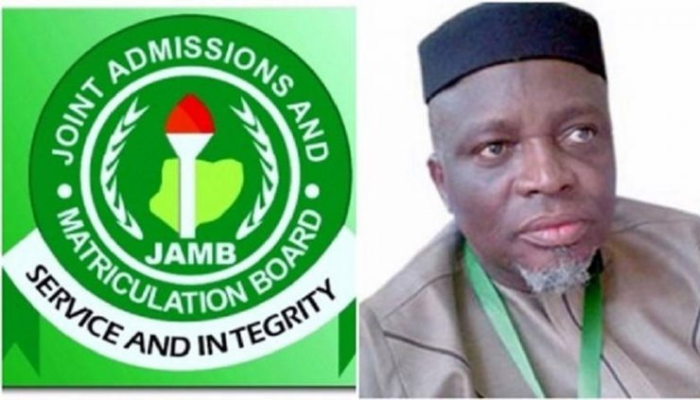
The man cried openly, begging forgiveness, in the face of overwhelming evidence to show that he was wrong. Perhaps, as a senior civil servant, this might be the first time he may have openly said, “I am sorry because I am wrong.” This is, of course, newsworthy because in Nigeria public servants are never wrong, even when it is clear that they don’t know what they are talking about. Sadly, before this admission of fault, a 19-year-old girl had committed suicide by ingesting rodent poison, according to eyewitnesses, for scoring a low mark of 190/400 in the just concluded UTME examination.
Meanwhile, the outcome of the 2025 Unified Tertiary Matriculation Examination (UTME) with over 1.9 million candidates sitting for the exam: over 1.5 million (75%) reportedly scored below 200 out of the maximum 400 marks obtainable, due mainly to tech glitches.
“Unfortunately, JAMB’s acceptance of errors came after the public outcry led to the setting up of a panel to investigate the process of conducting the exams.”
The result released on Friday, May 10, got many Nigerians on edge, wondering what went wrong. The minister for education, worse still, goofed by telling Nigerians that the abysmal performance reflects the measures the Joint Admission and Matriculation Board (JAMB) had put in place to curb examination malpractice.
This narrative was, however, changed with the admission of errors in the 2025 UTME by Professor Ishaq Oloyede, registrar of JAMB.

Oloyede, in tears before an international news conference, disclosed that the fault was the board’s when he said, “I apologise for the trauma caused to the candidates.
“What should have been a moment of joy has changed due to one or two errors.”
According to him, “JAMB set all machinery in order; regardless, there were still errors.”
Read also: The JAMB Registrar wept and people clapped: 2025 UTME results, controversies and way forward
Unfortunately, JAMB’s acceptance of errors came after the public outcry led to the setting up of a panel to investigate the process of conducting the exams.

Some of the findings include that a more advanced model was adopted, one that focused on the actual source and logic of the answers provided, rather than just their quantity.
The second change involved full-scale shuffling of both questions and answer options. This ensured that even two candidates sitting in the same session would not receive identical permutations, thereby enhancing test security.
The third change was a series of systemic improvements aimed at optimising performance and reducing lag during exam sessions. This was a major policy change that saw the best and highest-obtained UTME score in 15 years. And this would have amounted to a great achievement by JAMB!
While these improvements were technologically sound in theory, a major operational flaw was uncovered during the implementation phase.
As a result, approximately 92 centres in the South-East and 65 centres in Lagos, totalling 157 centres, operated using outdated server logic that could not appropriately handle the new answer submission/marking structure.
This affected an estimated 379,997 candidates, whose results were severely negatively impacted due to system mismatches during answer validation.
It was also discovered that technical glitches affected most of the candidates across the federation, subjecting the candidates to unnecessary trauma.
In the end, the panel resolved that JAMB should reschedule the exam for the affected applicants.
In the face of this unhealthy development in the education space, many are calling for the resignation of Prof. Oloyede, though one could in a way justify their anger, but a fact remains from the panel’s findings: the fault is majorly from the vendors, though also the vendors are working for JAMB.
Nigerians should applaud Prof. Oloyede for owning up to his board’s shortcomings, unlike many Nigerians in public offices, who would never accept their faults.
Other public office holders should learn humility from Prof. Oloyede and accept their shortcomings when needed. In fact, the minister for education must take the path of humility and apologise for insulting Nigerian parents with his unguarded utterances.
Read also: UTME 2025: JAMB raked in over N15bn from candidates registrations
Those calling for the head of JAMB’s registrar must not forget in a hurry how he has been able to transform JAMB into a reference point in effective public service delivery, transparency and accountability.
Oloyede was awarded NextMoney Person of the Year for his relentless and uncompromising pursuit of academic excellence and his unwavering commitment to transparency and accountability in public service.
Though the board got it wrong this time around, the common drive should be how to ensure that such does not repeat itself again.
Some takeaways from the 2025 UTME include that this is the first time Nigerians would come out in their numbers to agitate for justice; citizens have, over time, been cowed to submission, even when it is obvious that the leaders were wrong.
Alex Onyia, CEO of Educare, must be remembered for coming out to defend the future of young Nigerians, who were demoralised by the outcome of the examination.
To the affected students, we extend our empathy and encourage them to brace up for a better tomorrow; all hope is not lost, and we sympathise with the family of Tmilehin Faith Opesusi, who committed suicide for scoring a low mark of 190.