Fashion has always been more than clothing. It is identity, history, and aspiration woven into fabric. Across Africa, from the flowing agbadas of Yoruba nobility to the kente cloths of Ghana and the contemporary senator suits worn by professionals, every garment tells a story. These stories are not just cultural but also economic, global, and increasingly digital.
As a Nigerian designer who has served clients across West Africa and beyond, I believe Africa is the next frontier of luxury fashion. Our traditions provide the foundation, our creativity supplies the energy, and technology offers the bridge that connects us to global relevance. The challenge and opportunity lie in how we combine these elements.
From local craft to continental influence
When I began my career in Lagos, my focus was on Nigerian clients, political leaders, corporate executives, and creative personalities. Over time, that circle widened. Today, I have a strong client base in Ghana and serve Africans across the diaspora who still want garments that reflect their roots.
This evolution mirrors the direction of African fashion itself. It is no longer localised. A groom in Accra might request an agbada styled in Lagos, while a Nigerian entrepreneur in London may want kente-inspired embroidery. Borders are dissolving, and African luxury fashion is developing its own regional ecosystem.

Our shared heritage is becoming a continental brand. What connects Africans is the belief that clothing is more than material, it is cultural continuity. In the global marketplace, that belief sets us apart.
Technology as a bridge, not a replacement
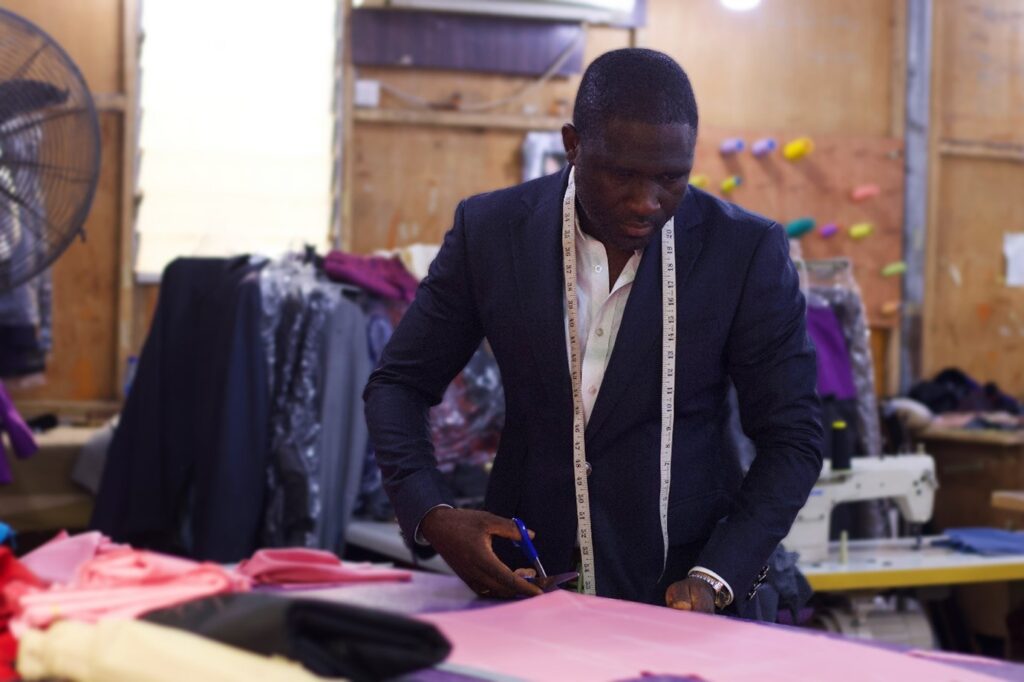
I have consistently maintained that to compete internationally, African designers must blend tradition with innovation. In my atelier, I have embraced tools like 3D body scanning, CAD (computer-aided design), and virtual fittings. These systems allow me to serve clients in Lagos, Accra, London, and Houston with the same precision. A client in Ghana can have the same experience as one in Nigeria, without repeated travel.
Artificial intelligence now assists me in forecasting trends, sourcing fabrics, and personalising designs at a new level. But technology does not replace the tailor’s hand, it amplifies it. The final stitch, the fabric selection, the instinctive adjustments for comfort and style remain human. Technology simply ensures that the process is efficient, sustainable, and globally competitive.
This hybrid approach is vital for Africa. We cannot abandon the personal essence of tailoring, but we also cannot ignore the demands of international clients who expect reliability and speed. By finding balance, we position African fashion as both authentic and innovative.

Overcoming continental challenges
It would be dishonest to ignore the challenges. Power supply issues, inconsistent internet access, and the high cost of advanced equipment create barriers. Training artisans to adapt to digital tools also requires time and investment.
In my experience, phased adoption works best. Older artisans are introduced to tablets for pattern viewing before moving to full CAD systems. Clients hesitant about virtual fittings are offered hybrid models that combine in-person consultations with digital updates. Gradual integration makes the transition smoother and more inclusive.
These challenges are not permanent obstacles; they are opportunities for African innovation. I see potential in collaborating with local tech companies to create solutions tailored to African realities, from AI tools designed for African body types to logistics systems built for our infrastructure.
Pan-African collaboration and cultural integrity
One of the most urgent conversations in fashion today is about cultural appropriation. Too often, African-inspired designs are adopted globally without credit to their origins. Digitising and archiving our traditional patterns is a way to protect cultural ownership. It ensures that African fashion remains in African hands even as it travels the world.
Collaboration across the continent will strengthen this effort. Nigerian designers can learn from Ghanaian textile heritage, while South African ateliers can share sustainability practices. Together, we can create a unified African luxury identity that is diverse but coherent.
This collaboration is not only cultural but also commercial. Joint showcases, cross-border boutiques, and regional supply chains will make African fashion more competitive globally. Already, I see demand growing not just for individual garments but for the African story they represent.
The global stage awaits
Internationally, luxury fashion is dominated by cities like Paris, Milan, and New York. But these centres are increasingly looking to Africa for inspiration. The question is whether we will only supply inspiration or also lead innovation.
My belief is that Africa can do both. We can present garments that are rooted in heritage and executed with modern precision. We can design collections that resonate with African identity while meeting global standards of quality and delivery. We can position Africa not as a source of raw ideas but as a fully realised player in the luxury fashion ecosystem.
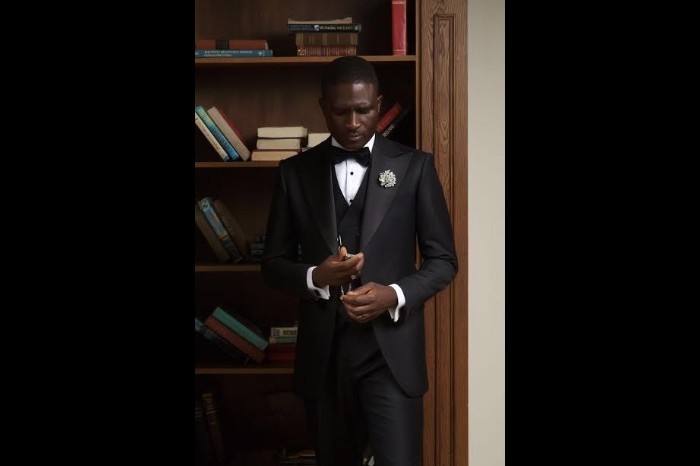
Already, I have seen this possibility unfold in my own work. When a Ghanaian client in Accra receives a suit that matches the standard of Parisian couture but carries African symbolism, it challenges assumptions. When a Nigerian executive abroad wears a digitally rendered, perfectly fitted agbada at an international conference, it redefines what African fashion can mean on the global stage.
Looking ahead
The future of African fashion is not about choosing between tradition and technology. It is about merging them. It is not about competing with Europe on their terms but presenting Africa on our own terms, authentic, modern, and globally relevant.
For me, every garment is part of that vision. A suit is never just fabric; it is heritage expressed through innovation. A client is never just a customer; they are a collaborator in carrying African identity into the future.
Africa is ready for this moment. From Lagos to Accra, from the continent to the diaspora, we are stitching together a story that is both deeply rooted and forward-looking. The world is watching, and I believe it is only a matter of time before Africa is recognised as the next true frontier of global luxury fashion.