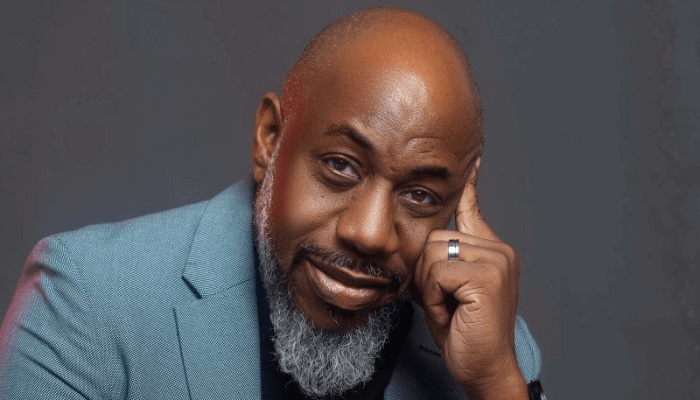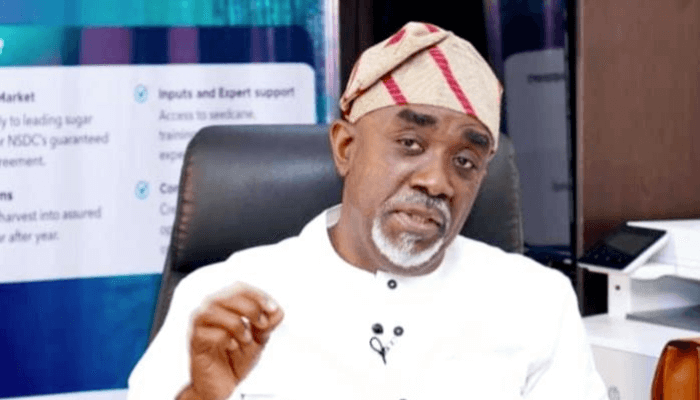
Senator Opeyemi Bamidele, currently the Leader of the Senate, has occupied different strategic political offices in Nigeria since the inception of the Fourth Republic. Apart from serving as the Chairman of the Senate Committee on Judiciary, Human Rights and Legal Matters between 2019 and 2023, Bamidele also had a stint as the Director of Media and Publicity of the defunct Alliance for Democracy.
First appointed Lagos State Commissioner for Youth and Sports in 2003; Commissioner for Information and Strategy in 2007 and elected into the House of Representatives in 2011 when he chaired the Committee on Legislative Research and Budget, Bamidele has been a consistent political figure in Nigeria, defending the interest of the masses and preaching peaceful co-existence among ethnic nationalities that constitute Nigeria.
In this interview, Bamidele extensively spoke about key national issues including the last off-cycle elections, 2024 appropriation and commitment of the National Assembly to social investment programmes, among others. INIOBONG IWOK brings the excerpts:
Six months ago, the 10th National Assembly was inaugurated. Can you reflect on what the National Assembly has been doing in the last six months?

It has been six months of working hard to sustain the tradition of this parliament. It is a tradition in which the poor find their voices in our representation. It is a tradition of ensuring that matters of public importance are attended to without delay. From the day the 10th National Assembly was inaugurated, both chambers have done so much to ensure that we work together with the executive arm in order to deliver the Renewed Hope mandate of His Excellency, President Bola Ahmed Tinubu.
We have resolved to do all we can to work closely with the executive arm to ensure that dividends of democracy are delivered to our people. On the other hand, we are committed to ensuring that the principles of separation of power, as enshrined in the Constitution of the Federal Republic of Nigeria, 1999 (as amended), is well-respected and upheld. Of course, there must be separation of power. There must also be checks and balances. However, the 1999 Constitution makes room for collaboration as it becomes necessary in overriding public interest.
We have been doing our best to ensure strategic collaboration with the executive arm without undermining the principle of separation of power. We also try as much as possible to discharge our primary assignment, which is lawmaking. There are two sides to our primary assignment. The first relates to making new laws to address contemporary issues. The second relates to amending existing laws based realities and developments as far as governance is concerned in this contemporary time.
Also, we have taken steps by way of legislative interventions to ensure that we are able to sustain governance. We have had a number of confirmation hearings. This includes the confirmation of ministerial nominees as well as other heads of agencies as the president kept referring them to us. Beyond this intervention, we have to make laws that will make it possible for different ministries, departments and agencies (MDAs) to get funds by way of supplementary appropriations. Within the last six months, we are actually working on the third budget. We first worked on the supplementary budget that was passed in 2022 because we needed to further extend its life to ensure that capital projects, then being implemented, did not become abandoned projects.
We also worked on the 2023 supplementary budget, which was passed into law. Of course, we are now working on the 2024 appropriation bill, which is keeping every legislator extremely busy because we are determined to sustain the January-December budget cycle.

We also try to make sure we do all we can to ensure thorough review of the appropriation bill and its passage as much as possible, not necessarily as it came, but based on our own understanding of contemporary best practice standard and principle of budgeting and the realities needs of the people.
Which areas have you made an impact in alleviating the pains of citizens who are living below poverty?
Again, we have entertained different categories of bills and motions that directly address the conditions of the less-privileged and downtrodden in the country. We have also entertained bills and motions addressing the cases of the poorest of the poor, according to the reports of the United Nations and World Bank. That is in the area of passing relevant laws and motions that have to do with social investment programmes. We are doing our best in this regard.
I believe there is still much to be done. It is an area to which we are committed. This is to ensure that governance does not suffer. At the end of the day, whatever we are doing translates to something every Nigerian can relate to. That is ongoing. In a matter of months, target citizens will start feeling the impact of these programmes.
Are you satisfied with the way the Independent National Electoral Commission (INEC) conducts elections looking at the just concluded off-cycle elections in Bayelsa, Kogi and Imo States?
Election is a process. It is a process that every democracy will continue to improve upon. Nigeria cannot be an exception. Whichever way any person will look at it, the truth is we have moved significantly further where we were as a federation. The Electoral Act, 2022 has gone a long way to improve on our electoral process. The law has also encouraged the deployment of technology in the electoral process, which has helped in ensuring that the votes of Nigerians count.
Does it mean we are where we ought to be? Of course, we are not. But definitely, where we are now is better than where we were. There are rooms for improvement. That is why we are here. Part of the goal of the 10th National Assembly is to further look into the Electoral Act, 2022 and identify areas we can further tinker with by way of amendment. This has become imperative to enable us to move closer to where we ought to be. It is a work in progress.
The 2024 budget is undergoing various stages of scrutiny in the National Assembly. Do you see this budget implementable considering the fiscal crisis the country is currently facing?
I cannot remember the last time that we had a budget that was not implementable. I have been part of the budgeting process in the National Assembly since 2011 when I came in as a member of the House of Representatives. I know the performance report has been better than a year before, specifically in the last four years of budgeting. It is not only because the performance report has been high. There has also been a precise and predictable manner of budgeting and budget implementation. This is so real that everybody can tell that budget implementation will commence in January and end in December.
In a situation where capital project implementation is completed in December, the parliament will, by resolutions, extend the period of implementation. For me, none of the budgets in the last four years has been unimplementable. The budget proposal that we have before us is one that is implementable. We are doing all we can to make it implementable. There is no doubt the fact that this budget is bigger than what we had previously. As a matter of fact, it is not as big as it ought to be. We need to spend our ways out of recession. We need to ensure we spend in such a way that much more is given to capital expenditure. This is the only way we can ensure that funds percolate within the economy.
At the end of the day, every facet of our national economy benefits from it. Definitely, a budget of N27.5 trillion is not too big in an economy that is aiming at $1 trillion GDP. I know it is doable. As to cash-backing, I know the executive arm did not come up with their figure without bilateral and multilateral engagement. The executive arm did not come up with their figure without sitting down with revenue-generating agencies to ensure that there will be cash-backing for the budget as much as possible. They prepared the budget based on assurance given by the revenue-generation agencies. It is not just assurance, but the capacity they have demonstrated so far.
With the way the budget defence is being conducted, what is the guarantee that the January-December budget cycle will not be disrupted?
There is nothing we are doing now that is unusual. If the budget has been laid earlier, perhaphs we will be done by now. But could the budget have come earlier? My answer will be probably No. The reason is not far-fetched. This is the first budget of an administration that came into office mid-year.
The budget process commences at the beginning of the year. Just as you are implementing a new budget, you are beginning to see what you left out in that budgeting process that ought to have been captured and you are taking note of them. Month by month, you see the shortfall and you are trying to capture it.
By September when you are holding bilateral talks in the vaious agencies, you already know where you have done well, where you are lagging behind and you are putting all these indices together. By October, you lay your budget before the parliament. Like I said, this is a new administration that came in mid-year. What is important is that they brought the budget. As of the time the budget was laid, we asked ourselves the critical question as a parliament. Will we be able to pass this budget and sustaine the January- December budget cycle. Our answer was in the affirmative. How did we intend to achieve it?
We came to a conclusion that rather than make an agency first appear before the Senate and later before the House of Representatives, we resolved to collapse both committees together for the purpose of budget defence. In the same way we collapsed the two chambers for the President to lay the 2024 budget before the joint sitting of the National Assembly, we resolved that we should hold joint sitting of our various committees for the purpose of budget defence.
As a result, we reduced the time by half. We also worked out an agreement with the President that none of the ministers or heads of MDAs critical to budget defence will travel out of the country for any reason during the weeks of budget defence so that they will be available. This is because we are not going to tolerate a situation where ministers or heads of MDAs will delay the budget defence process or timetable because he or she is not available. These are some of the things that we did. For us, we believe that it is possible to pass this budget before the end of December. We are working toward this target.
The concern really is the thoroughness of the process. What is an assurance that the National Assembly will carry out a thorough budget defence process?
In terms of thoroughness, we are achieving our aims in that regard. Like I said, we decided to hold joint sittings of both chambers. The good news is that all committees of the Senate and House of Representatives will sit together; listen to presentations by the heads of MDAs and ask questions together. In terms of parliamentary practices and procedures, by the time the reports are collated, there is no delay in that we do not have separate reports from the House of Representatives and Senate.
In our own procedures, we require a conference of another committee, whose membership will be drawn from both chambers, to harmonise the report. Let me tell you what we do in budget defence. It is in two parts. First, you have to defend your budget performance for the previous year. We ask heads of MDAs how they spent funds allocated to them in the previous year to justify the appropriation of more funds to their agencies. There are questions to ask the heads of MDAs, and the questions are based on our observations during oversight functions that the committees carried out during the year. If the committee is not convinced, then it adjourn to enable its members visit the site of the capital project.
This is because budget performance is not about recurrent expenditures. It is not also about overhead cost or personnel cost. It is more in the area of capital expenditure. If you have spent N10 billion in 2023 on a certain number of projects, for instance, it is either we have seen these projects or we adjourn to pay an oversight visit to the sites of the projects. If we are convinced, we come back. At this point, we would have ended the budget performance report for 2023. And then, we move to the next budgetary year. If you are asking for N10 billion for capital projects in 2024, we can say No. You got N12 billion in 2023.
If your project is completed, then you do not need so much funds in 2024. We then ask the head of MDA to reduce it by a certain amount. Or if the budget you got in 2023 took you up to 85 percent completion or performance of that project, you are only entitled 15 percent additional funds to complete the project except there are new projects that have been approved for your MDA. That is basically what we do at the level of budget defence. For the purpose of budget defence, every committee of the Senate and House of Representatives is deemed to be a sub-committee of the Appropriation Committee.
We actually suspended our plenary for two weeks to allow various committees to entertain their various agencies. Those presentations were made. And budget defence was done last week. We sat for only one day and decided to suspend the plenary for another week just to ensure that they were able to finish the assignment. What is left by the time we reconvene is for the various committees to submit reports to the Appropriation Committee. Some of them are already submitting their reports.
But there are few committees with a higher number of agencies. They are still trying to conclude. I am sure what is left is probably they are waiting for one document or the other. Or they have asked them to bring additional information. By the time all this is done, every sub-committee will have presented its report to the Appropriation Committee. The Appropriation Committee will now sit down for the next couple of days again to take a look at all the reports. What are they looking for in these reports? It is nothing so complicated. How did the President project? Or how did he propose? What did the report of this sub-committee say? Have they reduced? We are doing everything to ensure that there is no increase.
Our hope is to be able to return Mr. President’s budget in a way that if we have reasons to reduce, we reduce. But we do not intend to increase it. Where you see an increment may be either the Ministry of Budget and Economic Planning will have come back to the Appropriation Committee with additional proposals based on certain realities or in the event that they feel they have more income to execute more projects. In any case, that will be at the level of their own proposals, but not us sitting down here to increase the budget. We can reduce it if it becomes necessary. It is not our intention to begin to add figures to the budget.
We just want to make sure that whatever has been proposed by the executive arm are things that we will work on. What are those things again? What are the fundamentals on which the budget proposal is based? Our projection is to sell crude oil at $75 per barrel. We look at it in the last four years month by month, how much are sold for? What are the factors driving price in the international market? Is the Russia-Ukraine war over? Is it likely to be over soon? What is going on in the Middle East as far as Israel and Palestine are concerned?
What effect may it have on our economy? We look at such things before we conclude whether we are agreeing with the executive arm as to the benchmark price of $75. We also project that we will produce 1.7 million barrels per day. We look at the situation across the federation. What is the situation in the Niger Delta?
Are there threats to achieving this production target? Or do we have a situation whereby we are even under-reporting our capacity to produce more crude oil? These are the parameters that will determine the conclusion we are going to make at the end of the day. Thoroughness is not about how much time we devote to the budget defence process. Rather, it is more about what kind of parameters we set and what kind of fundamentals we are following.
There has been a lot of lamentation over low budgetary allocations by many MDAs. Also, there have been concomitant promises by the committees to augment the figures. How do you not want to increase the budget at the end of the day? Are you also categorically saying this budget will address the concern of Nigerians?
No committee chairman actually has power to increase the budget figure. It does not work the way.you put it. I was privileged to be a committee chairman when I was a member of the House of Representatives. When I came to the Senate, I was privileged to chair one of the most important committees. That is the Committee on Judiciary, Human Rights and Legal Matters, which oversees the whole arm of the government and Federal Ministry of Justice. At every budget session, we had complaints about not having enough funds.
If a committee chairman will promise, the best he can do is to talk to the leadership of the Senate as well as the House of Representatives. If they take it up with the executive arm, there may be consideration. Few times, I have personally called the Minister of Budget and Economic Planning where there are concerns based on reports before my committee. And the minister then would explain over and over again. We brought him back some of the time to address members of the Committee on Judiciary, Human Rights and Legal Matters. He tried as much as possible to give explanations, which members of the committee found reasonable and realistic.
When committee chairmen promise, it is not that they can on their own increase the budget. If they do it, that is what is called budget padding. It makes the budget unimplementable because budget proposals are estimates drawn based on anticipation of the amount of income that will come in and based on the assurance from the revenue-generating agencies. It is not something that any person can sit down at the parliament and begin to increase. Virtually every agency comes to the parliament to ask for help in that regard. Whether or not enough funds have been given to any agency is another issue. The budget that we have this year is bigger than the budget that we had last year. Again, does it mean there is enough funds for every sector?
As a matter of fact, twice the size of budget we have now will still not be enough. It is just a question of how much funds we can generate and how much facility we can access. These are the issues that will determine how much can be given to each sector of the economy. What is important is the executive arm has defined its priority, and the parliament is looking into it. Critical to the priority of the executive arm is to continue to fund social investment programmes.
This is one of the ways to directly address issues that border on the welfare and interest of the poorest of the poor. We are trying to see that the aspect of the budget, which represents the human face of this administration, is given priority. Of course, infrastructure is another area that the executive arm is given priority. We want to see the train work. We want to see the road better maintained. We want to see the transportation sector function effectively. This is another critical area without which we cannot run our economy functionally. Priorities are defined. But that does not mean some sectors are not important.
Every secretary is important. It is just that some deserve greater attention than the others because there is a difference between social service agencies and income-generating agencies or agencies that are devoted to making our economy run functionally. Also, the issue of insecurity is another area of priority, which the budget is addressing. In this regard, the parliament believe that without addressing insecurity, we will be playing ostrich if we are investing more in agriculture.
We want to diversify this economy from the monolithic economy of oil and gas to agriculture and mineral development. A lot of these activities take place in the forests, where bandits and terrorists have taken over. These are the issues that are addressed in the 2024 appropriation bill.
Some senators are disenchanted with the operations of the upper chamber, especially during the constitution of the committees. Some claim that there is a plot to unseat the President of the Senate. Is there harmony in the upper chamber?
There are as many opinions as there are people. This is a parliament. It is a parliament that is very unique. For the first time, we have seven political parties that produced the membership of the Senate. Of course, it is the same story in the House of Representatives. So, we have seven distinct and divergent political interests to manage or contend with. I am happy because 109 of us have come to the conclusion that various political parties on which we were elected are vehicles through which we got to the Senate.
Once you are sworn in as a senator, your allegiance is first and foremost to the Federal Republic of Nigeria through the Constitution. Consequently, whatever that can cause division in our rank must not be allowed. Yes, some senators may not be happy about the constitution of committees. This is part of some issues that happen in every parliament worldwide. We have 72 committees while there are 109 senators. We are alao in a nascent democracy where some committees are classified as juicy.
I do not know what that really means. If we have 72 committees and 109 senators, we already have a good number of senators, who will not be committee chairmen regardless of who you voted for. Even when all the senators voted for one candidate, we will still have some senators who will not be committee chairmen. It is better in the Senate than the House of Representatives. In the Senate, everyone, who does not chair a committee, was made vice chairman of a committee. We tried to create more committees. We look at certain committees at the instance of what happened in the executive arm. Some ministries were split for the purpose of easy administration. We have the Committee on Youth and Sports. The executive arm now has the Minister of Sports and Minister of Youth.
On their own, they have decided to split the ministry into two. Let us do the same thing here. We have a Committee on Arts, Culture and Tourism. In the executive, they have the Ministry of Tourism and the Ministry of Culture. We did the same thing here. In the area of mineral development, the executive split it into the Ministry of Steel Development and the Ministry of Minerals Development. We did the same here. After the review, we ended up with five additional committees.
Even at that, that is 79 out of 109. Whichever way you look at it, there will always be people who will complain. These are not things we should over-celebrate because things that unite as senators are more than things that tend to divide us. It may be impossible to have 109 eminent Nigerians together under one roof without a moment of disagreement.