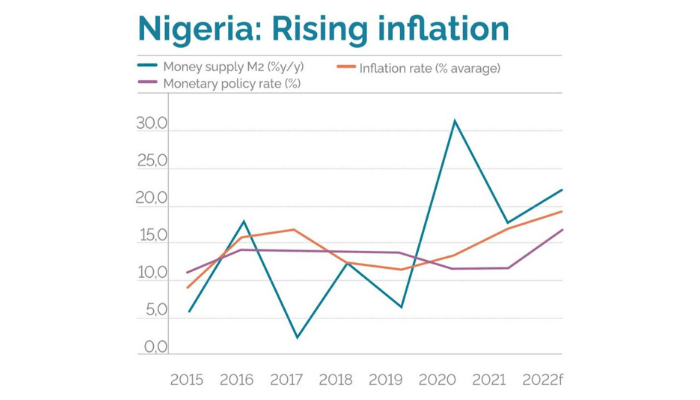
An empirical investigation by Matthew Diyaolu, economist and graduate of the University of Lagos, offers a new understanding of one of Nigeria’s most complex macroeconomic challenges: the relationship between money supply growth and inflation. His study, “Macroeconomic Analysis using VAR Model: The Impact of Money Supply on Inflation in Nigeria,” provides robust empirical evidence on the monetary forces shaping price stability and long-term economic growth.
Drawing on annual data spanning more than six decades, from 1961 to 2023, Diyaolu employs a Vector Autoregression (VAR) framework to examine how changes in money supply transmit through the economy to affect inflation. Anchored in the Quantity Theory of Money, the study accounts for real-world complexities such as structural rigidities, fiscal imbalances, and external shocks that often weaken the theoretical one-to-one link between money and prices. The findings confirm a unidirectional causal relationship running from money supply to inflation, meaning past expansions in liquidity significantly predict future inflation, while inflation itself does not determine money supply growth.
Impulse response analysis reveals that a positive shock in money supply leads to a gradual rise in inflation, peaking after about one year before subsiding a clear indication of policy lags in Nigeria’s monetary system. The variance decomposition further shows that money supply shocks explain around 30 percent of short-run inflation variation, while the remaining fluctuations are driven by non-monetary factors such as exchange-rate depreciation, fuel costs, and food supply disruptions. These findings affirm that while monetary policy is vital for price control, broader economic structures play a decisive role in shaping inflation outcomes.
Grounded in both classical and modern macroeconomic thought, Diyaolu’s research emphasises that price stability cannot be achieved through monetary tightening alone. He argues that monetary policy must work in harmony with fiscal discipline and structural reform to ensure consistent and sustainable outcomes. “Effective inflation management requires coordination between monetary and fiscal authorities,” Diyaolu explained. “When expansionary fiscal policy overlaps with loose monetary control, inflationary pressures become deeply entrenched.”

The study’s policy implications are clear and actionable. It recommends that the Central Bank of Nigeria (CBN) maintain a prudent approach to money-supply management while working closely with the Ministry of Finance to minimise deficit financing and limit the monetisation of public debt. At the same time, structural bottlenecks such as inadequate power supply, infrastructure gaps, and overreliance on food imports must be addressed to reduce cost-push inflation. “When an economy’s productive base is weak, even modest increases in liquidity can trigger sharp price surges,” Diyaolu observed, underscoring the need for policies that strengthen the real sector.
Furthermore, Diyaolu highlights the critical role of financial-sector reforms in improving the transmission mechanism of monetary policy. He notes that in Nigeria, interest-rate adjustments have limited effects on lending and consumer behaviour due to shallow credit markets and underdeveloped financial channels. Expanding access to finance, integrating digital payment systems, and enhancing communication between policymakers and market participants, he argues, will make monetary policy more efficient and equitable.
The research also acknowledges the importance of external and structural influences that lie beyond central bank control, from exchange-rate management to global commodity prices and calls for a coordinated, multi-institutional approach to inflation stabilisation. Economists at the University of Lagos, where the study originated, have lauded the work for its methodological rigour and relevance, describing it as a timely contribution to Nigeria’s economic policy discourse.
Ultimately, Diyaolu’s findings extend beyond national borders. By integrating empirical rigour with practical policy insight, his work contributes to the global understanding of inflation dynamics in developing economies. It shows that while monetary expansion plays a significant role in price behaviour, sustainable stabilisation depends on fiscal prudence, institutional strength, and structural reform. His research stands as an example of how data-driven economic inquiry can guide effective policymaking in an increasingly uncertain world.