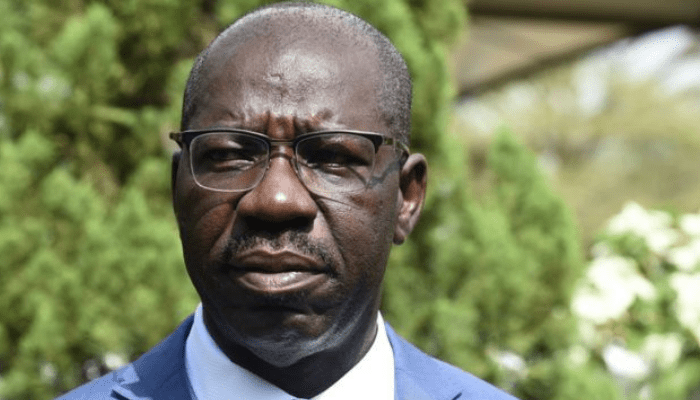
Technology will play a key role in improving the quality of education and helping Nigeria achieve its sustainable goal targets, Godwin Obaseki, the Governor of Edo State said at the ongoing 27th Nigerian Economic Summit.
“Education is more than going to school, it is about the quality of education, it is about how teachers teach and how they motivate the children,” Obaseki said at the event themed ‘Securing Our Future: The Fierce Urgency of Now.
“With technology, we can upload teachers’ notes on a notepad and all the data can be aggregated on a portal. This helps us to know when a teacher is in class if the subject was completed and also monitor other outcomes,” he said.
Obaseki explained that EdoBest has been a success because they have been able to employ technology and adequately train teachers, a lesson Nigeria can draw from.

“Today a primary two child in Edo can learn more than a primary 5 pupil in a non-Edo school,” he said.
Read also: Here’s a strategy for achieving financial freedom in business
In April 2018, Edo State launched a programme to retrain and support all 15,000 government teachers— novice and experienced. This was to transform the learning outcomes for the 300,000 children across 1,500 public primary and junior secondary schools in Edo State.
Some of the achievements of the EDOBEST programme include over 11, 356 teachers and headteachers trained on the use of modern technology to enhance teaching delivery and learning outcomes. About 234 public primary schools were renovated with a playground and over 12,000 pupils’ furniture (desks and chairs) distributed.
Benjamin Piper, Senior Director, Africa Education for RTI International explained that Nigeria must focus on improving its structural methods and effective skills and training for teachers.

“In sub-Saharan African countries, only 10 percent understand what they read by the end of grade three compared to the United States where over 90 percent of school students understand what they read by grade three,” Piper said.
Already, Nigeria has the highest number of out-of-school children in the World. At 13.5 million, one in five of the world’s out-of-school children are Nigerian.
Muhammadu Sanusi, Former Governor of the Central Bank of Nigeria & 14th Emir of Kano also said that the role of the government in improving human capital in Nigeria must not be underestimated.
“Nigeria spends less than Ghana and Rwanda on health care and education. We are paying for subsidies at the expense of education,” Sanusi said.
“There would be a cost but economics is about choice, if our resources keep going into the wrong areas, we will not meet the SDGs,” he said.
Kayode Fayemi, Chairman, Nigeria, Governors Forum also pointed out that Nigeria has seen an increase in primary education from 14 million to 19 million within a few years and the majority of this population are girls.