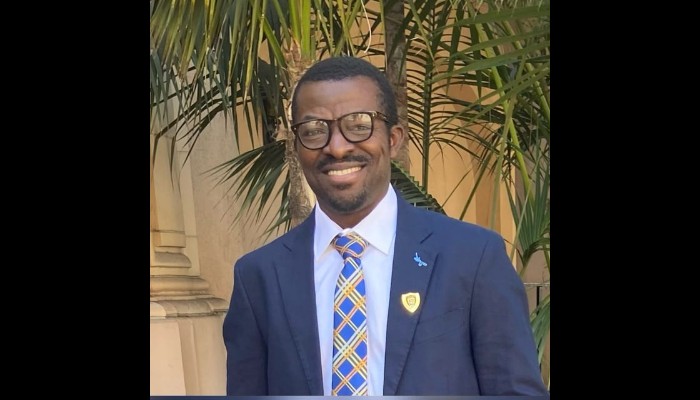
A new behavioural analytics framework developed by Nigerian marketing strategist and researcher, Abiodun Onifade, is gaining global recognition for transforming how brands understand and predict customer behaviour.
The model, which integrates behavioural signals, psychographic insights, statistical modelling, and machine learning, is being adopted by companies across Africa, Europe, and North America as businesses shift from traditional metrics to deeper customer intelligence.
For years, marketers relied on surface indicators such as clicks, impressions, reach, and frequency to gauge consumer engagement. But Onifade argues that these metrics are no longer sufficient in today’s complex digital environment. His research shows that customers behave in nonlinear, multidimensional ways that require more sophisticated interpretation to improve retention, conversion, and loyalty.
According to Onifade, the traditional tools used by marketers often obscure the motivations behind customer actions. “A click does not tell us why the customer interacted. An impression does not capture whether the message resonated,” he noted in his research paper. He explains that this gap is even wider in Nigeria, where many companies prioritise visibility over relevance, leading to billions in wasted marketing spend annually.

His behavioural model addresses this challenge by mapping micro-interactions, such as scrolling patterns, product comparisons, pauses, and abandonment, to underlying psychological states. Machine learning then predicts what customers are likely to do next, enabling brands to intervene proactively rather than react after disengagement occurs.
The impact has been significant. Banks in Nigeria, Ghana, and South Africa have used the model to improve app adoption and digital engagement. Retailers in Europe have reported reductions in cart abandonment, while SaaS companies in North America have applied the insights to curb customer churn. Telemedicine platforms also report higher appointment completion rates after deploying the framework.
Industry analysts say the research arrives at a critical time for African businesses. Nigeria’s youthful, digital-first population presents enormous potential, but the market is also high-friction, with trust deficits and rising customer acquisition costs. Onifade’s model offers a path to more efficient targeting, better personalisation, and improved customer experience without violating ethical boundaries.
The framework also enables companies to shift from reactive marketing to predictive engagement. By identifying early warning signs, such as reduced session depth or erratic navigation, brands can take corrective action before customers churn. This approach aligns with global trends toward AI-driven customer intelligence and “decision science” marketing.
Experts say Onifade’s research positions Nigeria as a potential leader in the next frontier of marketing intelligence. “What will separate winners from laggards is the ability to interpret behavior, not just count clicks,” Onifade wrote. “Marketing is no longer a promotional function. It is a decision-science discipline.”

As digital ecosystems evolve, his work is expected to influence how brands across emerging markets design customer journeys, allocate budgets, and build long-term loyalty.