Amid rising poverty, youth unemployment, inability of most states to pay N30,000 minimum wage, poor road infrastructure, and underdevelopment of rural areas, many states have continued to pamper and further enrich former governors with humongous pension packages— an act the Socio-Economic Rights and Accountability Project (SERAP) and many Nigerians have condemned without reservation.
Sadly, across the states, there are pension laws that allow each state to pay former governors, deputy governors, speakers and their deputies mega monthly pensions, even when workers’ salaries and pensions are being withheld for months and many years after retirement.
Also, the mega monthly pension varies according to the capacities of the states, with the likes of Lagos, with the highest internally generated revenue (IGR) in Nigeria, oil-rich Rivers, Bayelsa and Delta states spending humongous amounts in unnecessarily servicing their former government top functionaries, who also contributed to the underdevelopment of the states.
Besides Lagos, states such as Abia, Akwa Ibom, Bauchi, Bayelsa, Borno, Delta, Ebonyi, Edo, Gombe, Kaduna, Kano, Katsina, Kogi, Kwara, Imo, Niger, Osun, Oyo, Rivers, Yobe, and Zamfara also have such legislations in place.

Generally, the huge emoluments of public office holders since the return of the country to civil rule in 1999 have continued to generate controversy as they have been described as “predatory”, with many citizens calling for downward review.
The obnoxious pension laws in some states were championed by former state governors on the verge of their exit from office, to enable them and their deputies earn outrageous pension packages for life.
The major concern is that some of the affected ex-governors are in the Senate or are serving ministers or in other capacities.
While they currently draw monthly salaries in their current office, they also receive huge monthly package from their states, an act that can be considered wicked, selfish, and sabotage of their states’ lean revenue.
Kolawole Oluwadare, deputy director, Socio-Economic Rights and Accountability Project (SERAP), says such an arrangement has continued to deny states of critical funds needed to provide necessary infrastructure and proper running of the states.

John Mutu, a public affairs analyst and legislative consultant, believes that such expenditure is unnecessary and has eaten deep into states’ purses. He says that budgets have, over the years, failed to positively impact the lives of people.
“In all these years, to what extent have budgets reduced poverty; to what extent have budgets reduced unemployment or to what extent have budgets provided infrastructure?” Mutu wondered.
“I think, especially for a government whose mantra is against corruption, or a government that wants to reduce the cost of governance, the current administration through the Attorney-General should take the initiative because the court has already given that judgment, citizens are also crying against that; it is expected that the Attorney-General of the Federation should take that initiative either to institute a charge against such laws or start engaging with his colleagues at state level to ensure that such obnoxious laws are repealed,” he said.
According to the legislative consultant, “There has to be a dialogue where there could be a collective agreement through the Office of the Attorney-General of the Federation, that could be easier, but if you think that any House of Assembly could just wake up and take that initiative, it is going to be very, very difficult, except it is coming from the governor, like in the case of Lagos State where the governor is the one taking the initiative.
“Now, in the case of Lagos, once that bill is brought to the House, because it is a collective effort, and the former governor in whose administration the law came into being, has also thrown his weight behind it; so the House of Assembly can easily repeal it. But if it has not enjoyed the blessing of the governor; it has not enjoyed the blessing of the political leader, the Assembly as currently constituted may not be able to take that initiative. That is why I think SERAP is also considering taking other alternative of getting the Attorney-General to lead that effort, either through judicial arrangement or through political engagement. The most feasible option is for citizens to rise up at various states to push for this to happen. This is because if you don’t rise up to ensure that this happens in your state and you are waiting for the FG to take the initiative, it may take a long time to happen.
“But I am happy that the precedence set by Lagos and Zamfara states may set the tone for other states to also take the initiative. Once there is consensus- that this particular law does not serve the interest of the people- and the Attorney-General, working with the President, takes that initiative to look at the issue, it would be a lot better and easier.”
Last Tuesday, November 10,2020, the Lagos State Governor, Babajide Sanwo-Olu, while presenting the 2021 Budget, declared that his administration was taking a step to repeal the pension law.
Sanwo-Olu was following in the footsteps of two governor-colleagues of his who had taken that decision.
Recall that in November 2019, Bello Mohammed Matawalle, governor of Zamfara State, had assented to the law prohibiting ex-governors, deputy governors, speakers and their deputies from taking mega monthly pension.
In May this year, Hope Uzodimma, governor of Imo State, signed a bill to stop payment of pensions, gratuity of ex-governors, speakers and others.
Speaking on a monitored television programme, on the efforts SERAP has made to see the end of the obnoxious pension laws for ex-governors and their deputies, Olawadare said that SERAP has since written to the Attorney-General of the Federation, and has also been communicated to in March by the Office of the Attorney-General, but that it was still waiting to see action from that end.
“It is difficult for SERAP to move from state to state challenging those laws, that’s why the Attorney-General of the Federation should step in. If we continue from state to state, when are we going to finish? There are 36 states, for years now we have only three that have responded, and that is why that single action from the Attorney-General over statutory backing will be easier,” the SERAP deputy director said.
Mutu also shared the same sentiment, saying that the Attorney-General of the Federation being the chief law enforcement officer of the Federation has the responsibility to enforce compliance to court judgments and laws of the federation.
“If he takes that action, the funds that had been paid to the former governors and their deputies may be recovered. SERAP can also go back to court to seek an enforcement order; may be, mandating the Attorney-General to take action to recover the funds,” he added.
In March, the Federal Government asked the SERAP to send a list of former governors and ministers that have received and/or receiving pensions.
Abukabar Malami, Attorney-General of the Federation and Minister of Justice said the request was to ensure compliance with a court judgment on a suit by the rights group.
The AGF’s letter with ref: MJ/LIT/ABJ/CMC/661/793 was signed by Anne C. Akwiwu, director of Civil Litigation and Public Law Department in the ministry.
Lagos was reportedly the first state to implement the pension law. It was signed in 2007 by then Governor Bola Tinubu weeks before he completed his two-term tenure.
Tinubu, a former senator, is the national leader of the All Progressives Congress (APC), the party under which Governor Sanwo-Olu and President Muhammadu Buhari were elected.
While presenting the 2021 Budget estimate to the state House of Assembly, Sanwo-Olu announced that the pension law would be repealed.
The financial hemorrhage in Lagos’ Pension Law
In Lagos, the pension legislation was passed during the tenure of Bola Ahmed Tinubu as governor. The state was the first to implement the pension law which was signed in 2007.
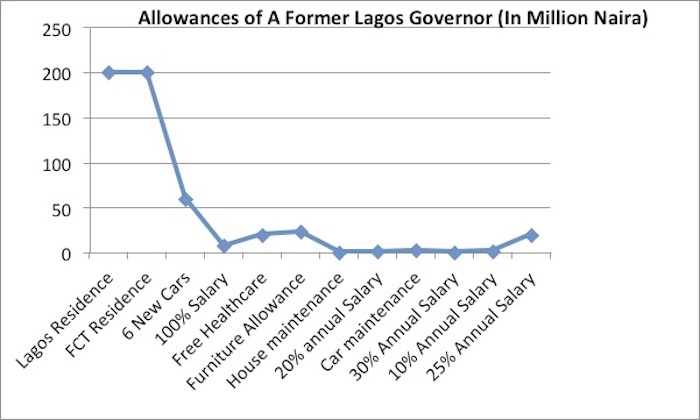
A breakdown of the legislation titled ‘Public Office Holder (Payment of Pension) Law No 11 Official Gazette of 2007, shows that former governors in Lagos are entitled to a house each in preferred locations in Lagos and Abuja, the nation’s capital.
The law provides for six new cars every three years, 100 percent of the basic salary of the incumbent governor (N7.7million per annum), and free health care for the beneficiary and family members.
Former governors are also entitled to furniture allowance, 300 percent of annual basic salary (N23.3million); house maintenance allowance, 10 percent of annual basic salary (N778,296); utility allowance, 20 percent of annual basic salary (N1.5million), and car maintenance allowance,30 percent of the annual basic salary (N2.3million).
There is also an entertainment allowance, which is 10 percent of the annual basic salary (N778,296); and a personal assistant who will earn 25 percent of the governor’s annual basic salary (N1.9million).
A former governor is also entitled to eight policemen and two Department of State Services (DSS) operatives for life.
An allowance of a former Lagos governor is estimated by BusinessDay Sunday at N538.3 million annually, which would have paid the minimum wage of N30,000 for 1,495 Lagosians in a year. For young graduates willing to take N50,000 as salary, the amount could employ 897 of them each year.
In Gombe State, a similar package applies. There is also for the governor and deputy governor an additional 30-day paid travel expenses annually to any country of their choice with their wives. Katsina State even included the ex-speakers and ex-deputy speakers of the State House of Assembly. With slight modifications in the respective pension laws or bills passed, Akwa Ibom, Abia, Kano, Delta, Kogi and Bayelsa states have similar humongous packages for former political office holders.
My hands are clean: Fashola reacts
Reacting to Sanwo-Olu’s moves in that regard, Babatunde Fashola, minister of works and housing, said he is “morally conflicted” with the legislation by some states’ Houses of Assembly, which gives pension allowance to people who have served as governors or deputy governors in those states.
Fashola, a two-term governor of Lagos State, between 2007 and 2015, recalled that when such legislation was made by the Lagos legislature, but he declined to benefit from the ‘compensation’.
The minister, who expressed his views at a media programme—Hard Copy: Real Conversation with Babatunde Fashola—hosted by Channel’s Television in Abuja, noted that there was public expression of concerns about that legislation passed at the state level.
“When this came up at our State Executive Council meeting, I made it clear that if this is a privilege conferred on me, I have the right to refuse and I refused and insisted that the cabinet meeting should record my refusal to partake,” he recalled further.
Fashola, who was reacting to the intension of Lagos State governor, Babajide Sanwo-Olu, to stop the payment of pension to ex-governors and deputies in the state for reasons of dwindling state revenue, said, “I have gone back to my house in Surulere and I have not collected any emolument; no house was built or bought for me anywhere.”
The minister believes that the real privilege and honour for people in government is the opportunity to serve. But his legal training and disposition could not be caged when he argued that if the elected representatives of the people in that state pass such legislation, then it becomes law in which case, he said, paying and collecting the pension is not immoral, but legal.
This, perhaps, explains why, according to the minister, he has been receiving N350,000 monthly from the state government in addition to his N900,000 salary as minister of the federal republic.
A public affairs analyst, who spoke to BusinessDay SUNDAY on condition of anonymity, said: “It appears that the Pharaohs are ready to let the people go.”
He further said: “I tell you, Sanwo-Olu could not have made that move to repeal the pension law. By the way, he is a product of the Bola Ahmed Tinubu political movement. Ask yourself, who are the leaders of the state House of Assembly expected to carry out the repealing action? Are they not Tinubu’s boys? It seems to me that the Tinubus of Lagos may have become weary of the impoverishment of the greater number of citizens of Lagos State. But whatever that motivated the move; we shall watch and see the end.”
The analyst further insisted that it would be very difficult to get the Houses of Assembly of those states that have the law in operation to repeal them since they are appendages of the current or former governors who they would want to please.
“If you have studied the mentality of Nigerian politicians at all levels, you would find out that they are the same, irrespective of party affiliation. As long as that law favours them, they would continue to operate it. Some people are saying that Sanwo-Olu came up with that pronouncement to get public acclaim at a time his public perception appears to nosedive following the recent #EndSARS Lekki saga. Some are also saying that he did not mean what he said. Well, what happens in the next few weeks will prove his sincerity or otherwise,” he said.
Economy
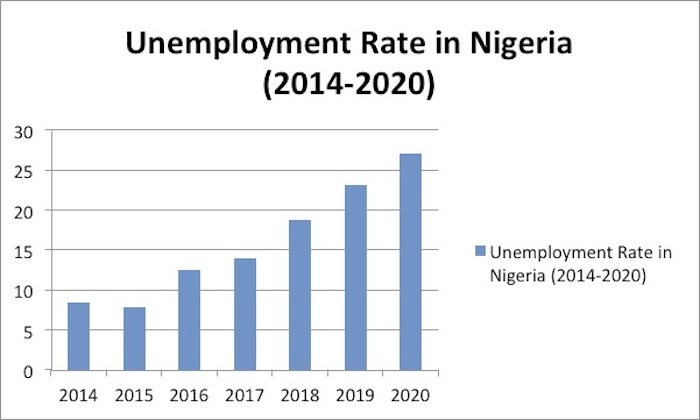
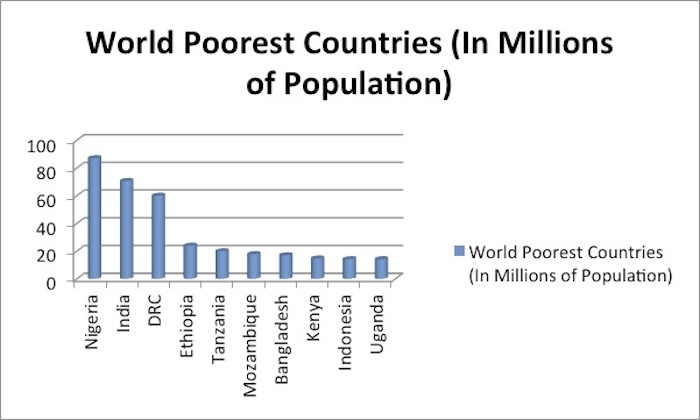
The sleaze has continued in states despite Nigeria’s status as world’s home for poorest people, with 87 million unable to feed, according to the Brookings Institute. Unemployment rate has been on the rise since 2014, and hit 27.1 percent in the second quarter of 2020. The Hanke’s Misery Index for 2020 has hit 43 points with naira weakening 25 percent to dollar at the parallel market in eight months.
SERAP and the legal battle
Recall that recently, SERAP won the latest round in the legal battle to compel the 36 state governors to disclose those details. Justice Folashade Giwa-Ogunbanjo of the Federal High Court, Abuja granted leave to the applicant to advance its case to compel the 36 state governors to disclose details of payment of billions of naira of tax-payers’ money as life pensions to former governors and other ex-officials under their respective state pension laws between 1999 and 2019.
Justice Giwa-Ogunbanjo, in granting leave, stated: “After going through the application filed by SERAP supported by 18 paragraphs affidavit, with supporting exhibits, statement of facts, and verifying affidavits and written address in support, leave is hereby granted for SERAP to pursue its suit.” The judge granted the order, following the argument in court on an ex parte motion by the applicant’s counsel Kolawole Oluwadare. The applicant had in the suit number FHC/ABJ/CS/19/2020 sought “an order for leave to apply for judicial review and an order of mandamus to direct and/or compel the 36 state governors to publish names and number of former governors and other officials that have received pensions and the total amounts received between 1999 and 2019 and have at the same time served and/or serving as members of the National Assembly.”
The suit followed SERAP’s Freedom of Information (FoI) requests dated December 9, 2019 to the governors, expressing concern that: “granting pension for life to ex-governors and other officials represents the use of public office to advance private interests, suggests the misuse of legitimate discretion for improper reasons, and has created a more cynical public view of politics and politicians.” According to SERAP, only two governors— Ifeanyi Okowa and Abdulrahman Abdulrazaq of Delta and Kwara states, respectively responded to its FoI requests. Although Okowa directed his Head of Service to send the details requested, no information was received as at the time the group filed the suit.
SERAP also said that Governor Abdulrazaq provided a copy of the pension law and list of former governors and ex-officials receiving pensions in Kwara State under the state’s Governor and Deputy Governor (Payment of Pension) Law, 2010. The state also named Cornelius O. Adebayo; Mohammed Shaaba Lafiagi; Sayomi Simon Adediji; Bukola Saraki; and Ogundeji Joel Afolabi as recipients of life pensions in the state. “However, the governor did not state the amounts that have so far been collected and whether the state would pursue recovery of the pensions paid,” it stated.
According to the Kwara State pension law (as amended), governors and deputy governors from the year 1967 shall be entitled to pension for life at the rate equivalent to the annual basic salary of the incumbent and other benefits as provided by the Revenue Mobilization, Allocation and Fiscal Commission. The pension shall include: furnished 5-bedroom duplex, 300 percent for furniture replaceable every four years; free medical treatment for governor and deputy governor and their immediate families; car maintenance; drivers (pensionable); house maintenance; and two cars for the governor in addition to one pilot car to be replaced every three years. The Kwara State pension law also provides that: “governor and deputy governor shall be entitled to domestic staff including cook, steward, gardener and two other domestic staff who shall be pensionable. Governor shall be entitled to two State Security detail and one female officer, in addition to eight policemen. Deputy governor shall be entitled to one State Security detail in addition to two policemen.”
Paul Ananaba (SAN), a Lagos-based lawyer, explained that the pension laws were made based on political considerations. He decried the fact that some states made laws to back up the wrong practice and commended states that have reversed it. “Governors are not civil servants. They are elected not appointed. Their election is not pensionable under the Pensions Act. They get elected for a maximum of eight years, compared to civil servants that spend years in office before retirement. This is a heavy burden on the already crushing exposure of the states,” he stated.