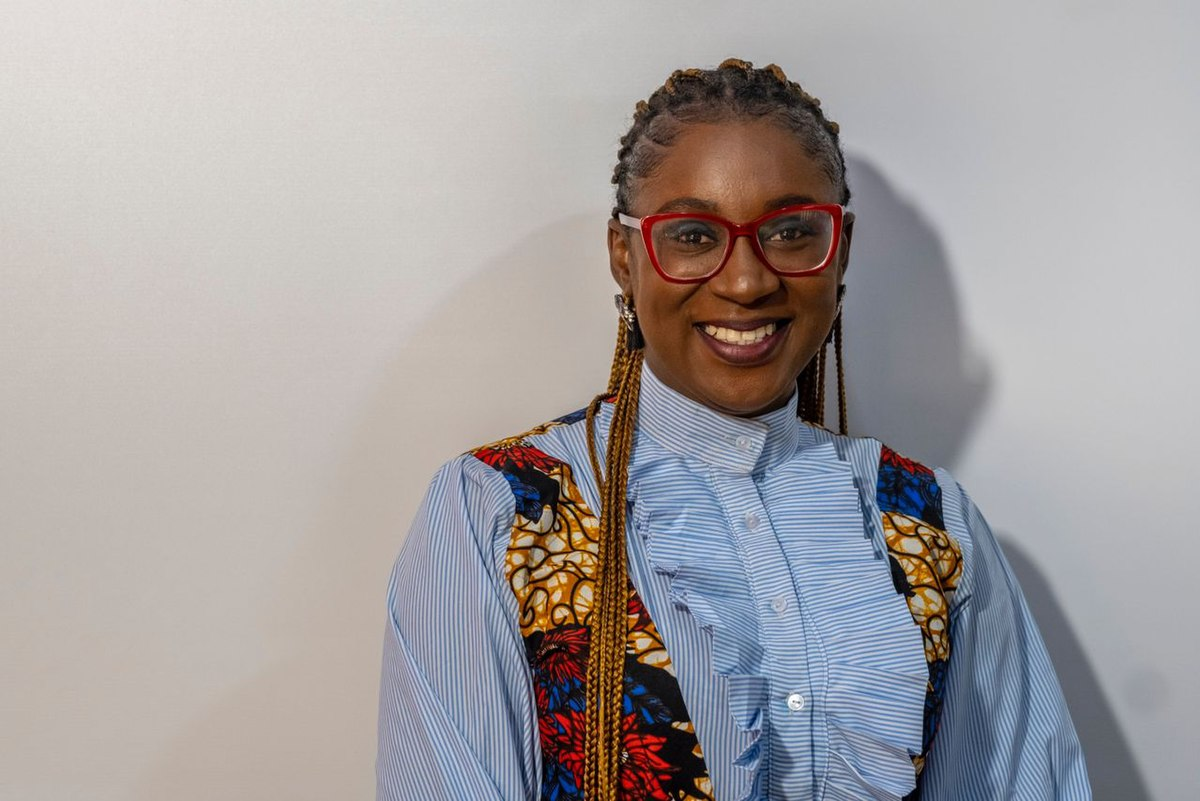
In 2015, my son was born in southern Nigeria. Just 48 hours later, he was fighting for his life. His eyes and skin had turned yellow. He was lethargic. It turned out to be neonatal jaundice—a common, treatable condition that affects more than half of newborns globally. But in our hospital, no working phototherapy units were available. The few that existed were either broken or already in use. When we finally got access to one, it failed during a power outage. I had to purchase the bulbs myself.
After hours of delay, my newborn had to undergo an emergency blood transfusion to stay alive. That moment altered the course of my life. I wasn’t a doctor or an engineer. I was a visual designer. But I had seen enough. I couldn’t pretend the system wasn’t broken. I became obsessed with the question: how could something so simple—a specialized light—be so out of reach for so many?
Imported solutions, fragile realities
Health systems in many low- and middle-income countries (LMICs) are saturated with imported medical equipment that frequently fails to align with local realities. In sub-Saharan Africa, for instance, approximately 70% of medical equipment is donated, according to the World Health Organization. Yet up to 40% of this equipment is non-functional, and nearly 80% of it is never used due to lack of maintenance infrastructure, training, or spare parts. The mismatch between the context in which the tools are designed and where they are deployed is not a minor oversight—it is a systemic flaw.
Take neonatal jaundice, which is responsible for up to 35% of preventable neonatal deaths in sub-Saharan Africa. Globally, an estimated 1.3 million babies annually require phototherapy for severe jaundice. Of these, more than 100,000 die due to lack of timely treatment. In Africa, the odds are even starker. Newborns in low-income countries are 10 times more likely to die in their first month than those in high-income countries, with a large proportion of these deaths attributed to conditions that are easily treatable with basic technologies.

A 2020 study published in The Lancet Global Health estimated that 80% of neonatal deaths worldwide could be prevented with simple interventions, including phototherapy, antibiotics for infections, and thermal care. Yet many facilities in Africa lack even the most basic equipment, including functional phototherapy units. A survey of over 500 health facilities across Nigeria found that fewer than 20% had working devices to treat jaundice. In many rural hospitals, mothers are told to expose their infants to sunlight—an unsafe and ineffective method that puts babies at further risk of brain damage, hearing loss, or death. This overreliance on imported solutions also creates structural dependency. Once these devices break, there’s often no way to repair them locally. Spare parts are expensive. Technicians are scarce. And budgets are stretched thin. When technologies fail to adapt to their operating environments, they become more than just ineffective—they become liabilities.
A new kind of light
After my son’s recovery, I channeled my grief and determination into creating a better solution. That’s how Crib A’Glow was born. It’s a solar-powered, foldable, affordable phototherapy device designed specifically for low-resource environments. It doesn’t depend on electricity from the grid. It doesn’t require complex training to operate. It’s manufactured in Nigeria, using local supply chains and talent. And it works.
Crib A’Glow is now being used in over 500 hospitals across Nigeria and Ghana. It has helped treat more than half a million babies. It has reduced hospital congestion. It has saved lives. But more than that, it has changed the story. It has given mothers like me a new kind of hope—the kind that doesn’t rely on charity or chance.
The innovation disconnect
Despite the evidence, local innovators still struggle to find funding and recognition. Most global health resources flow toward established institutions in the Global North. Solutions are often developed in Boston or Berlin and flown in to Lagos or Nairobi. Meanwhile, African entrepreneurs, engineers, and designers are left on the margins of the conversation—even when they’re solving the very problems the system is trying to fix.
This disconnect is not just inefficient—it’s dangerous. It reinforces a narrative where innovation is something that happens elsewhere, and where our countries are seen as consumers of solutions, not creators of them. But we are creators. We have the ideas. We have the urgency. We know the stakes. And we know what works—because we’ve lived the consequences when it doesn’t.

Collaboration, not dependency
This isn’t a rejection of international partnership. On the contrary, collaboration has played a vital role in our growth. Crib A’Glow has received global recognition, including awards from Johnson & Johnson and the Royal Academy of Engineering. We’ve learned from pediatricians, researchers, and investors around the world. But none of it would have been possible without the foundation we built at home.
What we need is not hand-me-down innovation. We need equitable platforms that elevate local problem solvers. We need funding mechanisms that trust the ingenuity of those working closest to the issues. We need research partnerships that value co-creation. And we need to stop asking what we can give to the Global South and start asking what we can learn.
A call to rethink the narrative
Too often, we define innovation by its proximity to capital, or its origin in a lab with a pedigree. But real innovation is defined by impact. It’s defined by relevance, accessibility, and resilience. When a device saves a baby’s life in a rural hospital that lacks electricity, that is innovation.
The future of global health will not be built solely in policy briefs or at donor conferences. It will be built in places like Yenagoa, in clinics where nurses work without air conditioning, where parents bring their children on motorbikes, and where light is a luxury. It will be built by people who have been forced to find solutions because failure is not an option.
From within, not from above
I built Crib A’Glow because I refused to let my child’s trauma become another statistic. I continue to build because I believe every baby deserves a chance—no matter where they’re born. And I write this because I believe the world needs to rethink how we define expertise and where we look for answers.
If we are serious about improving global health, we must begin by listening differently, funding differently, and building differently. We must trust that innovation doesn’t need to be imported when it is already growing, thriving, and healing—right where it’s needed most.
Sometimes, the most powerful light doesn’t come from above. It comes from within.